

A warranty void condition is defined as a specific circumstance in which a manufacturer legally refuses to honour coverage because a consumer’s actions directly caused the product’s failure. For homeowners managing windows and doors, understanding what is a warranty void condition can mean the difference between a covered repair and a costly out-of-pocket replacement. The Magnuson-Moss Warranty Act, the primary federal law governing consumer warranties in North America, sets firm limits on when a manufacturer can refuse a claim. Many homeowners believe common myths, such as “warranty void if removed” stickers being legally binding, when in fact these stickers are unenforceable under federal law. Proplas has spent 25 years helping Canadian homeowners protect their investments, and understanding warranty terms is the first step.
What is a warranty void condition for windows and doors?
A warranty void condition is any action or circumstance that a manufacturer can prove directly caused a product defect or failure. The key word is “prove.” Manufacturers must demonstrate a direct link between the consumer’s action and the product’s failure before they can legally deny a claim. This is not a vague standard. It is a legal requirement under the Magnuson-Moss Warranty Act.
For windows and doors, the most common void conditions fall into three categories: misuse, abuse, and neglect. Misuse means using the product outside its intended design, such as forcing a window open beyond its rated travel. Abuse means exceeding the product’s design limits, like hanging excessive weight from a door frame. Neglect means skipping required maintenance, such as failing to lubricate door hinges or clean window drainage channels as specified in the product manual.
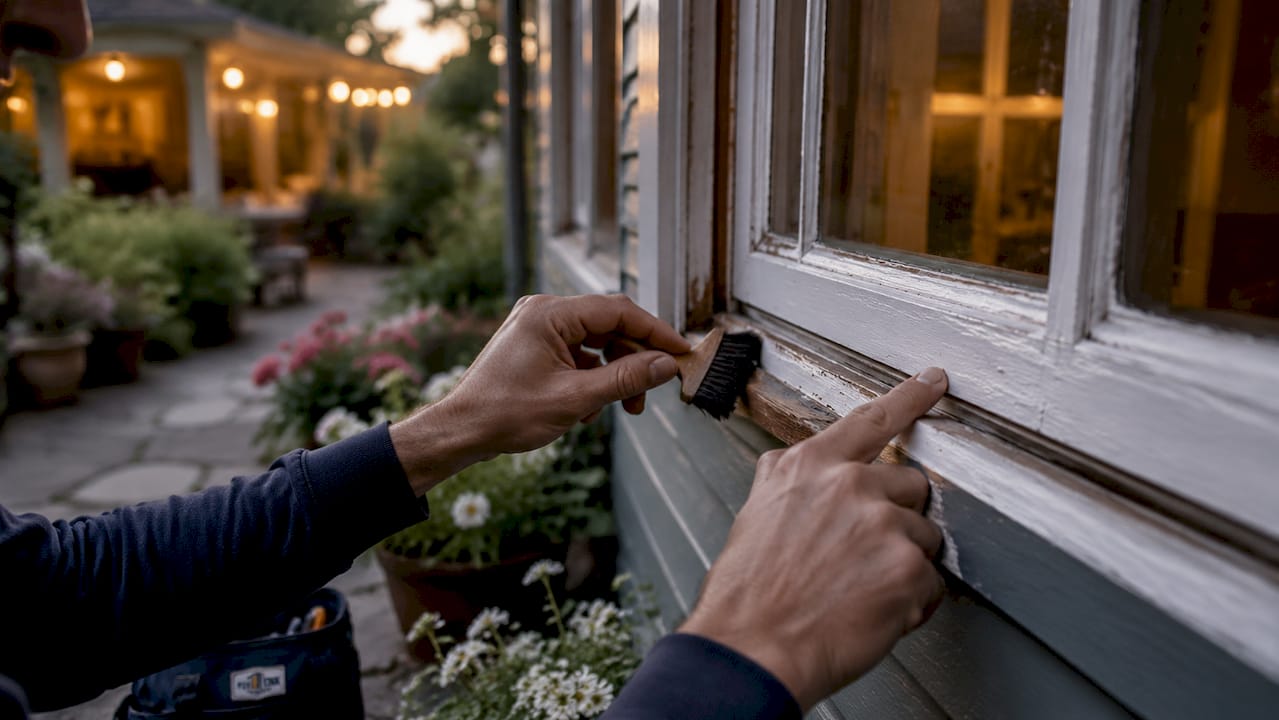
Limited warranty terms vary by manufacturer, but federal law adds a layer of protection on top of whatever the written document says. This means your rights as a homeowner are often broader than the warranty booklet suggests. Reading the written warranty is still important, but it is not the final word.
Which actions actually cause a warranty to be voided?
The three legitimate grounds for voiding a warranty are misuse, abuse, and neglect. Each has a specific legal meaning, and understanding the distinction helps you contest a denial if one is wrongly applied to your situation.
Here is how each applies to windows and doors:
- Misuse: Installing a window in an application it was not rated for, such as using a standard residential window in a high-wind coastal zone without the required rating.
- Abuse: Physically damaging a door frame by slamming it repeatedly or using tools to force a window mechanism beyond its design range.
- Neglect: Ignoring manufacturer instructions to clean weep holes annually, allowing water to pool and damage the frame from the inside.
- Unauthorized modifications: Cutting into a window frame to fit a non-standard air conditioning unit, then claiming the resulting seal failure is a manufacturing defect.
The manufacturer carries the burden of proof in every case. Manufacturers must link the specific consumer action directly to the specific failure. A general claim that “the product was misused” is not sufficient to deny coverage.
Pro Tip: Keep a simple maintenance log for every window and door in your home. Record the date, what you did, and any products used. This log is your first line of defence if a manufacturer questions your maintenance history.
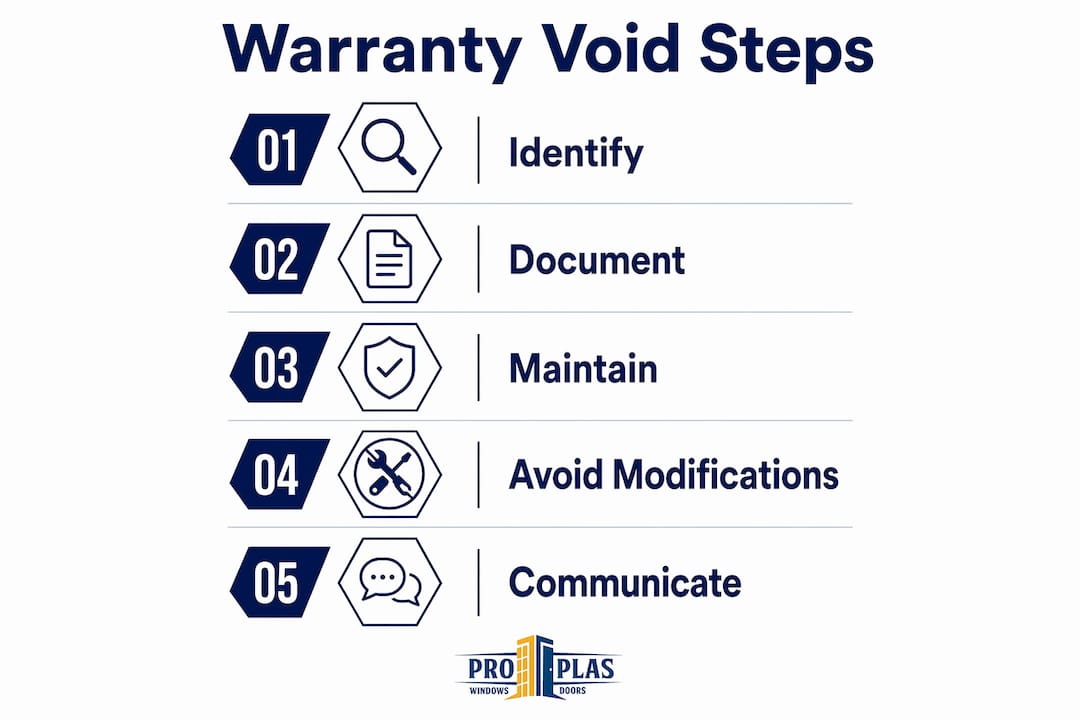
Unauthorized modifications are a common grey area. Painting a window frame a different colour does not void a warranty. Drilling through a sealed glazing unit to install a decorative element does. The test is always whether the modification caused the failure being claimed.
Common misconceptions and illegal warranty-voiding practices
Many homeowners accept warranty denials that are actually illegal. The most widespread myth is that a “warranty void if removed” sticker carries legal weight. It does not. FTC enforcement prohibits voiding a warranty based solely on a broken seal or an opened product. Breaking a seal on a window or door component to inspect or clean it does not void your coverage.
A second common misconception involves “authorized repair only” language. Many manufacturers include clauses stating that any repair performed by an unauthorized technician voids the warranty. This language conflicts with federal law and the FTC actively enforces its removal. You are not required to use the manufacturer’s preferred service provider for routine maintenance or repairs.
Here are the most frequent illegal or unenforceable warranty-voiding claims homeowners encounter:
- Requiring the use of branded replacement parts for routine maintenance
- Voiding coverage because a non-certified technician performed a repair that did not cause the failure
- Applying a blanket void to the entire warranty because one seal was broken
- Claiming that any modification, regardless of whether it caused the defect, voids all coverage
“Manufacturers rarely can void a full warranty without concrete proof linking a single maintenance or modification event to the product failure. Many warranty void claims are legally unsupportable without demonstrable cause.”
Pro Tip: If a manufacturer or retailer tells you your warranty is void because you used a non-branded part or had a non-certified technician do routine work, ask for that denial in writing. Written denials are much easier to contest and often prompt manufacturers to reconsider.
Consumer rights under the Magnuson-Moss Act apply primarily to residential consumers. If you use your windows or doors for any commercial purpose, your protections may differ. Verify your product type and intended use when reviewing warranty terms.
How to prevent warranty void conditions for windows and doors
Preventing a void condition is straightforward when you know what manufacturers look for. The goal is to show that you used, maintained, and modified the product within the bounds of its design and the manufacturer’s written instructions.
The table below outlines common actions and their effect on warranty status:
| Action | Effect on warranty |
|---|---|
| Cleaning window tracks with manufacturer-approved products | Preserves coverage |
| Lubricating door hinges per the maintenance schedule | Preserves coverage |
| Painting window frames with non-approved coatings | May void coverage for seal or finish defects |
| Drilling into a sealed glazing unit | Voids coverage for that unit |
| Having a non-certified technician adjust a door closer | Does not void coverage unless it caused a failure |
| Skipping annual weep hole cleaning | May void coverage for water damage claims |
Beyond following the table, these habits protect your warranty coverage:
- Read the maintenance section of your product manual before doing any work on windows or doors.
- Use only cleaning products listed as compatible by the manufacturer.
- Photograph your windows and doors before and after any maintenance or adjustment. Proactive photographic documentation before maintenance is one of the most effective ways to win a warranty dispute.
- Verify that any contractor you hire for installation or repair follows the manufacturer’s installation guidelines. Poor installation is one of the leading causes of warranty claims denied in the window and door industry.
- Keep all receipts, product manuals, and installation records in one place.
Pro Tip: Before any renovation that involves your windows or doors, review your warranty document for specific exclusions. Some warranties exclude damage caused by adjacent construction, which means a renovation gone wrong may not be covered.
Understanding installation warranty terms is equally important. A product warranty covers manufacturing defects. An installation warranty covers workmanship errors. Both can be voided independently, so confirm what each covers before signing off on any project.
What to do if your warranty claim is denied
A denied claim is not necessarily a final answer. Many denials citing vague tampering or broken seals are reversed after the homeowner escalates the dispute with the right information.
Follow these steps if your claim is denied:
- Request a written explanation. Ask the manufacturer to provide a specific, written reason for the denial. Vague explanations are harder for them to defend and easier for you to challenge.
- Review the denial against your documentation. Compare their stated reason against your maintenance log, photographs, and receipts. If the denial does not match your records, say so in writing.
- Cite the Magnuson-Moss Warranty Act. Escalating with a reference to federal law signals that you understand your rights. Many manufacturers reverse denials at this stage to avoid regulatory scrutiny.
- Escalate to a supervisor or regional manager. Front-line customer service representatives often follow scripts. A supervisor has more authority to review the claim on its merits.
- Contact a consumer protection agency. In Canada, the Competition Bureau and provincial consumer protection offices handle warranty disputes. Filing a complaint creates a formal record and often prompts a faster resolution.
- Consult a consumer rights lawyer. If the claim involves significant costs, a brief legal consultation can clarify your options quickly.
Pro Tip: Keep every communication with the manufacturer in writing, including emails and chat transcripts. A paper trail is your strongest asset if the dispute escalates to a regulatory body or legal proceeding.
Documenting product condition before and after any repair or maintenance visit forces the manufacturer to justify their denial with evidence. Without your documentation, they can make assumptions about negligence that are difficult to disprove.
Key takeaways
A warranty void condition requires the manufacturer to prove a direct link between your actions and the product’s failure. Without that proof, the denial is legally unsupportable.
| Point | Details |
|---|---|
| Void conditions require proof | Manufacturers must demonstrate your action directly caused the failure, not just that you modified the product. |
| “Void if removed” stickers are unenforceable | Breaking a seal or opening a product does not void your warranty under federal law. |
| Authorized repair requirements are often illegal | You are not required to use branded parts or certified technicians for routine maintenance. |
| Documentation is your strongest defence | Maintenance logs and photographs make wrongful denials much harder for manufacturers to uphold. |
| Denied claims can be reversed | Citing the Magnuson-Moss Warranty Act and escalating to supervisors or regulators resolves many wrongful denials. |
What 25 years of warranty disputes taught us at Proplas
The pattern we see most often is not homeowners doing something reckless. It is homeowners who did everything right but did not document it. A manufacturer receives a claim, sees no maintenance records, and assumes neglect. The homeowner has no paper trail to push back with, and the denial sticks.
The second pattern is homeowners accepting illegal denials without question. When a manufacturer says “you used a non-branded lubricant, so your warranty is void,” that is almost always an overreach. Federal law does not allow a manufacturer to void coverage based on a product choice that did not cause the failure. Most homeowners do not know this, and manufacturers count on that.
What we have found after working with over 10,000 Canadian homeowners is that the warranty conversation should happen before installation, not after something goes wrong. Knowing which maintenance tasks are required, which modifications are permitted, and how to document your work takes about 30 minutes of reading. That 30 minutes can save thousands of dollars in denied claims.
The warranty laws have also shifted meaningfully in recent years. Consumer protections are stronger now than they were a decade ago, and regulatory bodies are more active in enforcing them. Homeowners who stay informed hold real leverage in disputes.
— Proplas
Protecting your warranty starts with the right installation
Professional installation is the single most effective way to prevent warranty void conditions from the start. When a product is installed incorrectly, manufacturers can legitimately attribute failures to workmanship rather than manufacturing defects. That distinction matters enormously when a claim is filed.

Proplas installs picture windows, casement windows, doors, and more with a process built to preserve both the product warranty and the installation warranty. With Energy Star certified products and a lifetime warranty backed by 25 years of experience, Proplas gives Canadian homeowners the confidence that their investment is protected from day one. Contact Proplas for a consultation and get clear answers about what your warranty covers before any work begins.
FAQ
What is a warranty void condition?
A warranty void condition is a specific circumstance in which a manufacturer can legally refuse coverage because the consumer’s actions directly caused the product’s failure. The manufacturer must prove this link to deny the claim.
Do “warranty void if removed” stickers hold up legally?
No. The FTC prohibits voiding a warranty based solely on a broken seal or opened product. These stickers are legally unenforceable under federal consumer protection law.
Can using a non-certified repair technician void my window warranty?
Not unless the technician’s work directly caused the failure being claimed. The Magnuson-Moss Warranty Act forbids manufacturers from voiding coverage simply because an unauthorized technician performed a repair.
What should I do if my warranty claim is denied?
Request a written explanation of the denial, compare it against your maintenance records and photographs, and cite the Magnuson-Moss Warranty Act when escalating. Many denials are reversed at this stage.
Does neglecting window maintenance void my warranty?
Yes, neglect is a legitimate void condition. Skipping required maintenance tasks, such as cleaning weep holes or lubricating hinges as specified in the product manual, gives manufacturers valid grounds to deny claims related to that neglect.