
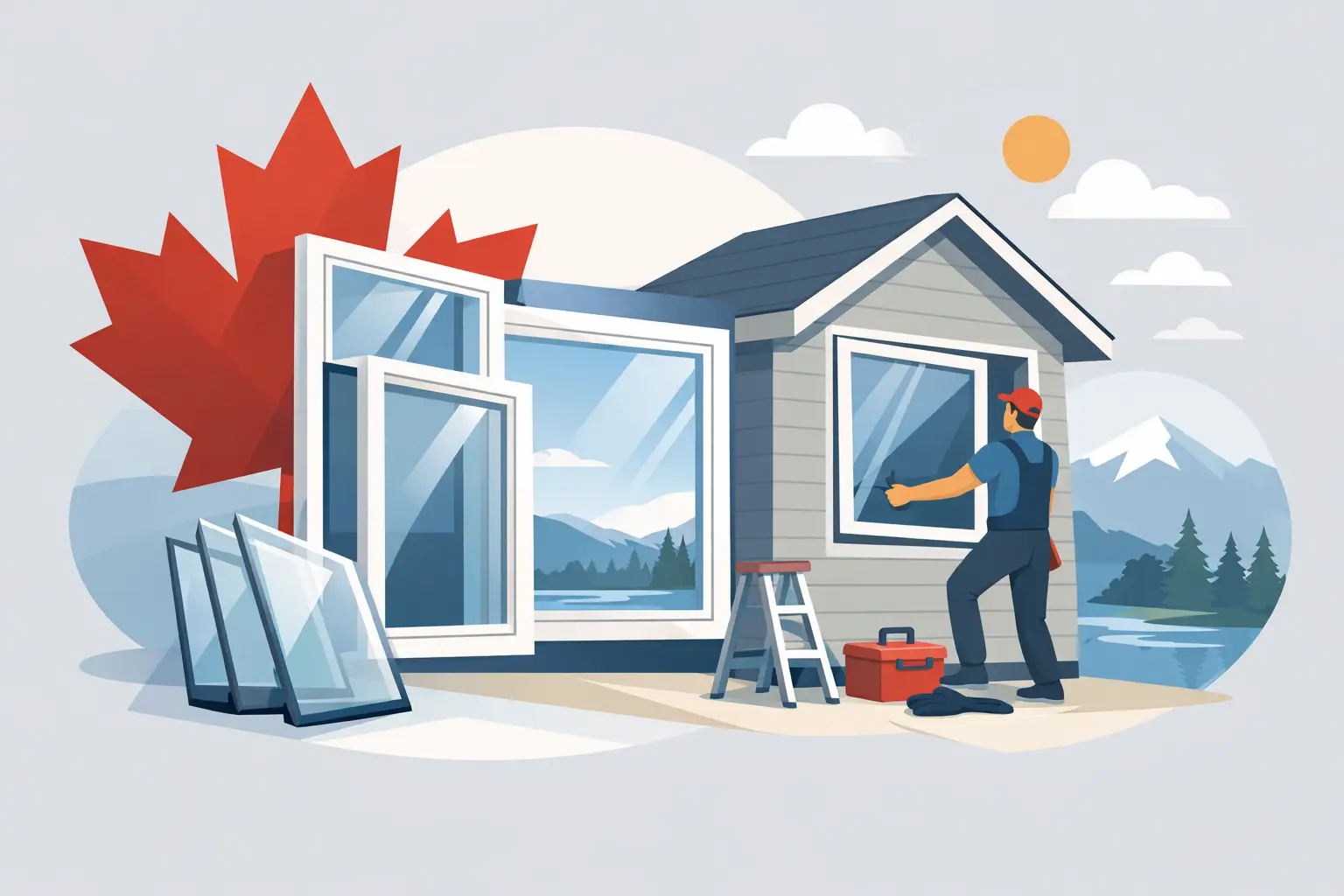
If your windows draft in January, stick in humid weather, or show fogging between panes, the question is not just what style to buy. It is whether canadian made replacement windows are the right long-term fit for your home. For homeowners in Toronto, the GTA, Simcoe Region, and across Southern Ontario, that question matters because local weather exposes weak products and poor installation fast.
A replacement window has to do more than look clean from the curb. It needs to handle freeze-thaw cycles, wind, summer heat, driving rain, and years of daily use without constant service calls. That is why many homeowners start by narrowing their options to products built for Canadian conditions and backed by companies that can actually support them after installation.
Why canadian made replacement windows stand out
The biggest advantage is not patriotism. It is fit for purpose.
Windows made for the Canadian market are generally designed around tougher performance expectations. That often means better attention to thermal efficiency, stronger frame construction, glass packages suited to colder climates, and manufacturing standards that reflect real winter exposure. A window that performs acceptably in a mild climate may not feel nearly as dependable during an Ontario cold snap.
There is also a practical service advantage. When your windows come from established Canadian manufacturers, lead times are often easier to manage, replacement parts are more accessible, and warranty support can be more straightforward. If something needs to be adjusted or addressed, homeowners usually prefer a clear local path to service instead of dealing with vague timelines or hard-to-reach suppliers.
That does not mean every imported product is poor or every Canadian product is excellent. Quality still depends on the manufacturer, the glass package, the frame, the hardware, and most of all, the installation. But if you want to reduce risk on a major home upgrade, starting with Canadian-made options is a sensible filter.
What actually makes a window worth replacing
Many homeowners wait too long because the signs build gradually. A little draft here, a stubborn lock there, some condensation that seems minor at first. Then energy bills climb, comfort drops, and the house never quite feels sealed.
Replacement is usually worth serious consideration when frames are warped, seals have failed, hardware is unreliable, or the window no longer opens and closes properly. Noise reduction can also be a deciding factor, especially on busy streets or in growing suburban neighborhoods. In older homes, appearance matters too. New windows can update the look of the entire exterior without changing the character of the house.
The key is to look beyond the glass. A low-quality replacement installed over existing problems will not solve much. If water intrusion, structural movement, or poor fitting openings are part of the issue, the installation team needs to address those conditions as part of the job.
The case for local manufacturing and local installation
This is where many projects succeed or fail.
Homeowners often compare brands first and installers second, when the order should really be reversed. Even strong windows underperform when measurements are rushed, openings are not prepared properly, or finishing details are treated as an afterthought. Air leakage, water issues, and premature wear often come back to installation quality rather than the label on the frame.
With canadian made replacement windows, local installation support creates a stronger overall system. Products are custom ordered for the opening, options are selected with the climate in mind, and the installer is working with manufacturers they know well. That familiarity can help with sizing, hardware choices, specialty shapes, and realistic delivery expectations.
For homeowners, that usually translates into fewer surprises. You want a clear quote, an accurate timeline, and a team that can explain what is included before the work starts. You also want to know what happens if something needs service later. A warranty only has value if the company behind it responds.
What to look for in canadian made replacement windows
Energy efficiency gets the most attention, and for good reason, but it should not be the only factor.
Start with the frame material and overall build quality. Vinyl remains a popular choice because it offers good insulation, low maintenance, and solid value when manufactured well. The important phrase there is when manufactured well. Not all vinyl windows are built to the same standard, and thinner frames or weaker corners can show their limits over time.
Next, consider the glazing package. Double-pane glass is common, but the right low-E coatings, gas fills, and spacer systems make a meaningful difference in comfort and efficiency. In some homes, triple-pane glass may be worth the added investment, especially where winter comfort and traffic noise are priorities. In others, the extra cost may not deliver enough benefit to justify it. That depends on the home, the orientation, and your goals.
Hardware also matters more than most buyers expect. Casement and awning windows rely on moving parts that should feel solid and operate smoothly for years. Locks should engage securely without forcing. Sliders should glide without wobble. These details affect daily use, not just showroom impressions.
Finally, look for products that meet recognized performance and energy standards. Those labels are not the whole story, but they are a useful baseline. They show the product has been tested rather than simply marketed.
Style choice is not just about appearance
Homeowners often begin with looks, but window style affects ventilation, maintenance, and function.
Casement windows are a strong fit for many homes because they seal tightly and open fully, which helps with airflow and efficiency. Awning windows work well in bathrooms, basements, and other areas where privacy or weather protection is a concern. Hung windows suit traditional homes, while sliders can be practical in tighter spaces where an outward swing is not ideal.
Picture windows and fixed casement units can bring in light and create a clean exterior look, but they do not open, so they are best used where ventilation is not a priority. Specialty shapes can add character, though custom sizing and design work may affect cost and lead time.
The right choice usually comes down to how each room is used. A good consultation should focus on that, not just on selling the same style throughout the house.
Common concerns homeowners have before buying
Price is usually first, but it is rarely the only concern. Most homeowners are also worried about delays, messy installation, hidden charges, and being left on their own if something goes wrong later.
Those concerns are justified. Window replacement is a significant investment, and the market includes plenty of vague quotes and overpromises. If a proposal seems unusually low, ask what is excluded. Interior trim, exterior capping, disposal, structural repairs, upgraded glass, and finishing details can all affect the final number.
Timeline matters too. Custom windows are not off-the-shelf items, and honest companies will tell you that. What you want is not a rushed promise. You want a realistic schedule and updates that make sense.
This is why a service-led approach tends to work best. Companies like ProPlas focus on the full process: measurement, product selection, customization, installation, and follow-up support. That reduces handoff problems and gives homeowners a clearer line of accountability from start to finish.
Are canadian made replacement windows always the best choice?
Often, yes, but not automatically.
If two windows are priced similarly and one is built for Canadian conditions with dependable local support, that option usually deserves serious preference. But there are still trade-offs. Some premium upgrades may increase the budget more than expected. Some homes benefit from advanced glass packages, while others may see stronger value from improving a larger number of openings with a well-balanced specification.
There is also the question of installation scope. Replacing every window at once can be efficient, but phased projects are sometimes the smarter move for budget or scheduling reasons. What matters is having a plan that prioritizes the windows causing the biggest comfort, efficiency, or maintenance problems first.
A reliable contractor should be willing to explain those trade-offs instead of pushing a one-size-fits-all answer.
Making the decision with confidence
Good window replacement should lower stress, not add to it. The best outcomes usually come from a simple combination: products that are built for the climate, customization that matches the home, installation done properly, and support that continues after the crew leaves.
That is why canadian made replacement windows remain such a strong option for homeowners who want durability, energy performance, and fewer surprises along the way. When the product and the process are both solid, you are not just replacing old windows. You are making the home quieter, more comfortable, and easier to trust through every season.
If you are comparing options now, focus less on sales language and more on who can give you clear answers, transparent pricing, and workmanship that holds up when winter arrives.