

Window sealing is defined as the practice of blocking air leakage around window frames, sashes, and trim using materials like weatherstripping and caulk, and it directly reduces the energy your heating and cooling systems consume. Less energy consumed means fewer greenhouse gas emissions produced. The U.S. Department of Energy confirms that uncontrolled air movement can account for more than 30% of a home’s heating and cooling costs. That single figure explains why window sealing reduces emissions more reliably than many other home upgrades. Standards like ENERGY STAR and NFRC measure air leakage in cfm/ft² on certified product labels, giving homeowners a clear benchmark for what properly sealed windows should achieve.
How does air leakage through windows increase emissions?
Air leakage forces your HVAC system to run longer and harder than it should. Every time conditioned air escapes through a gap around a window frame or sash, your furnace or air conditioner must replace it. That extra run time burns more fuel or draws more electricity, and both pathways produce greenhouse gas emissions.
The mechanism is straightforward. Warm indoor air leaks out through gaps in winter. Cold outdoor air infiltrates in summer. Your HVAC system compensates continuously. The DOE’s air sealing data shows this process can drive more than 30% of total heating and cooling costs. That cost is a direct proxy for emissions, because most Canadian homes still rely on natural gas furnaces or grid electricity with a carbon footprint.
Several window-specific factors make leakage worse:
- Operable windows (casements, sliders, double-hung) have moving sash-to-frame contacts that wear over time, creating gaps.
- Fixed windows can develop leaks where the frame meets the rough opening or interior trim.
- Older single-pane frames made of aluminium conduct cold directly and often have no compression seals.
- Settling and seasonal expansion cause frames to shift, breaking seals that were once intact.
Air leakage rates are reported on NFRC-certified labels, so you can compare products before purchasing. A lower cfm/ft² rating means less air passes through under standard test conditions. Choosing windows with low NFRC air leakage ratings, and then sealing the installation properly, addresses both the product and the installation gap.
What window sealing techniques effectively reduce emissions?
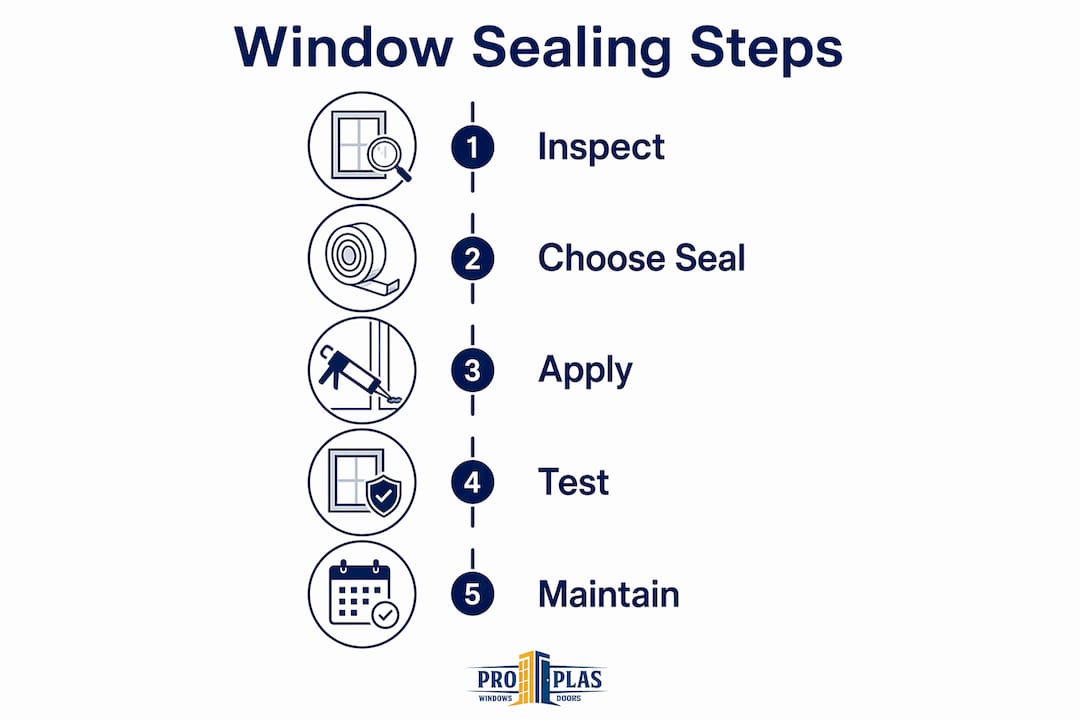
The two core techniques are weatherstripping and caulking. They are not interchangeable. The DOE recommends weatherstripping for movable parts and caulk for stationary gaps. Using the wrong material in the wrong location either fails quickly or prevents the window from operating correctly.
Follow this sequence for a complete seal:
- Inspect first. Check for visible daylight around the frame from inside with the lights off. Rattling sashes on a windy day also signal leakage. Mark every gap before you buy materials.
- Clean all surfaces. Remove old caulk, paint flakes, and dirt. Adhesion fails on dirty surfaces, and a new seal over an old one rarely lasts.
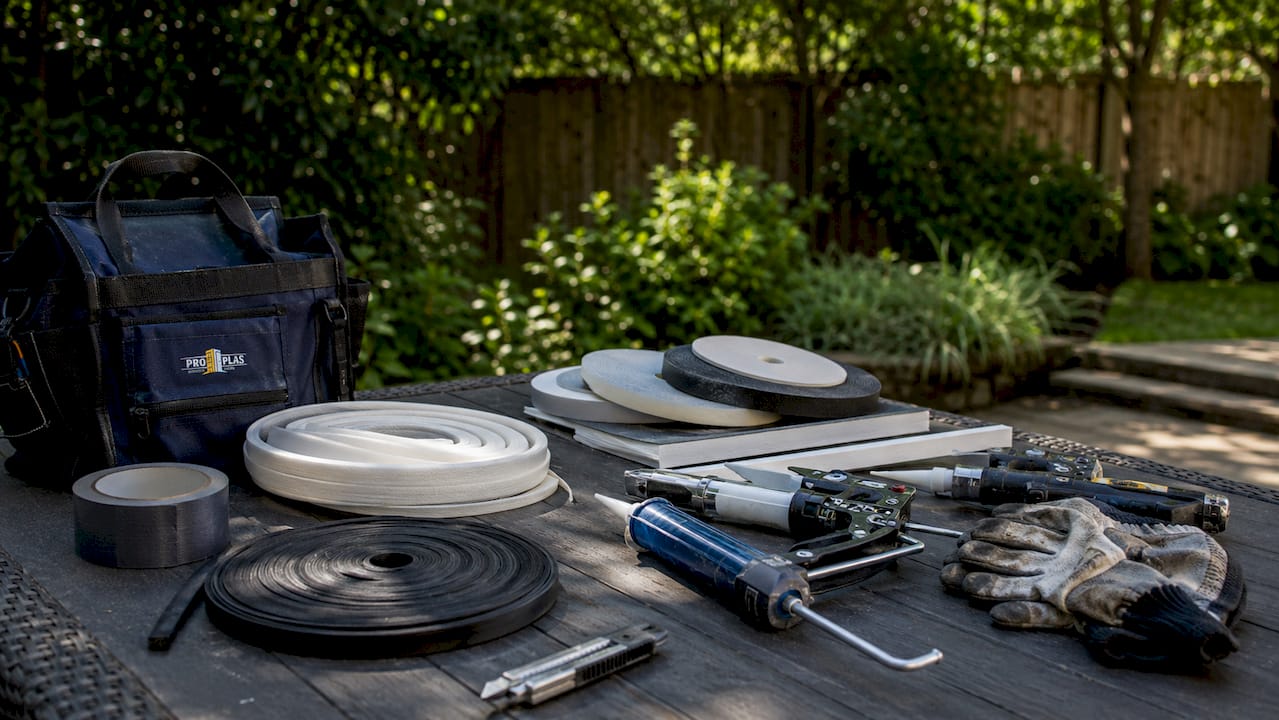
- Weatherstrip operable sash contacts. Apply foam, felt, or vinyl compression strips along the sash-to-frame contact line. Choose a thickness that compresses when the window closes without binding the operation.
- Caulk stationary gaps. Fill the joint between the window frame and interior trim with a paintable acrylic latex caulk. For exterior gaps, use a silicone or siliconised acrylic product rated for outdoor exposure.
- Seal the rough opening gap. The space between the window frame and the structural rough opening is often the largest single source of leakage. Use low-expansion spray foam or backer rod with caulk to fill it before replacing interior trim.
- Test after sealing. Close all windows and hold a lit incense stick near each frame on a windy day. Smoke that wavers indicates remaining leakage.
Material choice matters. Foam tape compresses well but degrades faster than vinyl or silicone-based products. For sealing durability, V-strip or tension-seal weatherstripping outlasts foam in high-traffic operable windows like casements or double-hung units.
Pro Tip: After completing your seals, revisit each window six weeks later. Seasonal temperature changes cause frames to shift slightly, and a second inspection catches any new gaps before winter heating season begins.
How do improved windows and glazing cut emissions beyond sealing?
Sealing existing windows is the first step. Upgrading the windows themselves is the second, and the emissions benefit compounds significantly. Project Drawdown estimates that upgrading single-glazed windows to double-glazed reduces greenhouse gas emissions by approximately 0.07 tonnes of CO₂-equivalent per square metre per year. Across a typical Canadian home with multiple windows, that adds up to a meaningful annual reduction.
Double glazing works by trapping a layer of inert gas, usually argon or krypton, between two panes. That gas layer resists heat transfer far better than a single pane of glass. The result is less heat escaping in winter and less heat entering in summer, which means your HVAC system runs less.
Glazing coatings add another layer of performance. Low-emissivity (low-e) coatings reflect infrared heat back into the room in winter and block solar heat gain in summer. The coating is invisible to the eye but measurable in energy bills. Frame material also matters: fibreglass and uPVC frames conduct far less heat than aluminium, reducing the thermal bridging that undermines even the best glazing.
The table below compares common window types by their general air leakage and insulation performance:
| Window type | Air leakage performance | Thermal insulation (R-value range) |
|---|---|---|
| Single-pane, aluminium frame | High leakage risk | R-1 to R-2 |
| Double-pane, aluminium frame | Moderate leakage risk | R-2 to R-3 |
| Double-pane, uPVC frame, no low-e | Low leakage risk | R-3 to R-4 |
| Double-pane, uPVC frame, low-e coating | Very low leakage risk | R-4 to R-5 |
| Triple-pane, fibreglass frame, low-e | Lowest leakage risk | R-5 to R-8 |
ENERGY STAR certified windows meet specific air leakage thresholds set by Natural Resources Canada for Canadian climate zones. Choosing an ENERGY STAR product guarantees the window itself performs to a verified standard before you even apply weatherstripping.
Does sealing windows affect indoor air quality?
Sealing windows reduces energy loss, but tighter buildings require deliberate ventilation planning. The DOE’s whole-house systems approach makes clear that air barriers are not always vapour barriers, and their placement depends on your climate zone. In Canada, getting this wrong can trap moisture inside wall assemblies, leading to mould and structural damage.
The risks of over-sealing are real but manageable:
- Moisture accumulation occurs when humid indoor air has nowhere to go. Cooking, bathing, and breathing all add moisture to indoor air.
- Reduced fresh air supply can increase concentrations of indoor pollutants like VOCs from furniture and flooring.
- Combustion appliance backdrafting is a serious risk in older homes where gas furnaces or water heaters rely on natural air infiltration for combustion air.
The solution is not to avoid sealing. The solution is to seal and then ventilate deliberately. A heat recovery ventilator (HRV) or energy recovery ventilator (ERV) exchanges stale indoor air for fresh outdoor air while recovering most of the thermal energy. This preserves the energy savings from sealing while maintaining healthy indoor air quality.
Pro Tip: Before sealing your home aggressively, have a certified energy auditor perform a blower door test. The test measures your home’s current air changes per hour and tells you exactly how much sealing is safe before you need mechanical ventilation.
Integrating window sealing with attic insulation, basement rim joist sealing, and door weatherstripping produces the best results. Windows are rarely the only leakage point, and a whole-envelope approach produces compounding emission reductions that a window-only project cannot match.
Key takeaways
Window sealing reduces emissions by cutting the air leakage that forces HVAC systems to consume more energy, and combining sealing with double-glazed, ENERGY STAR certified windows delivers the largest measurable reduction.
| Point | Details |
|---|---|
| Air leakage drives emissions | Uncontrolled leakage causes more than 30% of heating and cooling costs, directly increasing carbon output. |
| Use the right technique | Weatherstrip movable sash contacts and caulk stationary frame gaps to maintain both airtightness and window operation. |
| Glazing upgrades compound savings | Switching to double-glazed windows cuts approximately 0.07 t CO₂-eq per m² per year beyond sealing alone. |
| Ventilation must follow sealing | Tight homes need an HRV or ERV to maintain indoor air quality and prevent moisture damage. |
| Inspect after every season | Visible daylight or rattling frames signal new leaks that undo previous sealing work. |
What 25 years of window installations taught us about sealing
After working with over 10,000 homeowners across the Toronto and GTA region, we at Proplas have seen the same pattern repeat: homeowners seal their windows expecting a comfort improvement and are genuinely surprised by the size of the reduction in their energy bills. The emissions benefit is real, but most people only notice it when they see the gas or hydro statement.
The most common mistake we see is treating weatherstripping as a one-time fix. Compression seals wear. Frames shift with the seasons. A seal that worked perfectly in october may gap by january. The homeowners who see sustained emission reductions are the ones who build a quick annual inspection into their routine, not the ones who seal once and forget.
We also see a lot of caulk applied over old caulk. It looks fine for a season, then peels away in a sheet. Proper surface preparation takes twenty minutes and makes the difference between a seal that lasts two years and one that lasts fifteen.
The industry has moved significantly toward ENERGY STAR certification and NFRC-rated products in the last decade. That shift matters because it gives homeowners a verified number to compare, not just a salesperson’s claim. When you combine a certified low-leakage window with correct installation and proper weatherstripping, the emission reductions are not marginal. They are substantial and they persist for the life of the window.
— Proplas
Proplas window solutions for energy-efficient homes
Proplas has spent 25 years helping homeowners across Toronto and the GTA replace windows that leak, rattle, and drive up energy bills. Every window Proplas installs is ENERGY STAR certified and backed by a lifetime warranty, so the emission reductions you gain on day one are protected for the long term.

If your windows show daylight around the frame, fog between panes, or drafts you can feel on a cold day, a replacement is likely more cost-effective than repeated sealing attempts. Proplas offers fully customised solutions with no hidden fees and installation as fast as three days. Read the complete window replacement warranty guide to understand exactly what is covered, or contact our team for a no-obligation consultation.
FAQ
Why does window sealing reduce emissions?
Window sealing blocks air leakage that forces heating and cooling systems to run longer. Less HVAC run time means less fuel burned and fewer greenhouse gas emissions produced.
How does sealing windows reduce energy loss?
Weatherstripping and caulk close the gaps where conditioned air escapes and outdoor air infiltrates. The DOE confirms this leakage can account for more than 30% of heating and cooling costs.
What is the difference between weatherstripping and caulking?
Weatherstripping seals movable sash-to-frame contacts on operable windows. Caulk fills stationary gaps between the frame and trim. Using each in its correct location is what makes the seal last.
Does sealing windows affect indoor air quality?
Sealing reduces fresh air infiltration, so tighter homes benefit from a heat recovery ventilator to maintain healthy air quality. The whole-house systems approach recommended by the DOE addresses both airtightness and ventilation together.
How do I know if my windows need resealing?
Visible daylight around the frame, rattling sashes, or incense smoke that wavers near the window edge all indicate active air leakage that requires caulking or new weatherstripping.