
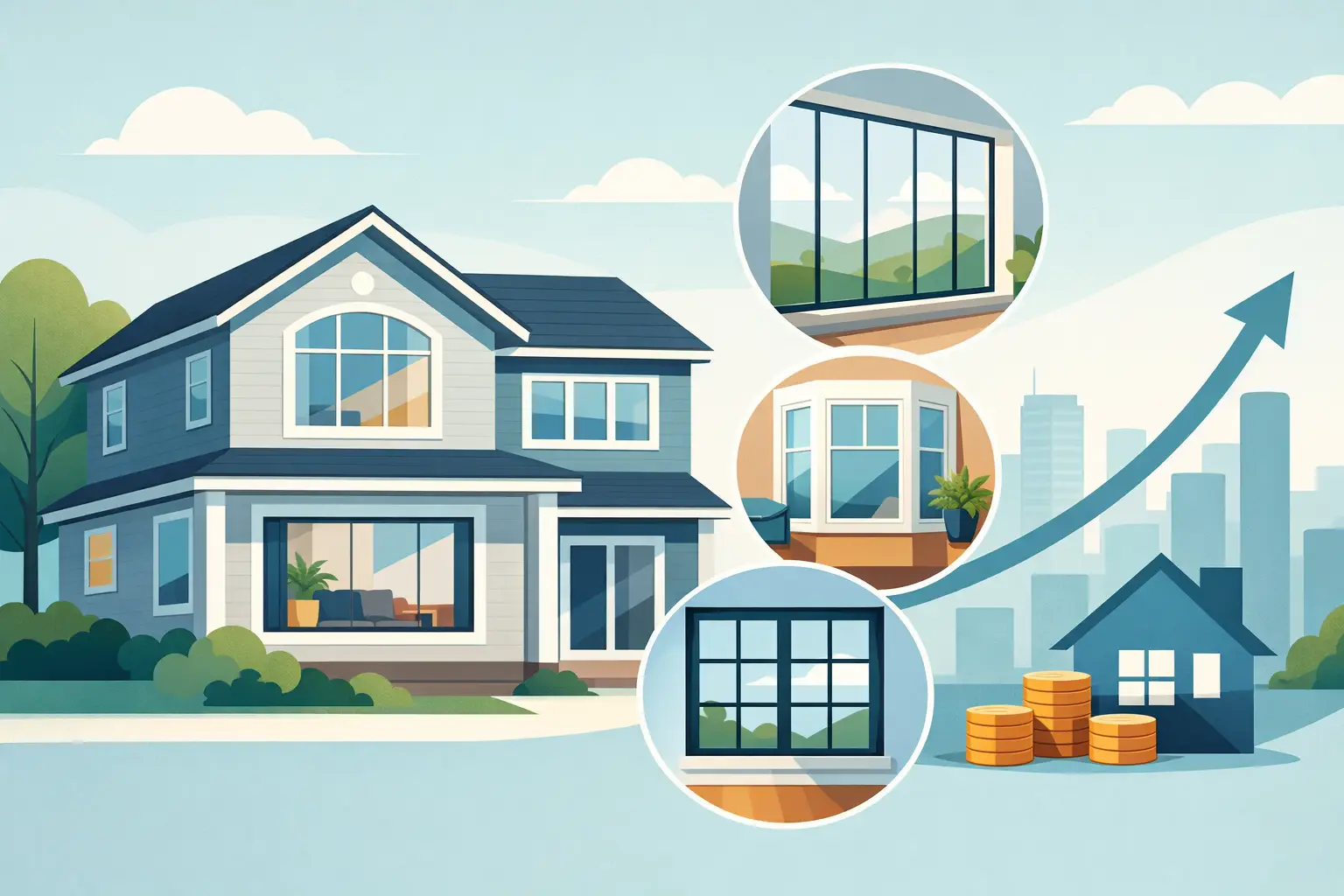
A dated front elevation can make a well-kept house feel tired before anyone steps inside. That is why homeowners often ask what windows increase home value, especially when they want better curb appeal, lower energy bills, and a stronger resale position without taking on a full exterior remodel.
The short answer is this: replacement windows that improve energy efficiency, fit the architecture of the home, and are installed properly tend to add the most value. Buyers notice comfort, quiet, appearance, and maintenance demands. Appraisers and inspectors notice condition, performance, and whether the upgrade feels like a quality improvement rather than a cosmetic patch.
What windows increase home value in real terms?
Home value does not rise because a window has a trendy name or an expensive frame. It rises when the new window solves real problems. Drafts, condensation between panes, hard operation, street noise, rotting wood, and visible wear all signal deferred maintenance. Replacing those windows can improve how the home shows, how it performs, and how much confidence a buyer has in the property.
In practical terms, the windows that usually bring the best return are energy-efficient vinyl windows, well-designed casement and picture window combinations, and replacement units that modernize the home without looking out of place. Double-pane or triple-pane glass, low-E coatings, solid weather sealing, and Energy Star compliance all matter more than decorative extras that do little for comfort or durability.
That said, value is not one-size-fits-all. A large custom picture window may be a strong selling point in a living room with a view, but it will not outperform a better-functioning bedroom window if the rest of the home still feels drafty. Buyers respond to the whole package.
The window features buyers and appraisers actually notice
Most buyers are not window experts, but they are quick to notice when windows feel solid and modern. They test locks, open sashes, look for fogging, and pay attention to outside noise. If the windows feel smooth, look clean, and make the house more comfortable, that creates value even before anyone starts comparing utility bills.
Energy efficiency is usually the first major value driver. New windows that reduce heat loss in winter and help manage solar gain in summer make monthly costs more predictable. In colder climates, that matters even more. A home with efficient windows often feels more comfortable room to room, which can influence buyer perception in a way spreadsheets do not fully capture.
Material is another key factor. Vinyl remains one of the strongest choices for value because it offers durability, low maintenance, and strong thermal performance at a reasonable price point. Wood has visual appeal, but it can bring more maintenance. Aluminum can suit some designs, yet it is often less effective for insulation unless it is a high-performance system. For many homeowners, vinyl replacement windows strike the best balance between cost and resale impact.
Glass package matters too. Double-pane insulated glass is standard in many value-adding projects, while triple-pane may make sense in colder regions, noisier neighborhoods, or homes where comfort is a major concern. The right choice depends on budget and the condition of the rest of the building envelope. Paying for the highest spec on paper does not always produce the highest return if other parts of the home still need work.
Which window styles tend to add the most value?
Casement windows are often among the best performers for home value. They seal tightly, look clean, and offer a more updated appearance than older builder-grade sliders in many homes. Homeowners also like that they are easy to operate and can provide strong ventilation.
Picture windows can add value when used in the right space. They bring in light, make rooms feel larger, and can dramatically improve curb appeal from the front of the house. On their own, they do not provide ventilation, so they are often best paired with operable windows such as casements or awnings.
Awning windows can also be a smart upgrade, especially in bathrooms, basements, and contemporary designs. They offer ventilation with good weather resistance and can help modernize the look of the home.
Double-hung windows still have strong appeal, particularly in traditional homes where buyers expect that look. They are familiar, versatile, and easy to clean in many configurations. If the home has a classic style, replacing old units with high-quality double-hung windows can preserve architectural consistency, which helps value.
Sliders can make sense in certain rooms and budgets, but not all sliders are equal. A well-built slider can perform well and look sharp. A cheap one can feel loose and dated quickly. If resale is a major goal, style should never be chosen on upfront cost alone.
What windows increase home value the fastest?
If the goal is to improve value quickly, focus first on the windows that are visibly failing or located where buyers pay the most attention. Front-facing windows, main living area windows, and large windows in kitchens or family rooms tend to shape first impressions. Replacing those can make the exterior look cared for and the interior feel brighter and more current.
But speed should not lead to a patchwork result. Replacing only a few windows can work if the project is planned carefully and the new units match the home. If styles, frame colors, grid patterns, and sightlines clash, the update can look incomplete. Buyers notice that too.
For many homes, the fastest path to added value is not luxury customization. It is a coordinated replacement plan with efficient, attractive, low-maintenance windows installed to a high standard.
Installation quality affects value as much as the window itself
This is where many homeowners lose return without realizing it. Even a high-quality window will not perform properly if it is measured poorly, installed out of square, or sealed incorrectly. Drafts, water intrusion, operational issues, and trim problems can erase the benefits of the upgrade.
Buyers may not know the technical details, but they can see sloppy caulking, uneven gaps, damaged finishes, and windows that stick. Those issues raise questions about the entire renovation. A strong installation, on the other hand, gives buyers confidence that the home has been maintained properly.
That is why a full-service process matters. Accurate measurement, product selection that matches the home, transparent pricing, and professional installation all contribute to long-term value. Companies such as ProPlas build trust by managing that process from consultation through warranty support, which reduces the risk homeowners often face with fragmented contractors and unclear accountability.
The trade-offs homeowners should think through
Not every premium window upgrade pays back equally. Black exterior frames may look sharp and appeal to current tastes, but only if they suit the home. Specialty shapes can elevate architecture, yet they also raise costs and may narrow buyer appeal if overused. Triple-pane glass can be worthwhile, but not every house needs it.
There is also the question of whether to replace all windows at once. A full-house replacement often creates the strongest visual and performance improvement. It can also simplify warranty coverage and maintain a consistent look. Still, if budget is limited, prioritizing the worst-performing windows and the most visible elevations can be a sensible phased approach.
The best value usually comes from practical upgrades that improve comfort, efficiency, and appearance without overbuilding for the neighborhood. A buyer expects quality. They do not always pay extra for features they do not understand or cannot feel.
How to choose windows with resale in mind
Start with the age and condition of your current windows. If seals have failed, frames are deteriorating, or operation is poor, replacement is easier to justify. Then consider the style of your home. A modern window can look excellent in a contemporary design and completely wrong in a traditional one.
Next, look at efficiency ratings, frame material, warranty coverage, and installer reputation. Transparent estimates matter. So do realistic timelines. Hidden costs and installation shortcuts can turn a value-building project into an expensive correction later.
If resale is on your horizon, think like a buyer. They want a home that feels comfortable, quiet, and well maintained. They want windows that look good, operate properly, and do not suggest future repair bills. That is where real value comes from.
The windows that increase home value are rarely the flashiest ones. They are the ones that make the house feel better the moment someone walks up, steps inside, and starts imagining it as home.