
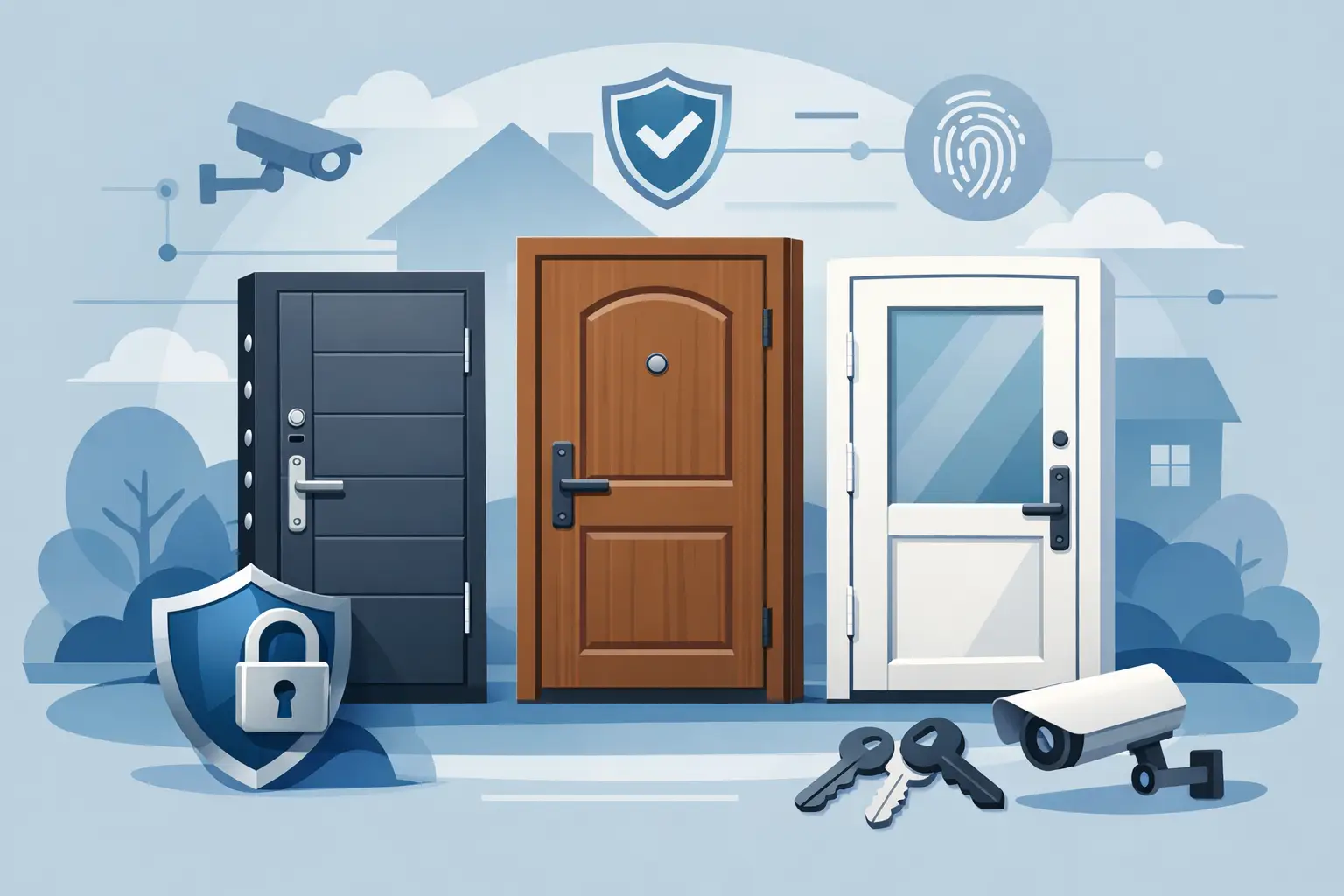
A front door can look solid and still be the weakest point on the exterior of a home. We see this often when homeowners start asking about the best doors for home security – not just which slab is strongest, but which complete door system actually holds up under force, weather, and daily use.
That distinction matters. A secure door is never just the panel itself. The material, frame, glass, lock area, hinges, strike plate, and installation quality all work together. If one part is weak, the whole system is easier to compromise. For homeowners replacing an exterior door, the right question is not simply, “Which door is strongest?” It is, “Which door gives me the best balance of security, durability, energy performance, and long-term reliability?”
What makes the best doors for home security?
The best doors for home security share a few practical traits. They resist forced entry, hold hardware securely, and stay structurally stable through seasonal temperature swings. In colder climates especially, a door that warps, shifts, or loosens over time can create security problems even if the original product looked impressive on paper.
Material is the starting point, but it is not the whole story. A well-built steel or fiberglass door with a reinforced frame and proper installation will usually outperform a poorly installed premium door. This is one reason many homeowners feel frustrated after paying for an upgrade that never delivered real peace of mind. The label sounds good, but the assembly and installation details were overlooked.
Steel doors: the strongest choice for many homes
For many properties, steel doors are the most straightforward answer. They are widely considered one of the strongest residential exterior door options because the skin resists impact better than wood or hollow-core alternatives. When paired with a solid frame, quality deadbolt preparation, and reinforced strike area, a steel entry system offers very strong protection.
Steel also makes sense for homeowners who want a practical, dependable product without unnecessary maintenance. It does not swell like wood, and it generally performs well in demanding weather when the door system is made well and installed correctly.
That said, not every steel door is equal. Gauge, internal core, edge construction, and frame quality all affect performance. A bargain product can still dent, rust in vulnerable areas, or feel less stable over time. Steel also tends to offer a more functional look than some homeowners want, although modern finishes and decorative glass options have improved that considerably.
If security is the top priority, steel is usually near the top of the list.
Fiberglass doors: strong security with better versatility
Fiberglass doors are often the better fit for homeowners who want security without sacrificing curb appeal or energy efficiency. A good fiberglass door is very durable, resists warping, and handles moisture well. It can also mimic the look of wood more convincingly than steel, which matters for homes where appearance is part of the investment.
From a security standpoint, fiberglass performs very well when the door is built around a solid structure and paired with quality hardware. It may not carry the same immediate reputation as steel for pure impact resistance, but in real-world residential applications, a premium fiberglass door system can be an excellent security choice.
This is where trade-offs matter. If someone wants the most visibly rugged option, steel may still feel more reassuring. If they want a strong, stable, low-maintenance door that also supports design flexibility and thermal performance, fiberglass often wins. For many modern homes, fiberglass offers the best all-around value.
Are wood doors good for home security?
Wood doors can be secure, but they are rarely the first recommendation when security and long-term stability are the main goals. A solid wood door is certainly stronger than a hollow interior-style slab, and high-end wood entry systems can perform well. But wood is more vulnerable to swelling, shrinking, and maintenance issues over time.
That movement matters because security depends on consistent fit. If the slab shifts seasonally or the frame starts binding, hardware alignment can suffer. Gaps can widen, locks can stop engaging cleanly, and the overall system can become less dependable.
For some historic or design-driven homes, wood still makes sense. But for most homeowners looking for the best doors for home security with lower upkeep, steel and fiberglass are more practical choices.
Sliding patio doors and security concerns
Many homeowners worry about sliding patio doors, and reasonably so. Older units have earned a bad reputation for weak locks, flexible panels, and poor resistance to forced entry. But newer systems are better than many people expect.
A quality sliding or lift-and-slide door can be secure when it includes multi-point locking, strong tempered or laminated glass, reinforced frames, and proper installation. The issue is that large glass openings naturally create different security considerations than a hinged front entry door. Visibility, lock engagement, track design, and glass specification all matter.
If a patio door replacement is part of the project, security should be discussed early, not treated as an add-on. Homeowners often focus on style and daylight first, then realize too late that the locking system or glass package was under-specified.
The frame matters as much as the door
One of the biggest misconceptions in door buying is that the slab does all the work. In reality, forced-entry resistance often depends just as much on the frame and the area around the lock.
A strong door installed in a weak, aging, or poorly anchored frame will not perform the way it should. The strike plate should be reinforced, fasteners should be long enough to reach structural framing where appropriate, and the door should close cleanly without excessive play. Hinges, latch alignment, and threshold fit also affect how secure the system feels in daily use.
This is where professional replacement has a real advantage. Security problems are often caused by installation shortcuts, misalignment, or reused components that should have been replaced as part of the full system.
Glass, sidelites, and decorative inserts
Glass does not automatically make a door insecure, but it does require more careful product selection. Decorative glass, sidelites, and large inserts can affect both privacy and security depending on placement and construction.
If glass is near the lockset, that area deserves special attention. Laminated or impact-resistant glass options may be worth considering, especially on highly exposed entries. The design should also support the level of privacy the household wants. Some homeowners prioritize light at the front entrance, while others would rather reduce visibility from outside.
There is no single rule here. A fully solid door is not always necessary. But if security is a major concern, decorative choices should be reviewed with the same seriousness as hardware and material.
Locking hardware is part of the security system
Even the best door can underperform with weak hardware. A quality deadbolt, durable handle set, and properly reinforced lock area make a major difference. Multi-point locking systems can add another layer of protection, particularly on certain door styles.
What matters most is compatibility. The lockset should suit the door construction, the frame should support secure engagement, and the installation should be precise. Hardware that looks premium but is poorly fitted will not provide the protection homeowners expect.
This is another area where cutting costs often backfires. Replacing a door is a long-term investment, and the hardware should be selected with the same mindset.
So which door is best?
If the goal is maximum security with a straightforward, durable solution, a well-made steel entry door is often the best choice. If the goal is strong security with better design flexibility, excellent energy performance, and low maintenance, fiberglass is usually the better all-around option.
The right answer depends on the home, the exposure, and the priorities of the homeowner. A busy front elevation may call for one solution, while a side or rear entry may call for another. Homes with older frames, custom openings, or decorative glass requirements need a more tailored approach.
For that reason, door replacement should never be reduced to a simple product purchase. The most secure result comes from choosing the right material, confirming the frame condition, selecting the proper glass and hardware, and making sure the installation is handled correctly from start to finish.
For homeowners who want fewer surprises, this is where working with an experienced exterior door company helps. A good process should include clear product guidance, accurate measurement, transparent pricing, proper installation, and warranty support after the job is done.
A secure door should do more than look strong on day one. It should close properly in January, lock cleanly in July, and keep performing year after year without leaving you second-guessing what was installed.