
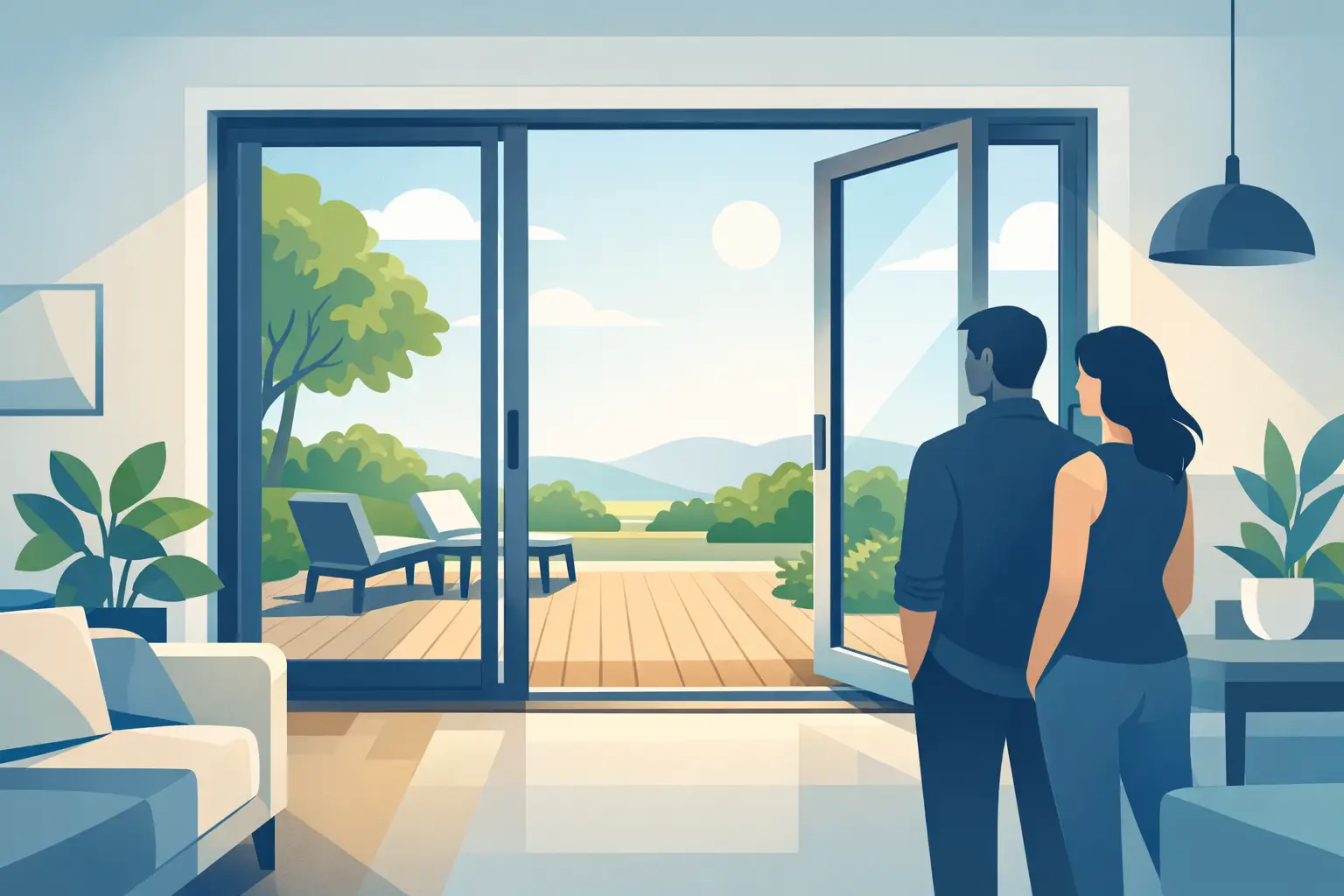
A sticking slider in January, a draft near the glass, or a door that never quite locks cleanly – these are usually the moments when patio doors move from being a design feature to a real household problem. For homeowners replacing exterior doors, the right choice is not just about looks. It affects comfort, energy efficiency, day-to-day convenience, and how well your home holds up over time.
Patio doors do a lot of work. They bring in natural light, connect indoor and outdoor living spaces, and create one of the largest glass openings in the home. That also means they need to perform under pressure. In a climate with cold winters, humid summers, and frequent temperature swings, poor-quality doors or poor installation tend to show their weaknesses fast.
Why patio doors matter more than most homeowners expect
Many replacement projects start with appearance. Homeowners want a cleaner view of the yard, an updated frame color, or a more modern style. Those are valid reasons, but they are rarely the full story. Large glass door systems can become a source of heat loss, air leakage, water intrusion, and security concerns if the product is not well made or the installation is rushed.
This is where trade-offs matter. A lower upfront price may look attractive, but it often comes with thinner frames, weaker hardware, limited customization, or short warranty coverage. On the other hand, the most expensive option is not automatically the best fit either. The right patio door depends on the size of the opening, how often the door is used, the exposure to sun and wind, and what level of performance the homeowner expects.
Sliding patio doors vs. lift-and-slide doors
For most homes, the decision starts with door type. Standard sliding patio doors remain the most common option because they are practical, space-saving, and relatively straightforward to operate. One panel slides while the other stays fixed, which makes them a strong fit for decks, backyards, and tighter layouts where a swinging door would take up valuable room.
Lift-and-slide doors serve a different purpose. They are usually chosen for larger openings and a more premium look. The mechanism lifts the panel slightly off the seals before sliding, which can improve operation and allow for larger, heavier glass sections. The result is a wider view and a more substantial feel, but it also comes at a higher cost and may not be necessary for every home.
If the goal is dependable performance and value, a well-built sliding system is often the better fit. If the goal is a larger architectural statement with expansive glass and a smoother operating feel, lift-and-slide may be worth considering. The key is not choosing the fanciest product. It is choosing the one that matches how the space will actually be used.
What to look for in quality patio doors
A patio door should feel solid when it moves. That sounds simple, but it tells you a lot. A quality system usually has better rollers, stronger frames, tighter weatherstripping, and hardware that does not feel loose or flimsy after a season or two.
Energy performance should be high on the list. Because patio doors contain so much glass, the glass package matters as much as the frame. Homeowners should pay attention to Energy Star compliance, insulated glass options, and overall sealing performance. In colder regions, this can have a direct effect on comfort near the door, especially in rooms where people spend a lot of time.
Security is another area where details matter. A large glass opening should not mean a weak point in the home. Multi-point locking systems, strong handles, and well-constructed frames all contribute to better security. Some homeowners focus only on the glass, but the locking hardware and installation quality are often just as important.
Then there is durability. Vinyl remains a popular frame material because it is low maintenance and performs well in varied weather. The right manufacturing quality makes a big difference here. Not all vinyl doors are built to the same standard, and that is why recognized manufacturers and clear warranty terms carry real value.
The installation matters as much as the product
A high-quality door installed poorly can still leak air, bind during operation, or fail early. That is one of the biggest frustrations homeowners face with replacement projects. They choose a decent product, but the measuring is off, the opening is not properly prepared, or the finishing work is rushed.
Patio doors need precise measurement and careful installation because the opening is large and the system has moving parts. If the frame is not level, square, and properly sealed, performance suffers. You may notice drafts, moisture issues, or a door that becomes harder to slide over time.
This is also why transparent quoting matters. A proper project should account for removal, installation, insulation, finishing, and disposal if needed. Hidden costs usually appear when these details were never clearly discussed in the first place. Homeowners are right to be cautious here.
An experienced contractor should be able to explain what is included, what customization options are available, how long the work will take, and what kind of warranty support is offered after installation. That level of clarity reduces surprises and usually leads to better results.
Common concerns homeowners have about patio doors
One common concern is whether bigger glass means worse efficiency. Sometimes it can, but not always. A modern, energy-efficient patio door with the right glass and a proper installation can perform very well. Older doors are often the real problem, especially if seals have failed or the frame has shifted over time.
Another concern is maintenance. Homeowners often want a door that looks good without requiring constant upkeep. Sliding systems are generally easier to live with than many people expect, provided the tracks are kept reasonably clean and the hardware is built to last. A cheap unit tends to create maintenance headaches much faster than a quality one.
Security also comes up often, especially for rear entrances. That concern is reasonable. The answer is not to avoid patio doors. It is to choose a system with dependable locking hardware, solid construction, and professional installation.
There is also the issue of timing. Many homeowners delay replacement because they assume the process will drag on for weeks or become disruptive. In reality, a well-managed replacement should feel organized, predictable, and much less stressful than people fear. Good planning makes a noticeable difference.
How to choose the right patio doors for your home
Start with the opening you have and the way you use the space. If this is the main route to the backyard and the door opens multiple times a day, smooth operation and durability should lead the conversation. If the opening faces strong sun exposure, glass performance becomes more important. If appearance is a major priority, frame finishes and sightlines may matter just as much as the mechanics.
It also helps to think long term. A patio door is not a cosmetic purchase alone. It is part of the building envelope, and it should support comfort, efficiency, and resale value over many years. That is why homeowners often do better with customized solutions rather than off-the-shelf assumptions.
For many households, the best experience comes from working with a company that handles the full process – measurement, product selection, customization, installation, and warranty support. That reduces the risk of miscommunication between separate suppliers and installers. It also gives the homeowner one accountable point of contact.
ProPlas works with homeowners who want exactly that: a clear process, recognized products, professional installation, and support that does not disappear after the job is done. For a purchase this visible and this functional, peace of mind is part of the value.
The right patio door should feel easy to use, look right in the home, and perform well when the weather turns. If you are replacing one, it is worth slowing down long enough to choose based on performance and installation quality, not just price or appearance. A good door disappears into daily life in the best possible way – it works every time, keeps the house comfortable, and gives you one less thing to worry about.