
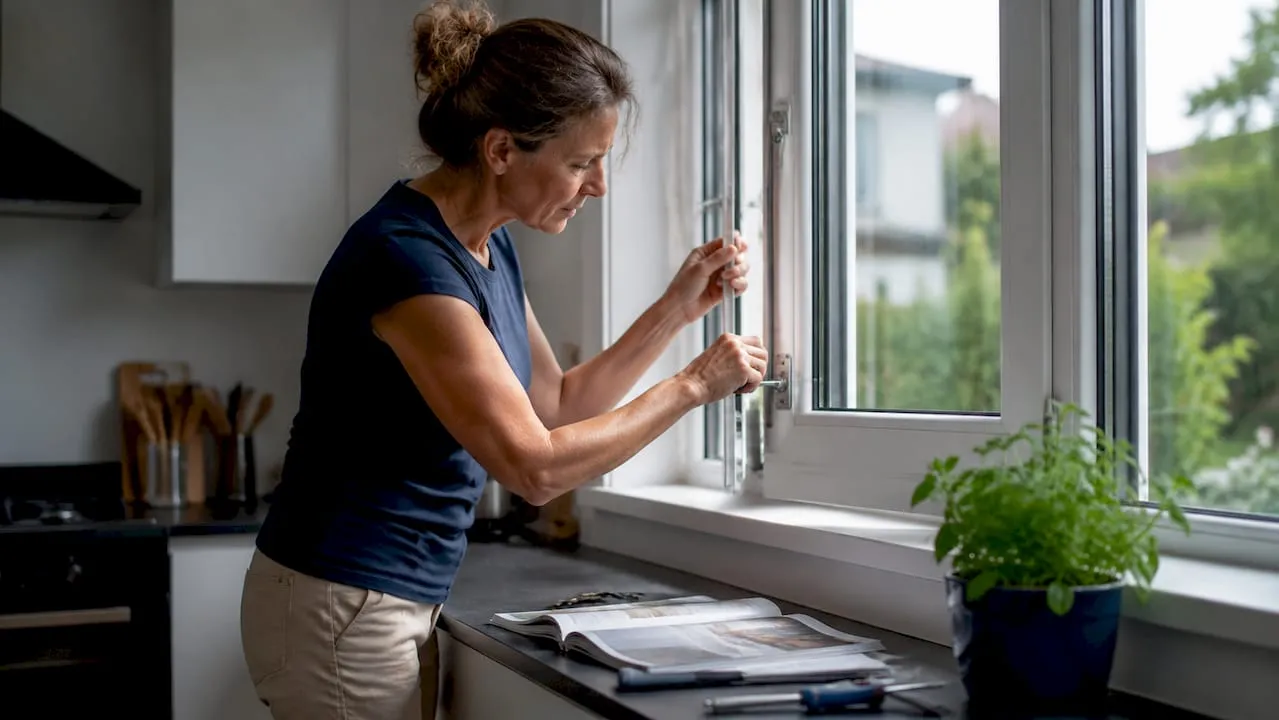
A newly installed window should open, close, lock, and seal properly. However, houses and window assemblies are not perfectly static. Small changes in temperature, normal settling, hardware positioning, or sash alignment can sometimes make a new window feel different after installation.
That does not automatically mean the window was installed incorrectly. Many common operating issues can be corrected with a straightforward adjustment.
What window adjustment means
Window adjustment is the process of fine-tuning the moving parts of an installed window so the sash operates and seals as intended.
Depending on the window style, an installer may be able to adjust:
- hinges
- keepers and locks
- rollers
- operating hardware
- sash position
- contact between the sash and weatherstripping
The goal is not to force the window into place. A proper adjustment restores smooth operation while maintaining an even seal.
Signs a window may need adjustment
Common symptoms include:
- a sash that rubs slightly when opening or closing
- a lock that suddenly requires more force
- a casement window that does not pull evenly against the frame
- a slider that feels noticeably tighter on one side
- weatherstripping that does not appear to make even contact
- a window that operated properly immediately after installation but has become slightly harder to use
These symptoms should be assessed before they become more pronounced.
What adjustment cannot fix
Adjustment is useful only when the basic installation and window assembly are sound.
It will not correct problems such as:
- an incorrectly sized opening
- a badly distorted frame
- significant water intrusion
- missing or failed exterior sealing
- damaged insulated glass
- defective components
- serious structural movement
If a window is visibly out of square, leaking, or showing signs of installation failure, the problem requires diagnosis rather than repeated hardware adjustment.
Avoid forcing the hardware
A common mistake is continuing to force a stiff lock or operator.
Window hardware is designed to move within a particular alignment. Excessive force can damage handles, gears, keepers, hinges, or weatherstripping and can turn a small adjustment into a repair.
If operation changes noticeably, stop forcing the window and have the cause checked.
Seasonal changes can affect operation
Window materials and building components expand and contract as temperature and humidity change.
A window that feels slightly different between summer and winter does not necessarily have a defect. What matters is whether it continues to close, lock, drain, and seal properly.
Repeated or severe changes deserve investigation.
Check the simple things first
Before assuming the installation has failed, look for obvious causes:
- debris in the track
- an obstruction near the sash
- loose visible hardware
- a screen interfering with operation
- dirt around weatherstripping
- a lock being operated before the sash is fully closed
Do not dismantle hardware or alter the frame if the window is still under product or workmanship coverage.
When to contact the installer
Contact the installer when:
- a new window becomes difficult to operate
- a lock will not engage properly
- the sash does not appear to sit evenly
- drafts are noticeable around an operable sash
- hardware repeatedly comes out of alignment
- an adjustment does not remain stable
Early correction is usually easier than waiting until hardware or seals are damaged.
Keep a record
If the problem develops after installation, take a few clear photographs or a short video showing the issue.
Record:
- which window is affected
- when the problem started
- whether it changes with temperature
- whether the issue concerns opening, closing, locking, or sealing
That information makes troubleshooting much faster.
Final point
A good replacement window should operate smoothly and consistently. Minor adjustment can be a normal part of fine-tuning an installed window, but persistent problems should not simply be accepted.
If a recently installed window is difficult to operate or does not appear to seal correctly, have the condition assessed before forcing or modifying the hardware.
For information about replacement-window installation, see the window installation guide. For project questions, contact us.