

Documenting window issues for a warranty claim means gathering precise, organised evidence that proves a defect exists, that it was reported promptly, and that the manufacturer or contractor is responsible for fixing it. Without this evidence, even a genuine defect can result in a denied claim. Manufacturers rely heavily on detailed documentation for claims assessment, and without clear proofs like photos and repair orders, claims are frequently denied regardless of defect validity. This guide walks you through exactly what to collect, how to organise it, and how to communicate effectively with manufacturers and contractors.
What documentation is essential for a window warranty claim?
A complete warranty claim package includes several distinct types of evidence. Each one serves a specific purpose in proving your case.
Repair orders and service reports
Repair orders are the backbone of any warranty claim. Every visit from a technician or installer must produce a written report that includes the date, the technician’s name, a description of the defect, and the work performed. Every repair order must be collected, including reports where the technician found no problem. A “no problem found” report is not a setback. It is evidence that you made a reasonable repair attempt, which strengthens your claim.
Photos, videos, and installation evidence
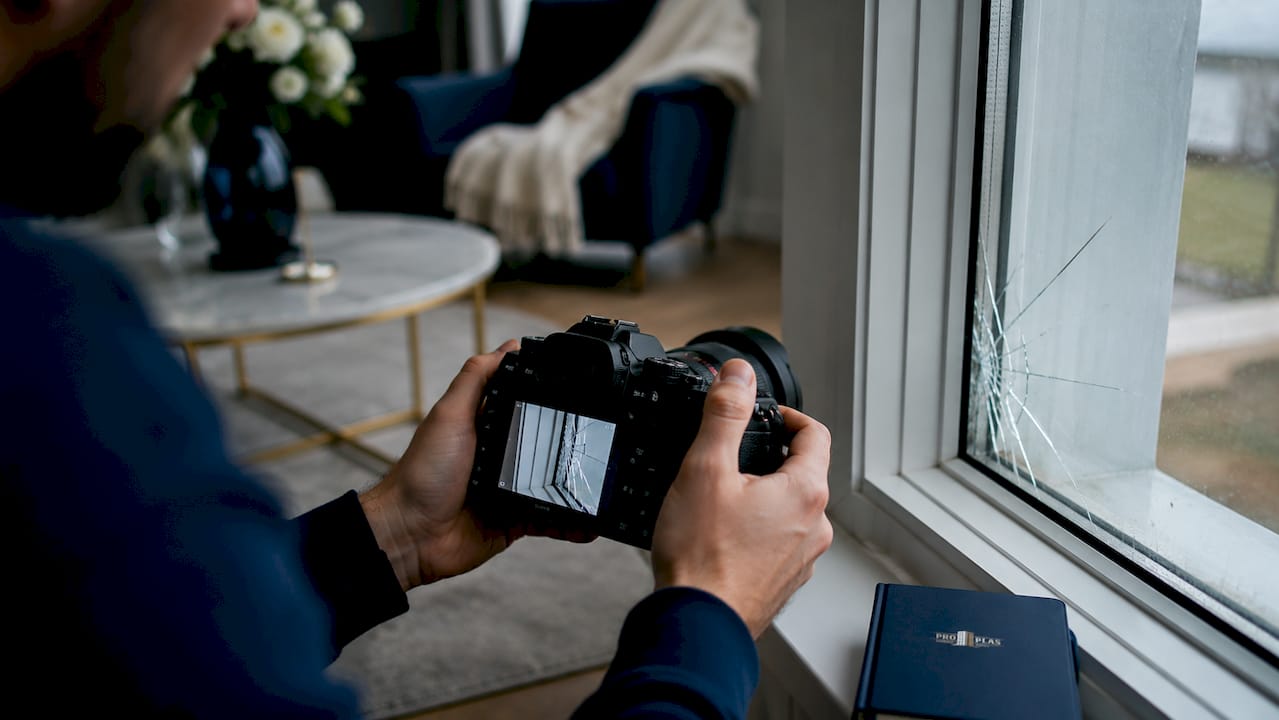
Photographic evidence must be specific and timestamped. Capture the defect itself, the surrounding frame, the flashing, and the seal condition. Flashing installation is the most frequent failure point in window warranty disputes, and manufacturers require proof of approved flashing products to honour claims. Photos showing proper frame squareness and flashing compliance directly counter manufacturer arguments that installation stress caused the failure.
Proof of purchase alternatives
A lost invoice does not end your claim. Physical invoices are not mandatory for warranty enforcement when alternative proofs like bank statements or manufacturer registration logs prove ownership and purchase date. Consumer laws often accept these alternatives to enforce warranty rights. Keep your bank statement, email confirmation, or online product registration as a backup.
Communication logs and maintenance records
Every phone call, email, and text message with your installer or manufacturer belongs in your file. Note the date, the person you spoke with, and a summary of what was discussed. Manufacturers also require maintenance records to prove the failure was not caused by owner neglect. A simple log showing regular cleaning and minor adjustments can prevent a denial based on alleged misuse.
Pro Tip: Create a dedicated folder on your phone or computer labelled with your window brand and installation date. Drop every photo, email, and document into it immediately. Waiting until you file the claim means you will miss things.
Step-by-step process for filing your window warranty claim
Follow these steps from the moment you notice a problem to the day you submit your claim package.
-
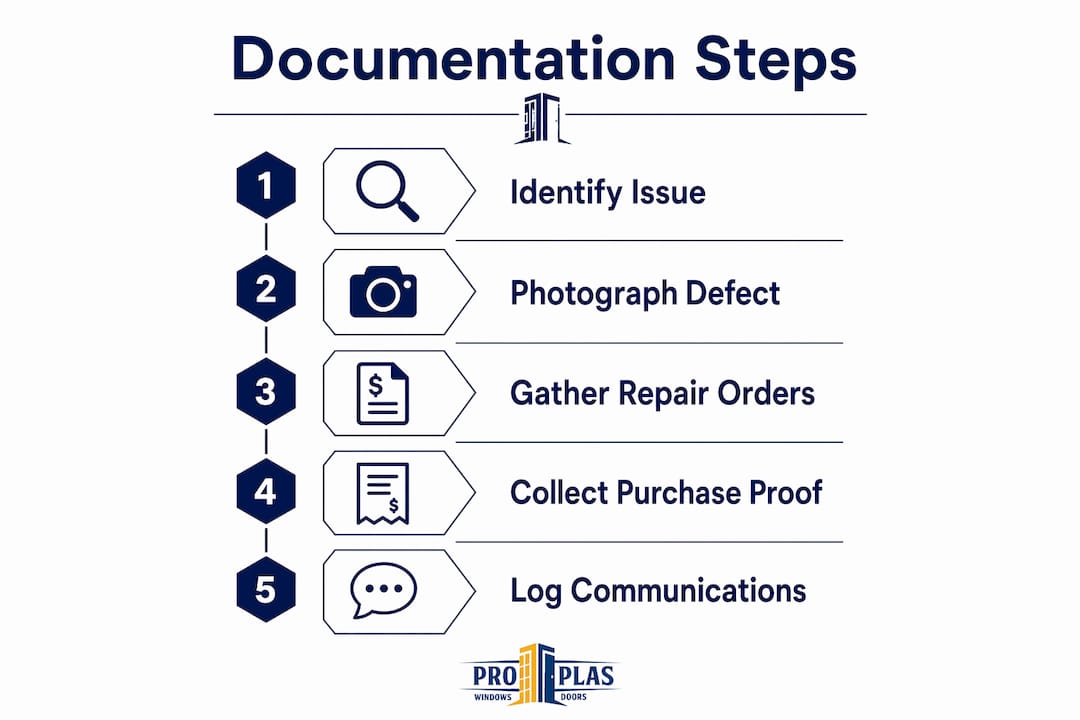
Photograph and record the defect immediately. Take timestamped photos and a short video the day you notice the issue. Capture the defect from multiple angles, including a wide shot showing the full window and a close-up of the specific problem area.
-
Contact your installer or manufacturer in writing. Send an email or use the manufacturer’s official portal to report the defect. A clear written complaint describing the defect, supported with photos and a request for inspection, is the foundation of warranty compliance. Keep the message concise: state the location, describe the defect, and request an inspection date.
-
Request a written repair order after every visit. Do not let a technician leave without giving you a signed, dated report. This applies even when the technician says everything looks fine. Collecting every repair order, including “no problem found” reports, demonstrates a clear pattern of reasonable repair attempts.
-
Send a formal written demand if repairs stall. Under the Magnuson-Moss Warranty Act, a formal written demand specifying the defect and repair history is a legal prerequisite before pursuing warranty litigation. Even outside the United States, a written demand letter creates a paper trail that shows you acted in good faith.
-
Organise all documents chronologically. Arrange your photos, repair orders, communication logs, and maintenance records by date. This creates a clear timeline that reviewers can follow without confusion.
-
Build a proof packet. A comprehensive proof packet aligns defect photos, repair orders, maintenance logs, and communication records around specific events. Tie each document to the specific defect it supports. Label each file clearly, for example: “2026-03-15 seal failure photo” or “2026-04-02 technician report no defect found.”
Pro Tip: Before submitting, read your warranty document and check for any specific submission requirements, such as a claim form, a required channel like a web portal, or a deadline. Missing a procedural step can delay or void an otherwise solid claim.
For more on what to prepare before installation to avoid these issues later, Proplas has a useful guide on preparing for window installation.
What are the most common warranty claim documentation errors?
Most denied claims share the same preventable mistakes. Recognising them before you file saves significant time and frustration.
-
Vague defect descriptions. Writing “the window is acting weird” gives a reviewer nothing to work with. Describe the defect precisely: “the double-pane seal on the south-facing bedroom window shows interior fogging consistent with argon gas loss.” Manufacturers scrutinize seal failure claims for installation stress, so specificity matters.
-
Missing or incomplete repair orders. A repair order without a date, a technician’s name, or a diagnosis is nearly useless. Common documentation gaps include missing before and after photos, unclear service steps, incomplete parts notes, and missing sign-off. Confirm every field is filled in before the technician leaves.
-
No proof of installation compliance. Manufacturers can deny claims if they suspect improper installation caused the defect. Deviations from a manufacturer’s installation manual create warranty loopholes. Photograph the flashing, the frame alignment, and the sealing during or immediately after installation. If you did not do this at the time, ask your installer for their installation photos or compliance checklist.
-
No maintenance records. Homeowners often neglect to keep maintenance records, which manufacturers require to prove failure was not caused by owner neglect. Even a simple dated note saying “cleaned tracks and lubricated hardware” counts as evidence.
-
Missing statutory deadlines. Statutory warranties commonly have strict time limits, such as 6 years for major defects like water ingress and 2 years for minor defects. Missing these deadlines can void a claim even when the defect is genuine. Check your jurisdiction’s rules and your warranty document as soon as a problem appears.
How should you communicate with manufacturers or contractors?
Effective communication during a warranty claim is as important as the documents themselves. Disorganised or delayed communication gives manufacturers grounds to question whether you reported the issue promptly.
-
Report the defect in writing within days of noticing it. A phone call is not enough. Follow up every verbal conversation with a written summary sent by email. This creates a timestamped record that the issue was reported promptly.
-
Include four elements in every written complaint. State the window’s location in the home, describe the defect precisely, attach your photos, and request a specific inspection date. A clear initial communication describing the defect, supported with photos and a request for inspection, is the standard manufacturers expect.
-
Set a response deadline in your follow-up messages. If you do not receive a reply within 10 business days, send a follow-up that references your original message and sets a new deadline. This shows persistence and creates a documented record of delays on the manufacturer’s side.
-
Use official channels. Submit claims through the manufacturer’s official portal or the address listed in your warranty document. Unofficial channels like social media messages or calls to a general sales line may not be tracked in the manufacturer’s claims system.
-
Escalate in writing when needed. If inspections stall or repairs are refused, send a formal written demand. Reference the specific warranty clause, list every repair attempt with dates, and state the resolution you expect. If the dispute continues, consider requesting an independent expert report or consulting a consumer protection agency.
Proplas explains the full scope of warranty replacement paperwork on their website, which is a practical reference for understanding what manufacturers typically require.
Key takeaways
Successful warranty claims depend on thorough, organised documentation collected from the moment a defect appears, not after a claim is denied.
| Point | Details |
|---|---|
| Start documenting immediately | Timestamped photos and videos taken on the day of discovery are the strongest evidence. |
| Collect every repair order | Even “no problem found” reports prove you made reasonable repair attempts. |
| Prove installation compliance | Photos of flashing and frame alignment counter manufacturer claims of improper installation. |
| Keep maintenance records | Dated cleaning and adjustment logs prevent denials based on alleged owner neglect. |
| Respect statutory deadlines | Major defects like water ingress may have a 6-year claim window; missing it voids the claim. |
What 25 years of warranty claims has taught us at Proplas
After working with over 10,000 homeowners, the pattern is consistent. The claims that succeed are not always the ones with the most severe defects. They are the ones with the clearest paper trails.
The most common misconception we see is that a warranty is a guarantee of automatic coverage. It is not. A warranty is a contract, and like any contract, it requires you to meet specific conditions. Reporting promptly, documenting thoroughly, and following the manufacturer’s process are your obligations under that contract.
Homeowners sometimes feel that asking for written repair orders or sending formal demand letters is confrontational. It is not. It is professional. Manufacturers and contractors expect it from informed customers, and it signals that you understand your rights.
One piece of advice that rarely appears in guides: photograph your windows during installation, not just after a problem develops. Frame alignment, flashing placement, and sealing quality are nearly impossible to verify after the fact. That installation-day photo can be the single document that resolves a dispute in your favour.
If a claim is denied and you believe it is unjust, do not stop at the first refusal. Request the specific reason for denial in writing, address each point with your documentation, and resubmit. Persistence, backed by organised records, is what separates resolved claims from abandoned ones.
— Proplas
Proplas windows: built with warranty support in mind
Proplas has spent 25 years helping homeowners across Toronto and the GTA get windows installed correctly the first time, which is the most effective way to avoid warranty disputes entirely.

Every Proplas installation comes with a lifetime warranty and transparent documentation from day one. Whether you are interested in picture windows, casement windows, or double hung windows, each product is Energy Star certified and installed by trained professionals who follow manufacturer specifications precisely. If you are currently dealing with a warranty issue or planning a new installation, contact Proplas for a consultation. We will walk you through the process clearly, with no hidden fees and no bureaucratic delays.
FAQ
What documents do I need for a window warranty claim?
You need timestamped photos of the defect, all repair orders including “no problem found” reports, proof of purchase or an alternative like a bank statement, a communication log, and maintenance records. Together, these form a complete claim package.
Can I file a warranty claim without the original invoice?
Yes. Physical invoices are not mandatory for warranty enforcement when alternative proofs like bank statements or manufacturer registration logs confirm ownership and purchase date. Consumer protection laws in most Canadian provinces accept these alternatives.
What happens if I miss the warranty claim deadline?
Missing a statutory deadline can void your claim even if the defect is genuine. Major defects like water ingress may carry a 6-year claim window in some jurisdictions, while minor defects may have a shorter period. Check your warranty document and local consumer protection rules as soon as a problem appears.
Why do manufacturers deny window warranty claims?
Manufacturers most often deny claims due to vague defect descriptions, missing repair orders, lack of installation compliance proof, or no maintenance records. Documenting installation details like flashing and frame alignment at the time of installation prevents many of these denials.
What is a proof packet and do I need one?
A proof packet is an organised file that ties your defect photos, repair orders, maintenance logs, and communication records to specific events in chronological order. Building one reduces review friction and significantly increases the likelihood that a manufacturer approves your claim on the first submission.