
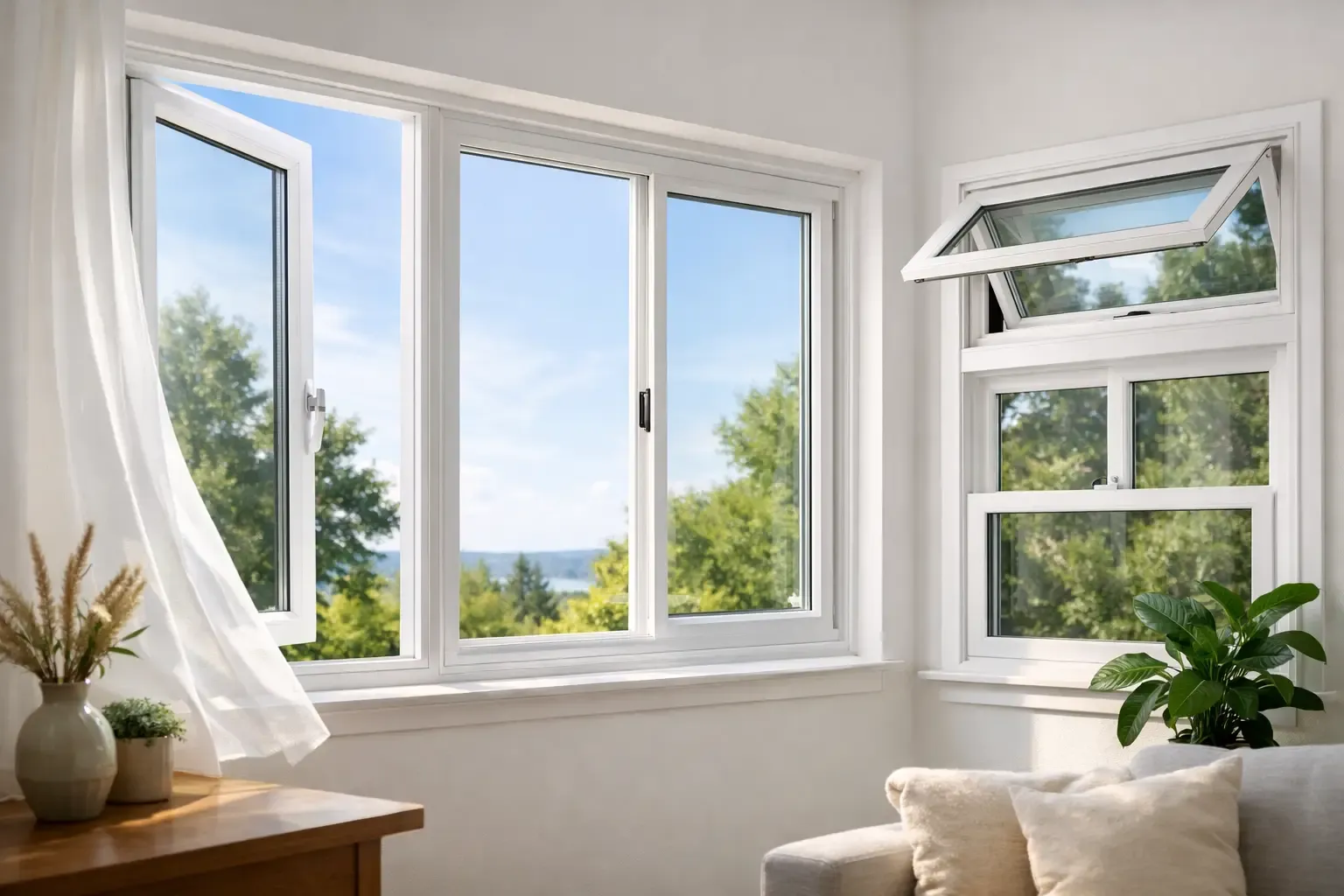
A room that always feels stuffy usually has less to do with square footage and more to do with how the windows work. Choosing the best window styles for ventilation can make a noticeable difference in comfort, moisture control, and even how hard your cooling system has to work in summer. The right style helps fresh air move where you need it, instead of giving you a window that technically opens but never really improves airflow.
For homeowners replacing windows, this matters more than people expect. Ventilation affects kitchens that trap cooking odors, upstairs bedrooms that overheat at night, bathrooms that hold humidity, and basements that need help feeling less damp. Good airflow is not just about comfort. It also supports indoor air quality and helps reduce condensation issues that can wear on a home over time.
What makes a window good for ventilation?
A ventilating window needs to do more than open. It should catch air effectively, direct it into the room, and give you enough opening area to create real circulation. That is why two windows with the same size rough opening can perform very differently.
The angle of the sash plays a big role. Some windows swing outward and act almost like a scoop, pulling breezes into the house. Others slide only halfway and create a smaller opening. Placement matters too. A great ventilating window in the wrong room may still underperform if there is no cross-breeze or if the opening is blocked by landscaping, decks, or tight side-yard spacing.
That is also where many homeowners run into a trade-off. The windows that ventilate best are not always the cheapest style, and the styles that look simplest on paper may not be the most effective in real daily use.
Best window styles for ventilation in most homes
Casement windows
Casement windows are often the strongest choice when airflow is the priority. Because they hinge at the side and swing outward, the open sash can catch passing air and direct it indoors. In practical terms, that usually means better ventilation than a sliding or hung window of the same size.
They also open almost fully, which gives you more usable opening area. That is especially helpful in bedrooms, living rooms, and spaces where homeowners want a noticeable breeze rather than just a little air movement.
The trade-off is clearance. Since the sash swings outward, casement windows are not always ideal where there are walkways, tight exterior spaces, or areas exposed to frequent contact. They also rely on hardware and crank mechanisms, so product quality and installation standards matter.
Awning windows
Awning windows hinge at the top and open outward from the bottom. They are excellent for controlled ventilation and work particularly well in bathrooms, basements, and kitchens. One major advantage is that they can often stay open during light rain because the sash helps shield the opening.
That makes them a practical option in Southern Ontario, where weather can change quickly and homeowners do not always want to rush around closing windows. Awning windows also pair well with larger fixed glass units when you want natural light and airflow in the same opening.
Their limitation is scale. Awning windows are usually better for targeted ventilation than for moving large volumes of air through a big room. They are effective, but often as part of a broader window layout rather than as the only opening in a large space.
Double hung windows
Double hung windows remain popular because they fit many home styles and are familiar to most homeowners. Both sashes can move, which helps create airflow by allowing warm air to exit through the top opening while cooler air enters from the bottom.
That top-and-bottom operation is useful in bedrooms and second-story rooms where heat tends to build up. Double hung windows also work well where an outward-swinging sash would be impractical.
Still, from a pure ventilation standpoint, they do not usually outperform casement windows. Only part of the total window area is open at one time, so the airflow is more moderate. If your main goal is maximum breeze, a double hung window is often a good compromise rather than the top performer.
Sliding windows
Sliding windows are simple, durable, and easy to use. They are common in contemporary homes, basements, and spaces with limited exterior clearance because the sash moves horizontally instead of swinging outward.
For ventilation, they are dependable but not usually the strongest option. In most slider designs, only one side opens at a time, which means only about half the unit provides active ventilation. That can be enough for many rooms, but it is not ideal if airflow is a top concern.
Where sliders do make sense is in wide openings. A large slider over a sink or in a basement can still provide practical daily ventilation with low-maintenance operation. They are often chosen because they balance function, cost, and convenience.
Which window style is best for each room?
There is no single answer for the whole house because ventilation needs change by room.
In kitchens, casement and awning windows tend to perform well. A casement window can bring in strong airflow near cooking areas, while an awning window over a sink is often easier to operate and works better in rainy weather.
In bathrooms, awning windows are usually one of the smartest choices. They offer privacy, controlled airflow, and better moisture management. If the bathroom layout allows it, a compact casement can also work very well.
In bedrooms, casement windows are often the best fit for homeowners who want maximum fresh air and comfort at night. Double hung windows are also a strong option, especially in traditional homes where appearance matters alongside function.
In basements, sliders and awning windows are common because they fit lower wall heights and limited exterior clearance. Here, the best choice often depends on the size of the opening and whether security, ease of operation, or moisture control is the bigger priority.
Ventilation is not just about window style
Even the best window styles for ventilation will underperform if the overall layout is working against them. Cross-ventilation matters. When windows are positioned on opposite or adjacent walls, air can move through the home instead of collecting in one area.
Window size and placement also affect results. A small operable unit high on the wall may help release heat, while a larger lower window can bring in cooler air. In many homes, a mix of fixed and operable windows creates the best balance between ventilation, energy efficiency, and curb appeal.
This is where professional planning matters. Homeowners often focus on replacing existing windows with the same style, even when the original layout was never ideal. In some cases, upgrading from sliders to casements in key rooms can improve comfort far more than people expect.
How to choose the right option for your home
Start with the problem you are trying to solve. If a room feels stale, you likely need a window that opens wider and catches more air, which points toward casement. If moisture is the issue, as in bathrooms or basements, awning windows may offer better day-to-day control. If you need a practical, cost-conscious choice for a standard opening, double hung or sliding windows may still be the right fit.
Also think about operation. A window that ventilates well on paper still has to be easy to open, easy to clean, and realistic for the location. Over a kitchen sink, for example, a crank-operated casement or awning window is often more convenient than a hung window. In a narrow side yard, an outward-opening sash may not be ideal.
Energy performance should stay part of the conversation too. Good ventilation and strong insulation are not competing goals. In a proper replacement project, you should expect both. Appropriately rated windows with careful installation can help you improve airflow without creating drafts, leaks, or winter comfort issues.
That is why many homeowners benefit from a full assessment rather than choosing by style name alone. A dependable installer will explain the pros, limitations, and pricing clearly, then recommend options based on how your home actually functions.
If your current windows barely open, stick, leak, or leave rooms uncomfortable season after season, it may be time to look beyond appearance and focus on performance. The best choice is usually the one that fits your room, your airflow needs, and your long-term expectations for comfort. When windows are selected with that in mind, fresh air stops being a small bonus and becomes part of how your home works every day.