
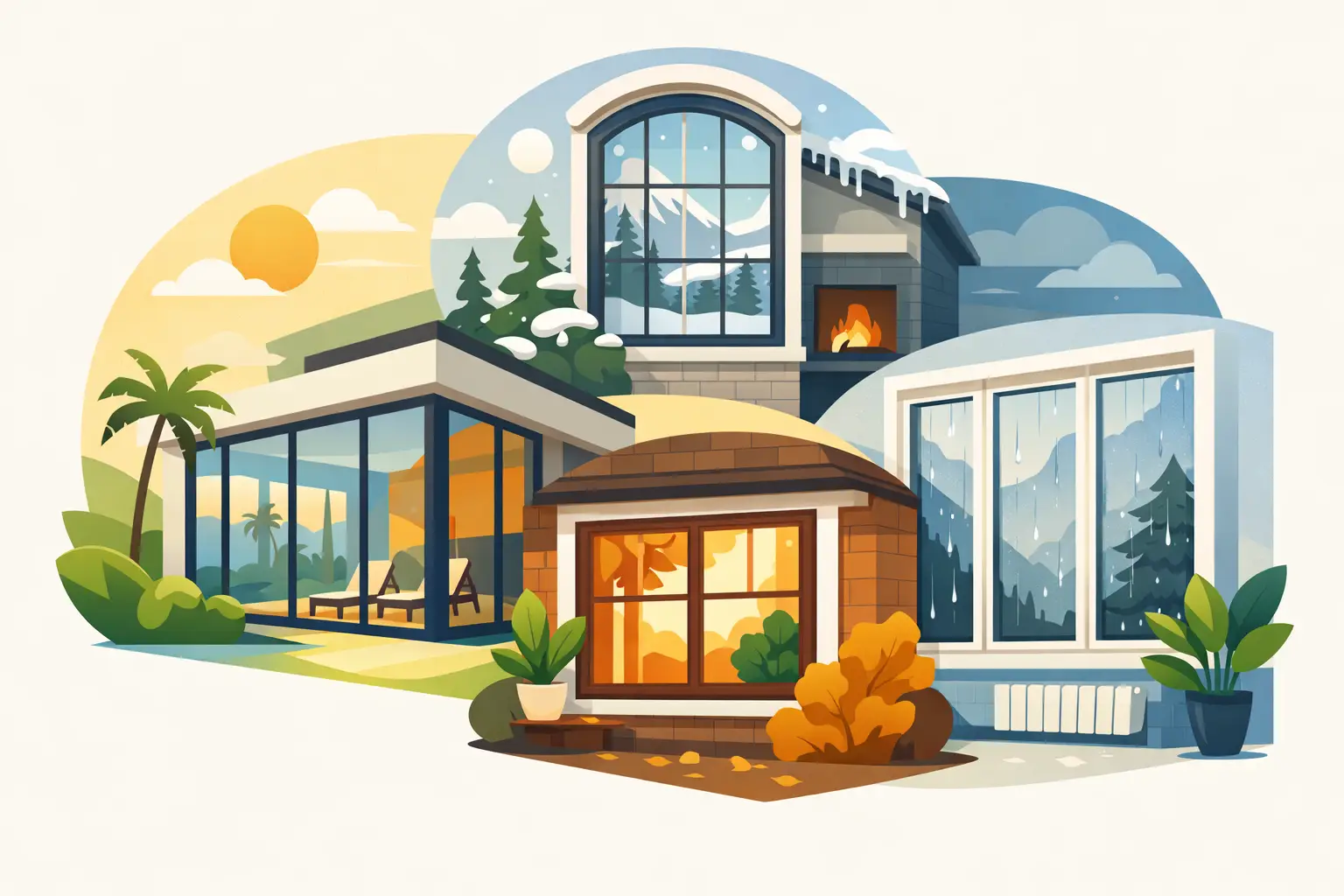
A window can look fine from the street and still be the reason a room feels cold in January, overheated in July, or difficult to keep quiet. For homeowners replacing aging units, custom windows are not simply about choosing a color or grille pattern. They are about getting the right fit, performance, operation, and installation details for the way your home is built.
That matters in Toronto, the GTA, Simcoe Region, and across Southern Ontario, where homes must handle cold winters, humid summers, wind-driven rain, and wide temperature swings. A standard-size product may appear less expensive at first, but it can create compromises around fit, insulation, sightlines, or design. A properly planned custom replacement addresses the whole opening, not just the glass.
What Custom Windows Actually Mean
Custom does not have to mean complicated or extravagant. In most replacement projects, it means each window is measured and made to suit the existing opening, while you select the style, operating configuration, frame finish, glass package, grille design, and hardware that work for your home.
The measurement stage is especially important. Older homes rarely have perfectly uniform openings. Settling, past renovations, brickwork, trim, and framing variations can all affect what will fit correctly. Ordering from rough assumptions can leave installers trying to solve gaps and alignment issues on installation day. Accurate field measurements help ensure the window is square, secure, weather-tight, and finished cleanly inside and out.
Customization also allows homeowners to preserve the character of the property. A traditional brick home may need divided-lite grilles and proportional sightlines. A contemporary renovation may call for cleaner frame lines, larger glass areas, or a specialty shape. The goal is not to add options for their own sake. It is to choose details that improve comfort and appearance without sacrificing long-term performance.
Start With How Each Room Needs to Work
The best window style depends on location. Before comparing finishes or glass options, consider ventilation, access, room layout, safety, and the view from each opening.
Casement windows are a practical choice where strong ventilation and a tight seal matter. Their hinged sash opens outward with a crank, allowing them to catch breezes from the side. They work well in kitchens, bedrooms, and living areas, but exterior clearance must be considered near walkways, decks, and landscaping.
Awning windows hinge at the top and open outward from the bottom. They are often useful in bathrooms, basements, and locations where you want ventilation even during light rain. A fixed casement or picture window is a strong option when natural light and an unobstructed view are the priority, but ventilation is not required.
For openings where an outward-swinging sash is inconvenient, single-hung, double-hung, single-slider, double-slider, and end-vent slider windows can make sense. These designs can be particularly useful in rooms facing patios, porches, or narrow side yards. Double-hung units offer more flexible ventilation, while slider configurations can suit wide openings and more contemporary elevations.
Specialty shape windows deserve the same planning as standard rectangular units. Arches, circles, triangles, and custom combinations can transform a front elevation or stairwell, yet they must be designed with the surrounding trim, masonry, and adjacent windows in mind. A striking shape that is poorly proportioned can look like an afterthought. One that follows the home’s architectural lines can make the entire exterior feel more finished.
Choose Glass for Comfort, Not Just Appearance
The glass package has a major effect on indoor comfort and energy use. Two windows can look almost identical while performing very differently in a Canadian climate.
For most replacement projects, insulated glass with low-emissivity coatings is a sensible starting point. Low-E coatings help manage heat transfer through the glass, keeping more heat indoors during winter and reducing unwanted solar heat gain during warmer months. Argon-filled units and warm-edge spacer systems can further support efficiency by improving the insulating performance of the sealed glass unit.
The right glass choice depends on orientation. A large south- or west-facing window may benefit from glass designed to control solar heat, particularly if the room becomes uncomfortable in the afternoon. A shaded north-facing room may have different priorities. Bedrooms near busy roads, rail lines, or active neighborhoods may also benefit from an upgraded glass configuration intended to reduce exterior noise.
There are trade-offs. More aggressive solar-control glass can reduce heat gain, but it may also slightly change the amount or quality of daylight entering the room. Triple-pane glass can improve thermal performance and comfort in certain applications, but it adds weight and cost. A trustworthy recommendation should explain where an upgrade is likely to provide real value and where a standard energy-efficient configuration is enough.
Look for products that meet recognized energy performance standards, including Energy Star requirements where applicable. Ratings are helpful, but they should not be viewed in isolation. A highly rated window still depends on correct sizing, proper flashing or sealing methods, and careful installation.
Frame Color, Grilles, and Hardware Should Support the Home
Exterior color can have a bigger effect than many homeowners expect. White frames remain a practical, classic option for many homes, while black, dark brown, and custom exterior finishes can create a more defined contrast against brick, stone, siding, or stucco. The best choice is usually one that relates to existing elements such as the roof, front door, eaves, or garage door rather than following a short-lived trend.
Grilles should be selected with restraint. Colonial-style patterns can complement traditional homes, while prairie or perimeter grille layouts may suit a more transitional design. On a modern home with clean lines, no grille pattern may be the right answer. Consistency matters across front-facing openings. Mixing unrelated grille styles can make even quality windows look mismatched.
Hardware is also more than a finishing touch. It affects day-to-day use, especially on large casements and hard-to-reach windows. Ask to see how locks, cranks, and screens operate before finalizing the order. A window that looks excellent but is frustrating to open will not feel like an upgrade.
Why Installation Is Part of the Custom Window Decision
Even the best-made custom window cannot perform as intended if it is installed poorly. Drafts, water intrusion, difficult operation, and premature seal failures are often connected to installation details rather than the window itself.
A professional installation begins with an assessment of the existing opening. The team should identify damaged wood, weak framing, moisture concerns, exterior cladding issues, or trim requirements before work begins. This is also the time to clarify what is included in the quote. Homeowners deserve clear information about removal, disposal, insulation, caulking, interior and exterior finishing, and any possible repairs that may be discovered once the old unit is removed.
A proper fit leaves room for appropriate shimming, insulation, and expansion while keeping the frame level, plumb, and square. The installer should secure the unit correctly, create a durable exterior weather seal, and verify that sashes open, close, lock, and drain as designed. Clean finishing work matters because it protects the opening and makes the investment look complete.
This is why the lowest price is not always the lowest-cost decision. A quote that leaves out essential finishing, uses vague allowances, or offers little warranty support can become expensive once problems appear. Transparent pricing and clear scope help homeowners compare proposals fairly.
Plan the Project Before You Order
Window replacement becomes easier when decisions are made early. Start by noting what is not working now: cold spots, condensation, fading furniture, difficult operation, traffic noise, or water around a frame. Bring those concerns to the consultation. They provide better direction than simply asking for the least expensive window.
It also helps to prioritize openings. If the budget does not allow for every window at once, begin with units that leak, will not lock, show glass seal failure, or cause major comfort issues. For a staged project, choose styles and finishes that can be matched later so the home maintains a consistent appearance.
At ProPlas, the process should feel straightforward: accurate measurement, clear product recommendations, defined pricing, professional installation, and support after the work is complete. The right custom solution is one that suits the home, the budget, and the homeowner’s expectations without unpleasant surprises.
A well-chosen window should disappear into daily life. Rooms stay more comfortable, the home looks more cohesive, and opening a window no longer feels like a chore. That is the practical value of getting the details right before the order is placed.