
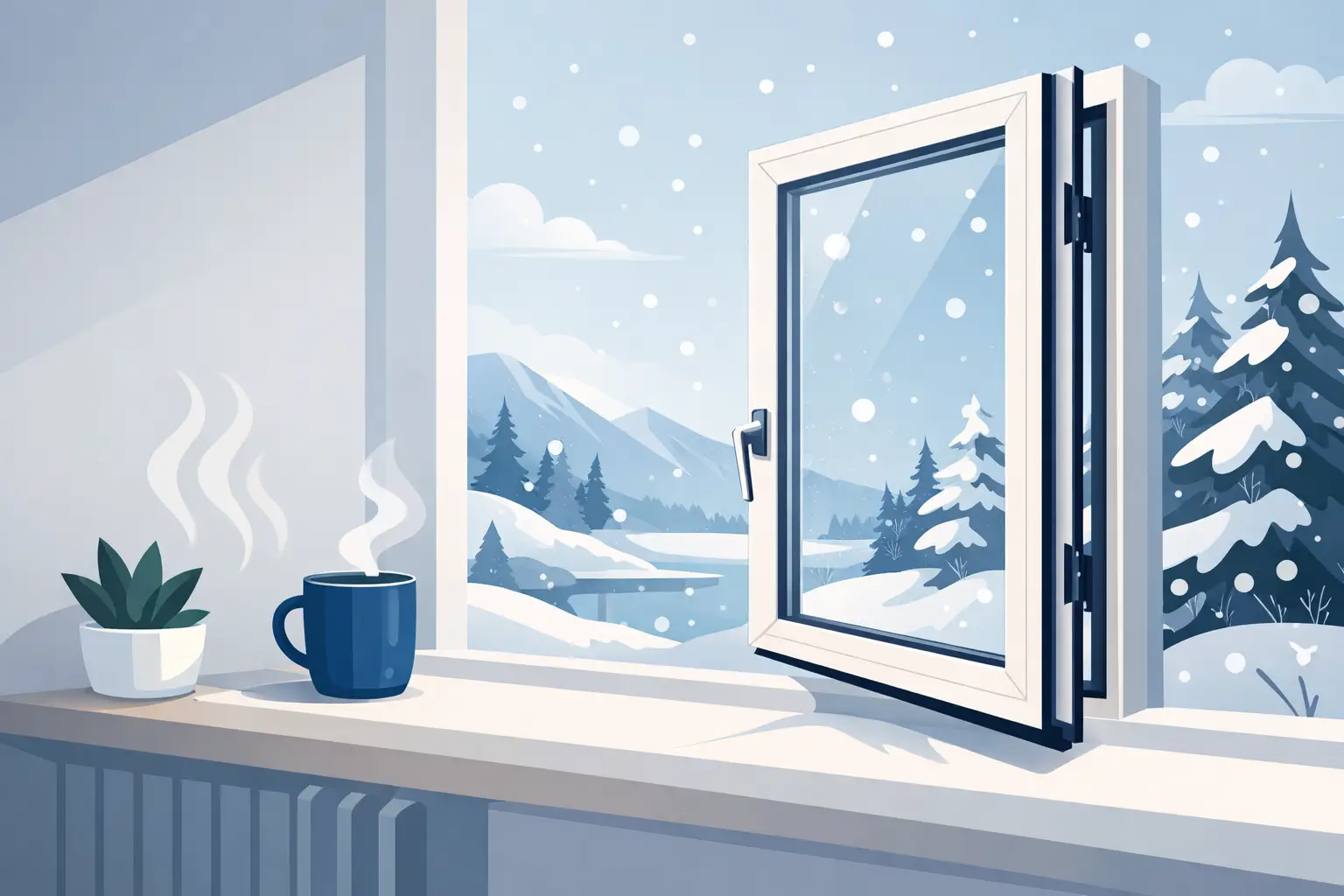
If you feel a cold draft near your windows every winter, the issue is often not just the glass. It is the way the window seals, locks, and fits the opening. That is why many homeowners start looking at casement windows for cold weather when comfort, energy bills, and reliability become bigger priorities.
In Southern Ontario and other cold-climate regions, winter exposes every weakness in a window system. Small air leaks become obvious fast. Rooms near older sliders or double-hung units can feel several degrees colder than the rest of the house, and condensation starts building at the edges when indoor warmth meets outdoor air. A window that performs well in mild weather can still disappoint in January.
Why casement windows for cold weather perform well
Casement windows are hinged at the side and open outward, usually with a crank. Their biggest advantage in cold weather is the compression seal. When the window is closed and locked, the sash presses tightly against the frame. That creates a firmer seal than many older window styles that slide up, down, or sideways.
That tighter seal matters because air leakage is often what homeowners notice first. Even before heat loss shows up on a utility bill, you feel it as a draft near the seating area, the breakfast nook, or the bedroom wall. Casement windows are designed to reduce that problem when the unit is manufactured well and installed correctly.
This does not mean every casement window is automatically the best choice. The frame quality, weatherstripping, glass package, spacer system, and installation all affect winter performance. A premium product installed poorly can still leak. A good installer will treat the window as part of the wall system, not just a product being dropped into an opening.
What actually matters in winter window performance
When homeowners compare window styles, the conversation often stays too general. “Energy efficient” sounds good, but cold-weather performance depends on a few specific details.
Air infiltration is one of the most important. This measures how much outside air gets through the unit. In winter, lower air leakage usually means fewer drafts and more consistent indoor comfort. Casement windows tend to do well here because their locking system pulls the sash in tightly.
Glass performance matters too, but it is only part of the picture. Double-pane glass with low-E coatings and argon gas is a common starting point for colder climates. In some homes, triple-pane glass may be worth considering, especially on exposed elevations or in rooms where comfort has been a long-term problem. The trade-off is cost and, in some cases, added weight.
The frame and spacer system also affect results. Vinyl remains a popular choice because it resists moisture, insulates well, and does not need the same maintenance as wood. Warm-edge spacers can help reduce heat transfer around the edge of the glass, where condensation often starts.
Then there is installation. Even a high-quality casement unit can underperform if the opening is not insulated and sealed properly. Gaps around the frame, poor shimming, or rushed finishing work can cancel out the benefits that looked good on paper.
Casement windows vs sliding and double-hung windows in winter
This is where trade-offs matter. Sliding and double-hung windows can be good products, especially when space, ventilation style, or budget makes them the practical fit. But in cold weather, casement windows often have an edge because of how they close.
Sliding windows rely on tracks and meeting rails, and double-hung windows have more moving parts and more places where air can work its way through over time. Modern versions of both styles have improved a lot, but if your top concern is reducing drafts, a casement window is often the stronger option.
That said, some homeowners do not want a projecting sash on a walkway, deck, or front porch. Others prefer a different operating style for everyday use. The best choice depends on the room, the available space outside, and how the window will be used year-round.
Where casement windows make the biggest difference
Bedrooms, living rooms, and family rooms are common places where homeowners notice the comfort benefit first. These are spaces where people sit still for long periods, so even mild air leakage becomes annoying. A tighter-sealing window can make the room feel warmer without changing the thermostat.
Casement windows are also a smart option for harder-to-reach areas because the crank mechanism is easier to operate than lifting a sash. Kitchens and bathrooms benefit from that, especially when you want quick ventilation in warmer months without giving up winter performance.
Homes with older builder-grade windows often see the biggest improvement. If the current units are drafty, poorly insulated, or nearing the end of their service life, replacement can solve several problems at once: comfort, condensation, appearance, and heating efficiency.
Signs your current windows are not handling cold weather well
You do not need a major failure to know a replacement is worth discussing. The warning signs usually show up gradually.
Cold air near the frame, visible condensation between panes, frost buildup, difficulty locking the sash, and rooms that stay chilly even when the heating system is working properly are all common red flags. Rising energy bills can point in the same direction, though bills alone never tell the full story because insulation and furnace performance also play a role.
Noise is another clue. If outdoor sound comes through too easily, the window may be underperforming in more ways than one. Better-sealed systems often improve both comfort and acoustic control.
What to ask before buying casement windows for cold weather
This is where many homeowners protect themselves from future frustration. Ask how the window is rated, what glass options are available, and how the installation will be handled. Do not stop at the product brochure.
You want to know whether the unit meets recognized energy standards, whether customization is available for your opening, and what kind of warranty covers both product and labor. You should also ask who is responsible if trim, insulation, or finishing issues show up after the job is done.
A trustworthy contractor will be clear about pricing, scope, and timeline. If the quote seems vague, if the installation process is glossed over, or if warranty terms sound hard to pin down, that usually becomes a bigger problem later.
For homeowners who want fewer surprises, a full-service approach makes a difference. Companies like ProPlas focus on measurement, product fit, professional installation, and after-sales support because winter performance depends on the whole process, not just the window itself.
The cost question: are casement windows worth it?
They often cost more than some basic window styles, but the value should be judged over time. If a casement window reduces drafts, improves comfort in key rooms, and holds up well through repeated freeze-thaw cycles, the higher upfront cost can make sense.
Still, not every room needs the same specification. A front-facing living room with strong wind exposure may justify a higher-performance glass package, while a more sheltered area may not. Good recommendations should reflect how your home actually behaves, not a one-size-fits-all upsell.
That is the real test. Are you paying for features that solve a real problem, or just adding cost without clear benefit?
Choosing the right installer matters as much as the window
Cold-weather performance is easy to promise and harder to deliver. The quality of the measurement, the condition of the existing opening, the insulation around the frame, and the final fit all influence the result.
This is why rushed jobs so often disappoint. Homeowners may buy a strong product and still end up with drafts, trim issues, or callbacks because the installation team cut corners. A reliable installer should explain the process clearly, set realistic timelines, and stand behind the work after the job is complete.
If your goal is a warmer, quieter, more efficient home, casement windows are a strong option for cold climates. But the real payoff comes from choosing the right unit for the space and making sure it is installed with care. Winter has a way of exposing shortcuts. A well-built, well-installed window gives you one less thing to worry about when the temperature drops.