
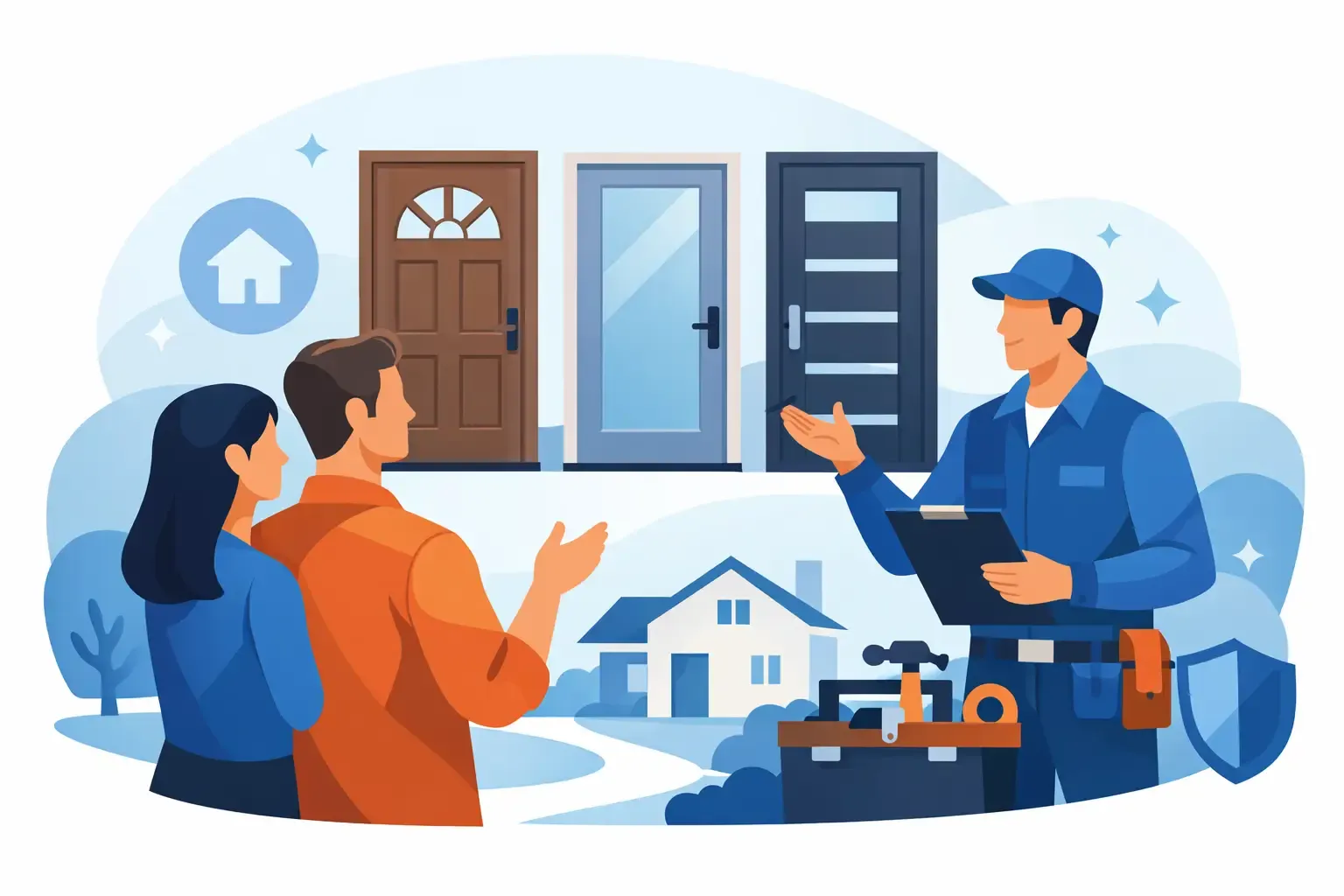
A front door can look great in a showroom and still disappoint once it is installed. Gaps around the frame, drafts in winter, sticking hardware, water intrusion, and trim that starts to shift after one season usually point to the same issue - the product was only part of the job. The real difference often comes down to the entry door installation company behind it.
For homeowners, that choice matters more than most people expect. An entry door is not just a design feature. It affects security, energy efficiency, curb appeal, and how the home performs through heat, rain, wind, and freezing temperatures. If the installation is rushed or the sizing is off, even a premium door can become a recurring problem.
What an entry door installation company actually does
Many homeowners start by comparing door styles, glass options, or finishes. Those details matter, but they are only one part of the project. A qualified entry door installation company should manage the entire replacement process, from the first measurement to the final adjustment.
That includes reviewing the existing opening, identifying any structural concerns, confirming the right swing and threshold setup, and helping you choose materials that fit your home and budget. It also means explaining what is included in the quote, how long the project will take, and what kind of warranty support you can expect after installation.
This is where companies begin to separate themselves. Some simply sell a slab or pre-hung unit and leave the rest vague. Others handle customization, installation, cleanup, and follow-up in a way that removes uncertainty for the homeowner. When you are replacing a major exterior opening, that difference is not minor.
Why installation quality matters as much as the door itself
A properly installed entry door should close smoothly, latch cleanly, seal tightly, and remain stable through seasonal changes. That sounds basic, but it requires precision. The opening has to be measured accurately, the frame has to be plumb, insulation has to be applied correctly, and the finishing details have to protect against moisture and air leakage.
If any part of that work is skipped or handled carelessly, the problems show up fast. You may notice cold air near the threshold, uneven reveals around the frame, locks that do not line up properly, or condensation where the assembly is not performing as it should. In colder climates, these issues can become more than an inconvenience. They can affect comfort, energy bills, and the life of the door system itself.
There is also the issue of warranty protection. Many homeowners assume a product warranty covers everything. Often, it does not. If the problem is tied to installation rather than manufacturing, the installer matters just as much as the brand on the door.
How to evaluate an entry door installation company
The strongest companies tend to be clear in how they speak about process. They do not rely on vague promises. They explain how measurements are handled, what products they install, who does the work, and what happens if adjustments are needed after the job is complete.
Look closely at pricing transparency. A low initial quote can become expensive if it excludes trim work, disposal, reframing, hardware upgrades, or finishing details. A dependable contractor should tell you what is included and what could change if hidden conditions are found once the old door is removed.
Experience with local housing stock also matters. Older homes, custom openings, and non-standard frame conditions require judgment, not just labor. A company that works regularly with residential exterior doors will usually spot potential issues early and plan for them. That helps avoid delays and last-minute cost increases.
Communication is another useful test. If scheduling is inconsistent before the contract is signed, it rarely improves afterward. Homeowners who want a hassle-free experience should pay attention to response times, clarity, and whether questions are answered directly.
Material choices and where guidance matters
Not every home needs the same door. Steel, fiberglass, and glazed door systems each have advantages, and the right choice depends on priorities.
Steel doors are often chosen for value, security, and clean appearance. They can perform very well, but quality varies. Fiberglass doors are popular for durability and resistance to warping, especially where homeowners want a wood-look finish without the maintenance. Decorative glass can bring in natural light and add visual impact, though privacy and energy performance should be considered at the same time.
A good installer does not push one option for every project. Instead, they explain the trade-offs. If your main concern is insulation and weather resistance, one configuration may make more sense. If the priority is maximizing light in a darker foyer, another setup may be better. The point is not to sell the most expensive unit. It is to match the door to the home and the homeowner's goals.
Red flags homeowners should not ignore
Some warning signs are obvious, and others only become clear halfway through the process. If a company gives a price without a proper site visit, that is a concern. Exterior door openings are rarely identical from one house to the next, and accurate measurements are essential.
Another red flag is a quote that feels too simple for a complicated project. If sidelites, custom glass, frame replacement, brickmold, threshold changes, or finish work are involved, the proposal should reflect that detail. Homeowners should not have to guess what is included.
Be cautious with timelines that sound unrealistically fast. Quick service is valuable, but custom exterior doors and proper installation still require coordination. A rushed job can create the exact problems you were trying to avoid.
Finally, pay attention to after-sales support. Doors may need minor adjustments after installation as materials settle and weather changes. A company that disappears once payment is collected is not offering the kind of service most homeowners actually need.
What a well-run replacement process should feel like
The process should be straightforward. First comes an in-home assessment with accurate measurements and a conversation about style, material, glass, hardware, and performance priorities. Then you should receive a clear quote that outlines scope, pricing, and timing without hidden add-ons buried in the fine print.
Once the order is placed, communication should stay consistent. You should know what to expect on installation day, how long the work will take, and whether any preparation is needed. On the day itself, a professional crew should protect the work area, remove the old unit carefully, install the new system correctly, seal and finish the opening, and test the operation before leaving.
That may sound like the standard, but many homeowners have dealt with the opposite: vague scheduling, surprise charges, messy workmanship, and no clear point of contact after the job is done. A reliable company reduces friction at every stage.
For homeowners who want a managed replacement from measurement through installation and warranty support, companies like ProPlas have built their reputation on that full-service model. The appeal is not just the door itself. It is the accountability behind it.
The long-term value of choosing carefully
An entry door replacement is not a purchase most homeowners want to repeat anytime soon. When done properly, it should improve daily comfort, reduce drafts, refresh the exterior of the home, and hold up well over time. When done poorly, it becomes one more repair issue that keeps resurfacing.
That is why the decision should not be based on price alone. Value comes from accurate measurement, suitable product selection, skilled installation, and dependable service after the work is complete. Paying slightly more for a company that delivers those things is often less expensive than fixing the results of a bad install.
If you are comparing contractors, ask simple but direct questions. Who measures the opening? Who performs the installation? What is included in the quote? What happens if the frame condition is worse than expected? How is warranty service handled? Clear answers usually point to a company that takes its work seriously.
A front door is one of the first things people see, but the real test happens after the installers leave. It should feel solid, close with confidence, and help the home stay comfortable in every season. That kind of result starts with choosing an entry door installation company that treats the job as more than a product sale.