
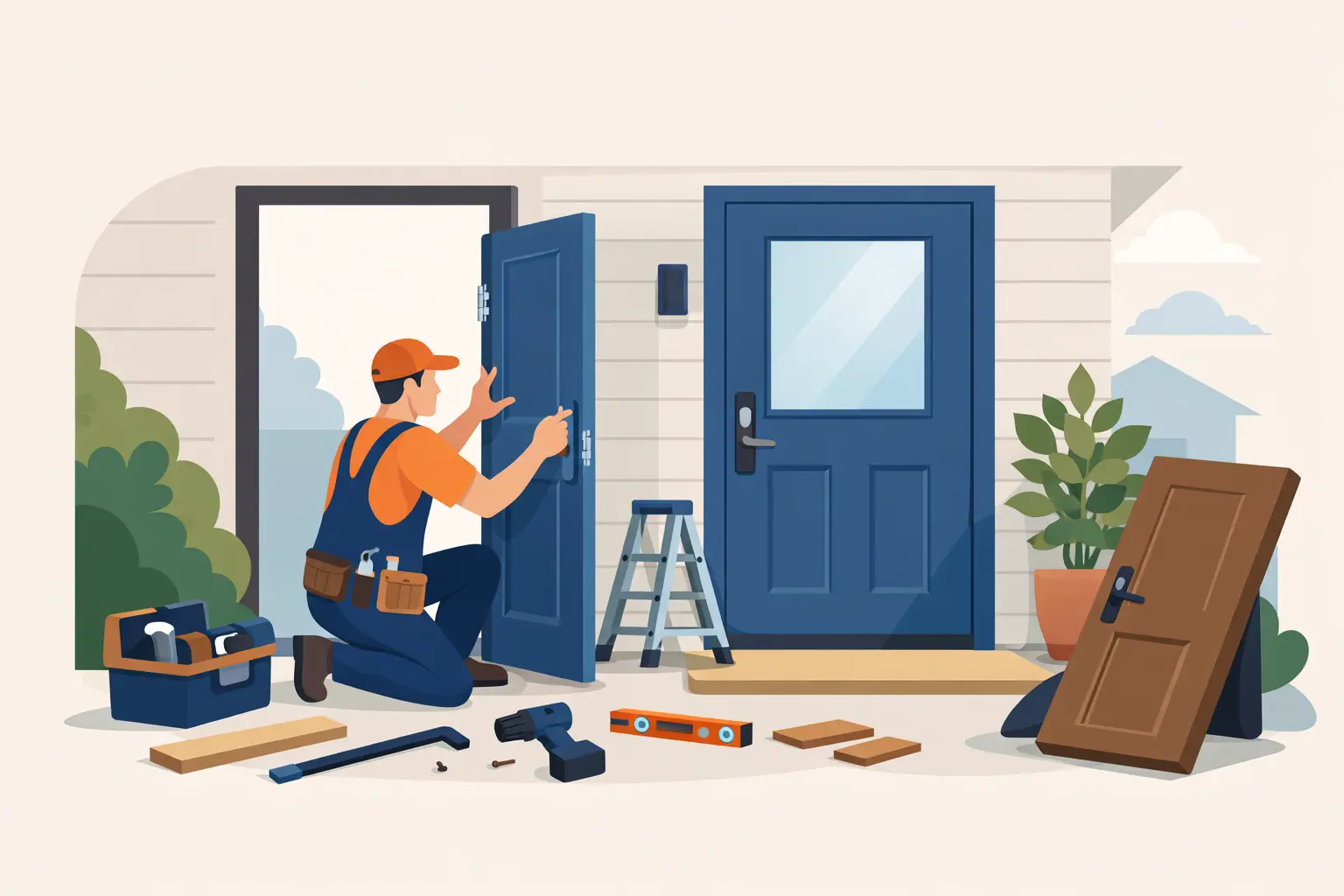
A front door replacement usually looks simple from the curb. Then the old frame comes out, the opening is slightly out of square, the threshold is uneven, and suddenly a quick upgrade turns into a lesson in air leaks, water control, and finish details. That is why homeowners searching for how to replace front door systems often discover the real question is not just how, but how to do it without creating new problems.
For most homes, the front door is part security feature, part weather barrier, and part first impression. If it is drafty, sticking, swelling, or showing signs of frame rot, replacement can improve comfort and curb appeal in one project. But the quality of the result depends as much on installation as on the door itself.
How to replace front door without costly mistakes
The first step is deciding whether you are replacing only the slab or the full door system. A slab replacement means changing just the door panel while keeping the existing frame, hinges, and threshold. That can work if the frame is in excellent condition, the opening is square, and you are matching the size and swing exactly.
A full system replacement includes the slab, frame, sill, weatherstripping, and often the brickmold or trim details. In most cases, this is the better long-term option. It gives you a cleaner seal, more reliable operation, and fewer surprises with fit. If your current door lets in drafts, sticks in humid weather, or shows water damage near the sill, replacing the full unit is usually the safer investment.
This is also where many homeowners underestimate the job. Exterior doors are exposed to rain, snow, freeze-thaw cycles, and direct sun. If the opening is not flashed and sealed properly, problems can show up long before the door itself wears out.
Start with the opening, not the catalog
It is tempting to choose style first. Glass inserts, sidelites, color, and decorative hardware all matter, but the opening has to be assessed before product decisions are finalized.
A proper measurement includes width, height, jamb depth, swing direction, threshold condition, and the condition of the surrounding framing. Older homes in particular may have settled enough that a standard-size assumption leads to gaps, binding, or extra site work on installation day.
Material choice matters too. Steel and fiberglass are the most common choices for modern front door replacements. Steel is strong, secure, and generally cost-effective. Fiberglass offers excellent durability, handles temperature swings well, and can mimic wood grain while requiring less maintenance. For many homeowners in cold-weather regions, fiberglass is attractive because it balances performance, appearance, and longevity.
Glass is another decision with trade-offs. More glass can brighten the entry and make the home feel more open, but privacy and energy performance have to be considered. Decorative glass, frosted inserts, or strategic side glass can help you get light without making the entrance feel exposed.
The basic replacement process
If you want to understand how to replace front door systems properly, it helps to know what a professional installation typically involves.
First, the existing interior and exterior trim may be removed as needed, followed by the old door and frame. Once the opening is exposed, the installer checks for hidden damage such as rot, moisture intrusion, insulation gaps, or framing issues. This step matters because covering damaged material with a new unit only delays the real repair.
Next, the rough opening is prepared. That can include leveling the sill area, adjusting the opening, adding insulation, and making sure flashing and sealants will direct water away from the house rather than trapping it. The new door unit is then dry-fit, shimmed, leveled, and fastened so the margins are even and the door swings correctly.
After the frame is secured, the gaps around the unit are insulated carefully. This is not a place for overfilling with expanding foam, which can bow the frame and affect operation. Weather sealing, threshold adjustment, hardware installation, and trim finishing come next. A final check confirms that the latch engages smoothly, the sweep seals properly, and there is no daylight where there should not be.
That may sound straightforward, but each step affects the next. A door can look fine at first glance and still perform poorly if the sill is not level or the frame is racked slightly out of alignment.
Where DIY replacement usually gets risky
Some homeowners are comfortable with interior doors, trim, or finish carpentry, and that experience can make an exterior door project seem manageable. The challenge is that exterior entry systems are much less forgiving.
The biggest risk is not cosmetic. It is water and air infiltration. If flashing is incomplete, sealant joints are wrong, or the threshold is not integrated correctly, moisture can get behind the frame and into the wall. The result may be hidden damage, mold risk, insulation failure, or premature deterioration around the opening.
Security is another concern. A front door needs more than a strong panel. It needs proper anchoring, reliable hardware alignment, and a frame that can support the lockset as intended. If the screws are misplaced or the strike area is weak, the system may not perform the way homeowners expect.
Then there is warranty protection. Many manufacturers require professional installation or specific installation standards for warranty coverage to remain valid. Saving money up front can cost more later if the door develops operational issues and the root cause comes back to installation.
Cost depends on more than the door itself
Homeowners often ask for a simple replacement price, but front door costs vary for good reason. The final number depends on the material, glass configuration, custom sizing, hardware, finish options, sidelites, structural adjustments, and labor involved in removing and installing the system.
A straightforward swap in a standard opening will cost less than a custom fiberglass entry system with decorative glass and trim work. Homes with settling, framing repairs, masonry complications, or older openings can also require additional labor.
The better question is whether the quote covers the whole job clearly. Transparent pricing should explain product specifications, installation scope, finishing details, disposal of the old unit, and any known conditions that could affect the project. Homeowners are right to be cautious when a low quote leaves too much undefined.
Energy efficiency and weather performance matter
A new front door should do more than look better. It should help control drafts, improve comfort near the entry, and stand up to seasonal changes without constant adjustment.
That means paying attention to the full system – insulated core, quality weatherstripping, threshold design, glass performance, and installation quality. In colder climates, small air leaks around the perimeter can make a noticeable difference indoors. If your current entry feels cold in winter or humid in summer, the problem may be the seal as much as the door panel.
This is one reason many homeowners choose a fully managed replacement process. A good installer does not just drop a new unit into the hole. They measure accurately, recommend the right configuration for the home, and install it to perform in real conditions, not just in a showroom.
Choosing the right contractor matters as much as the product
If you are not planning a DIY project, the next step in how to replace front door systems is choosing who will handle it. Look for a company that measures before quoting final specifications, explains options clearly, and has a defined installation process. Strong warranty support matters too, because front doors are long-term components, not short-term purchases.
Good contractors also talk honestly about trade-offs. They will tell you when a slab replacement makes sense and when it does not. They will explain why one material suits your exposure better than another, or why an older opening may need more site work than expected. That kind of transparency usually prevents surprises later.
For homeowners who want the process handled from measurement through installation and follow-up, working with an experienced replacement specialist like ProPlas can reduce the usual stress points – unclear pricing, delays, fit issues, and weak after-sales support.
How to know it is time to replace your front door
Sometimes the signs are obvious, like visible rot, cracked glass, or a door that no longer locks properly. Other times, the clues are easier to dismiss. Repainting every few years, drafts around the edges, light coming through the frame, soft spots near the sill, or rising noise from outside can all point to a system that is no longer doing its job well.
If your front entry is aging, replacing it before damage spreads is usually the smarter move. Waiting can turn a door project into a larger framing or moisture repair.
A front door should close solidly, seal tightly, and make the house feel more secure and more comfortable the moment you walk through it. If yours no longer does that, the right replacement is not just an upgrade. It is a way to solve a problem once, and solve it properly.