
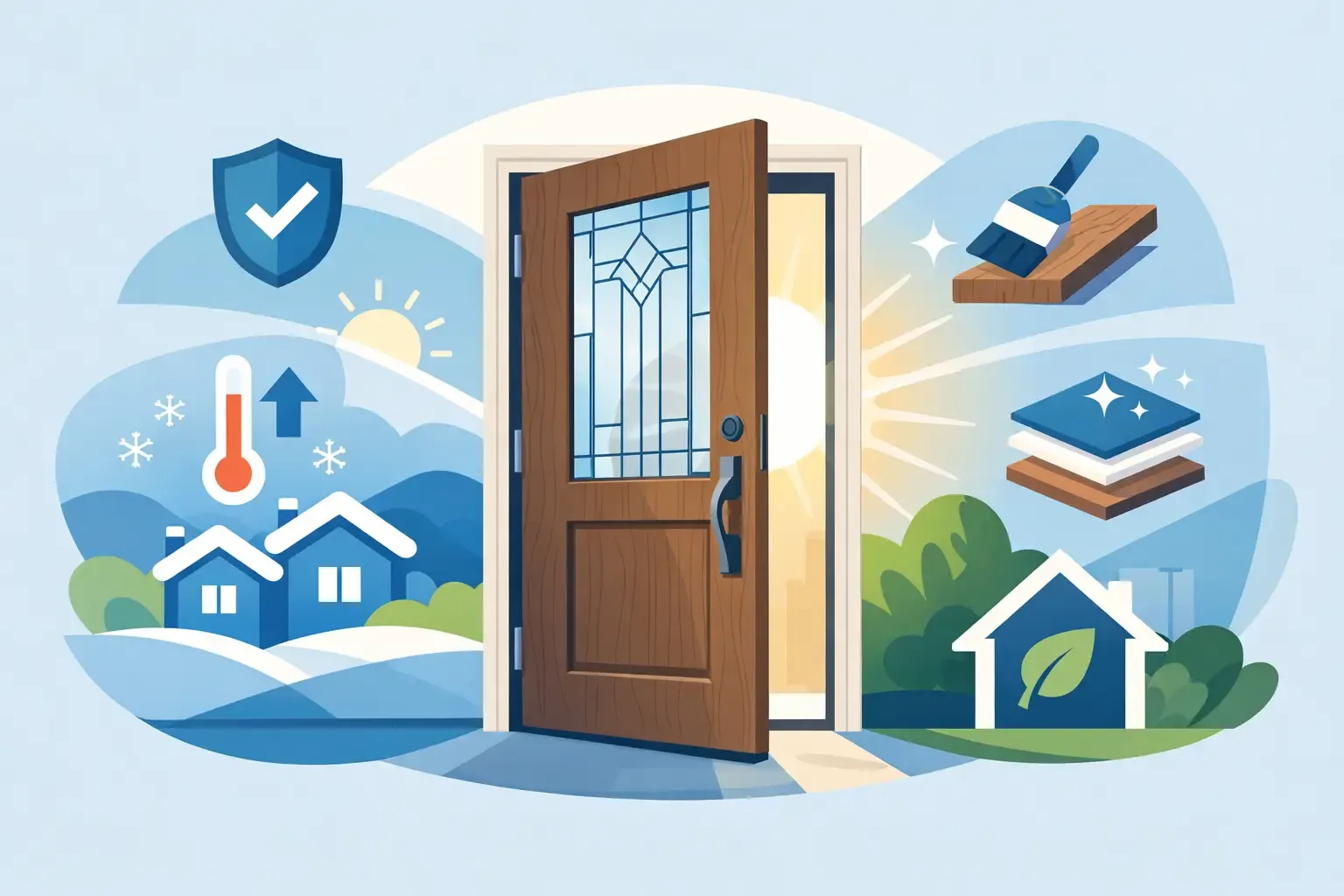
A front door has a hard job in Southern Ontario. It deals with freezing wind, summer heat, rain, humidity, and constant daily use, all while shaping the first impression of your home. That is why fiberglass entry doors benefits matter to homeowners who want more than a door that simply looks good on day one.
For many households, the real question is not whether fiberglass doors are attractive. It is whether they hold up, improve comfort, and justify the investment over time. In many cases, they do. But as with any exterior upgrade, the right choice depends on your home, your priorities, and the quality of the installation.
Why homeowners look closely at fiberglass entry doors benefits
Most homeowners replacing an entry door are trying to solve a problem, not shop for a trend. The old door may be drafty, swollen, dented, hard to lock, or simply dated. Sometimes the issue is energy loss. Sometimes it is curb appeal. Often, it is both.
Fiberglass doors stand out because they address several of those concerns at once. They are built to handle weather exposure better than many traditional wood doors, and they avoid the cold, industrial feel some homeowners associate with steel. That balance makes them a practical option for families who want durability without giving up appearance.
Durability is one of the biggest fiberglass entry doors benefits
A fiberglass entry door is designed to handle wear that would cause trouble for other materials. Unlike wood, fiberglass does not tend to warp, rot, or swell when moisture and temperature shifts are part of everyday life. That matters in climates where winter freeze-thaw cycles and humid summers can put exterior materials under stress.
It also resists dents better than many people expect. Steel doors are strong, but they can show impacts. If a door gets bumped by sports equipment, moving items, or repeated heavy use, dents can become part of the long-term appearance. Fiberglass is generally more forgiving in that respect.
That does not mean every fiberglass door performs the same way. Construction quality matters. A well-made slab, insulated core, and properly built frame all play a role in how the door holds up over the years. The hardware, weatherstripping, and glass package matter too. A good material can still disappoint if the surrounding components are weak.
Energy efficiency and comfort matter just as much
Homeowners often notice door problems first through comfort. A front hall that feels cold in winter or hot in summer is not just unpleasant. It can point to air leakage or poor insulation.
Fiberglass doors are often chosen because they can provide strong thermal performance, especially when paired with insulated cores and quality weather sealing. In practical terms, that can help reduce drafts near the entrance and support a more consistent indoor temperature. For households trying to improve efficiency across the home, the entry system is an area worth taking seriously.
The same point applies to glass inserts. Decorative glass can look great, but not all glass packages perform equally. If privacy, heat retention, or solar control matter, the exact glazing option should be part of the decision. The door material helps, but the full system determines the result.
Low maintenance is a real advantage
One reason fiberglass continues to gain interest is simple: most homeowners do not want another item on their maintenance list. Wood can be beautiful, but it usually demands more attention to keep it looking and performing the way it should. Depending on exposure, it may require refinishing or closer monitoring over time.
Fiberglass is easier to live with. It does not ask for the same level of upkeep, which makes it appealing for busy families and long-term homeowners who prefer practical improvements over high-maintenance ones. Routine cleaning and basic inspections of seals and hardware are still smart, but the day-to-day ownership experience is generally straightforward.
That ease of maintenance is especially valuable on doors with direct sun, wind, or moisture exposure. A front entry that takes the brunt of the weather will test any material. Fiberglass tends to handle that test well.
Appearance has improved well beyond the old reputation
Some homeowners still picture fiberglass doors as plain or obviously synthetic. That view is outdated. Modern fiberglass options can offer convincing woodgrain textures, clean contemporary finishes, and a wide range of panel and glass designs.
For many homes, this is where fiberglass becomes especially attractive. You can get a warmer, more refined look than many people expect, without taking on the maintenance demands of real wood. That is a strong value proposition for homeowners updating curb appeal before selling, renovating a forever home, or simply trying to make the entrance feel more finished.
Customization also matters. The right style, stain or paint finish, glass insert, sidelite configuration, and hardware set can make the front entry feel tailored to the house rather than selected from a limited catalog. That is often where professional guidance helps. A door may look good in a showroom but feel out of place once installed if the proportions and details are not matched to the home.
Security is part of the conversation, but not just the slab
A stronger-looking door does not automatically mean a more secure entry. Security depends on the full system, including the frame, lockset, strike plate, hinges, and installation quality.
Fiberglass doors can support secure entry systems well, particularly when combined with reinforced frames and proper hardware. For homeowners, the bigger point is this: a door should never be evaluated by material alone. Even a well-built slab can underperform if the installation is rushed or the surrounding frame is compromised.
This is one reason experienced installation matters so much. A door that is not aligned correctly can create problems with latching, sealing, and long-term wear. Those issues affect security and comfort at the same time.
When fiberglass is a better choice than wood or steel
There is no universal winner for every home. Wood, steel, and fiberglass each have their place.
Wood is often chosen for its natural beauty and traditional appeal. If a homeowner is committed to authentic wood aesthetics and is comfortable with ongoing maintenance, it may still be the right fit. Steel can make sense for budget-conscious projects or certain utility-focused applications. It offers strength, but it may be more prone to visible dents and can feel less refined depending on the product.
Fiberglass often becomes the preferred middle ground for homeowners who want strong performance, lower maintenance, and flexible design options. It suits homes where weather exposure is a concern, where energy efficiency matters, and where the front entry needs to look polished without becoming a maintenance project.
That said, price can be higher than some basic steel options. For homeowners comparing quotes, the conversation should focus on total value, not just initial cost. Better insulation, longer-lasting appearance, and reduced upkeep can make the investment easier to justify over time.
Installation can make or break the result
Even the best door will not perform properly if the opening is measured incorrectly or the installation is careless. Gaps, uneven reveals, poor sealing, and frame issues can lead to drafts, water problems, and early wear.
That is why homeowners should pay close attention not only to the product but also to the process. Accurate measurement, product selection, customization, and professional installation all need to work together. Transparent quotes matter too. Entry door replacements can involve frame work, trim adjustments, glass options, and finishing details, so it helps to understand exactly what is included before the project begins.
For homeowners who want a managed experience rather than a patchwork of suppliers and installers, working with a company that handles the full replacement journey can reduce a lot of uncertainty. That kind of approach is one reason ProPlas appeals to homeowners who want clear pricing, dependable timelines, and support after installation.
Are fiberglass entry doors worth it?
For many homeowners, yes. The strongest fiberglass entry doors benefits are not flashy. They are practical. Better resistance to weather. Better insulation potential. Lower maintenance. Flexible design. A door that continues to look and perform well after years of regular use.
The right fit still depends on the home. A covered front porch, direct sun exposure, design preferences, glass choices, and budget all influence the final decision. But if you are replacing an aging front door because it is drafty, worn, difficult to maintain, or no longer suits the house, fiberglass deserves serious consideration.
A front door should make your home feel secure, efficient, and finished every time you come back to it. When the product is well chosen and properly installed, fiberglass does that job quietly and well for years.