
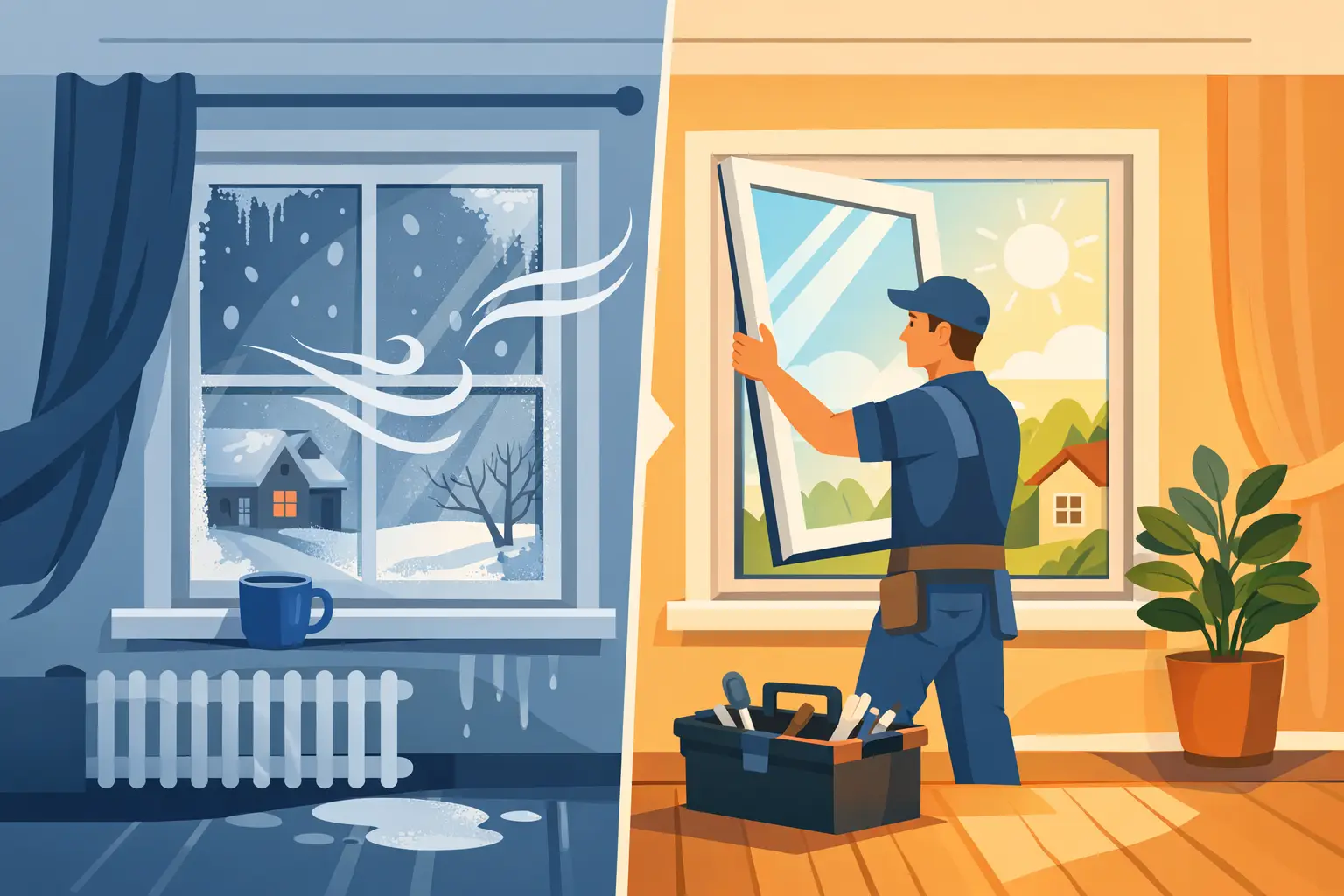
You notice it first on a cold morning. The room feels off, the furnace keeps running, and the chair by the window is the last place anyone wants to sit. That is usually when homeowners start asking, are drafty windows worth replacing, or is this something a quick repair can handle?
The honest answer is that it depends on why the window is drafty, how old it is, and whether the problem is isolated or part of a bigger pattern across the home. In some cases, a simple adjustment or sealing fix is enough. In others, keeping an old drafty window costs more over time in energy loss, discomfort, and repeat repairs than replacing it properly.
Are drafty windows worth replacing in most homes?
Often, yes – especially when the draft is coming from age, seal failure, warped frames, or poor overall window performance rather than one small repair issue.
A drafty window is not just a comfort problem. It can be a sign that the window is no longer doing its basic job of controlling air movement between indoors and outdoors. In a climate with hot summers and cold winters, that matters. Your HVAC system works harder, interior temperatures become uneven, and condensation issues may start to show up around the frame or glass.
Many homeowners wait because the glass is not cracked and the window still opens. But function is only part of the picture. If air is leaking around the sash, through the frame, or past worn weatherstripping, the window may technically work while performing poorly every day.
When a draft points to replacement, not repair
Not every draft means you need a full replacement. The key is identifying whether the issue is minor and localized or whether the entire unit has reached the end of its useful life.
If the weatherstripping is worn out on an otherwise solid, newer window, a repair may solve the problem. The same goes for small caulking gaps around the trim or hardware that needs adjustment. These are straightforward service issues.
Replacement becomes the better investment when the draft comes with other signs of window failure. If the frame is warped, if locks no longer pull the sash tight, if the insulated glass seal has failed, or if the window has visible deterioration, repairs tend to become temporary. You fix one issue, then another appears the next season.
Older windows also deserve a different standard. If your home still has aging units that were installed decades ago, even a successful repair may leave you with weak thermal performance compared to modern replacement windows. At that point, the question is less about stopping one draft and more about whether the entire assembly still makes sense for the home.
Signs your drafty window is likely worth replacing
A draft is more likely to justify replacement when you also notice cold glass surfaces, condensation between panes, difficulty opening or locking the window, visible frame wear, rising energy bills, or multiple problem windows throughout the house.
That last point matters. One drafty bedroom window is a smaller decision than a whole home with aging, underperforming windows. If several windows are showing the same symptoms, replacement usually gives better long-term value than piecemeal repairs.
The cost question homeowners really care about
Most people are not asking whether replacement is theoretically better. They are asking whether it is worth spending the money now.
That is a fair question, because window replacement is a real investment. But the right comparison is not replacement versus doing nothing forever. It is replacement versus ongoing energy loss, repeated maintenance, reduced comfort, and the possibility of bigger issues around moisture and frame deterioration.
Drafty windows rarely become less expensive with time. Small air leaks can lead to condensation on colder surfaces, which may affect nearby trim, paint, and wall materials. Meanwhile, your heating and cooling system continues compensating for avoidable loss.
The payoff from replacement is usually a combination of benefits rather than one dramatic monthly savings figure. Homeowners often notice improved comfort first. Rooms feel more stable. Cold spots near windows become less noticeable. Outside noise may drop. Then there is the practical value of updated appearance, easier operation, and less worry about future repairs.
If you plan to stay in your home for years, those benefits tend to matter as much as the utility savings.
Repair can still be the right call
A balanced answer matters here. Some windows should be repaired, not replaced.
If the unit is relatively new, structurally sound, and the problem is clearly related to weatherstripping, caulking, minor hardware adjustment, or installation touch-ups, replacement may be unnecessary. A good assessment should tell you that plainly.
This is where homeowners get frustrated with the industry. Some contractors push full replacement for every draft. Others patch obvious failures and leave you with the same problem a year later. The right recommendation depends on the actual condition of the window, not a sales script.
A trustworthy process starts with diagnosis. Where is the air getting in? Is it through the window itself, around the frame, or from another nearby building issue? Without that, you are guessing.
Are drafty windows worth replacing for energy efficiency?
If your current windows are older and poorly insulated, replacement can make a meaningful difference in efficiency, especially when paired with proper installation.
This is an important detail. Homeowners sometimes focus only on the product and forget the installation side. Even a well-made window will underperform if it is measured poorly, installed incorrectly, or sealed inconsistently. Air leakage is not always just a product problem.
Modern energy-efficient windows are designed to reduce heat transfer and air infiltration far better than older units. Features like improved frame construction, better weather seals, and insulated glass help, but they only deliver their full value when the window is installed to a high standard.
That is why the cheapest quote is not always the best value. If a lower price comes with rushed installation, vague warranty terms, or weak follow-up support, the long-term result may be disappointing. For most homeowners, the safer investment is a complete replacement process that includes accurate measuring, clear product options, professional installation, and real after-sales accountability.
Comfort matters more than many people expect
There is a tendency to reduce window decisions to numbers alone. But daily comfort has value.
A drafty family room changes how you use the space. A cold upstairs bedroom affects sleep. A window that creates constant temperature swings makes the whole home feel less settled, even if the thermostat says everything is fine.
Replacing drafty windows often improves the lived experience of the house in ways homeowners notice immediately. Rooms feel more usable. Interior temperatures become more consistent. The home feels quieter and more finished.
For long-term homeowners, that quality-of-life improvement is not a small benefit. It is part of the return.
How to decide without overbuying
If you are trying to make a practical decision, focus on three questions.
First, is the problem minor and repairable, or is the window showing broader signs of age and failure? Second, is this a one-window issue or part of a pattern across the home? Third, are you planning around a short-term patch or a long-term solution?
If the window is older, inefficient, and repeatedly causing discomfort, replacement is usually the smarter choice. If the issue is isolated and the unit is otherwise in good condition, repair may be enough for now.
For homeowners who want a low-risk answer, a proper in-home assessment is the best next step. A clear estimate, straightforward recommendations, and no-pressure guidance tell you a lot about the company before any work begins. That matters just as much as the window itself.
A draft should not be ignored, but it also should not trigger an automatic full-home replacement if the evidence is not there. The best decisions come from an honest evaluation of condition, cost, and how long you want the solution to last.
If your windows are making your home harder to heat, less comfortable to live in, and more expensive to maintain, replacement is often worth it. Not because new windows are trendy, but because a home should feel solid, efficient, and dependable every season.