

Window care is the deliberate upkeep of window components to preserve functionality, longevity, and energy efficiency through cleaning, seal maintenance, hardware lubrication, and drainage clearance. This window care guide explained covers everything you need to protect your investment. Consistent maintenance can extend the functional lifespan of quality PVC and aluminium windows to 25–40 years. Neglecting even basic routines leads to premature failure and repairs that cost far more than the upkeep ever would. Proplas has seen this pattern repeat across thousands of Canadian homes over 25 years of professional installation and service.
What are the essential window care tasks homeowners should follow?
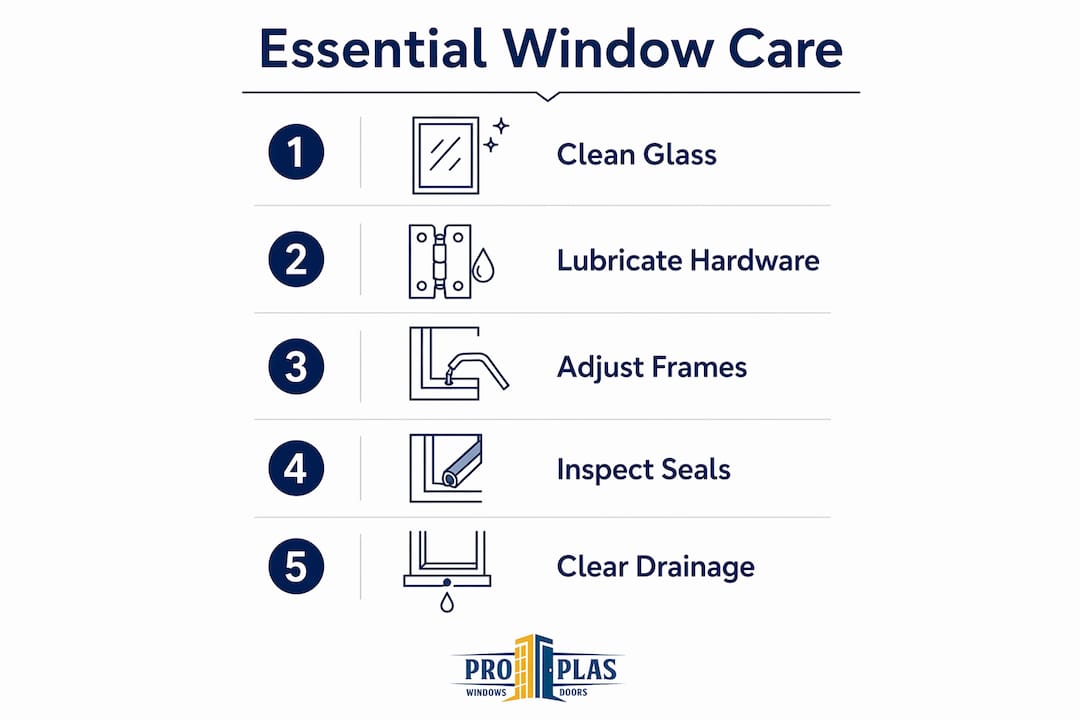
A reliable window maintenance routine covers four core tasks: cleaning, lubricating, adjusting, and inspecting. Doing each task on a consistent schedule prevents the small problems that quietly grow into expensive ones. Twice a year is the minimum frequency most windows need, with spring and autumn being the most practical times for Canadian homeowners.
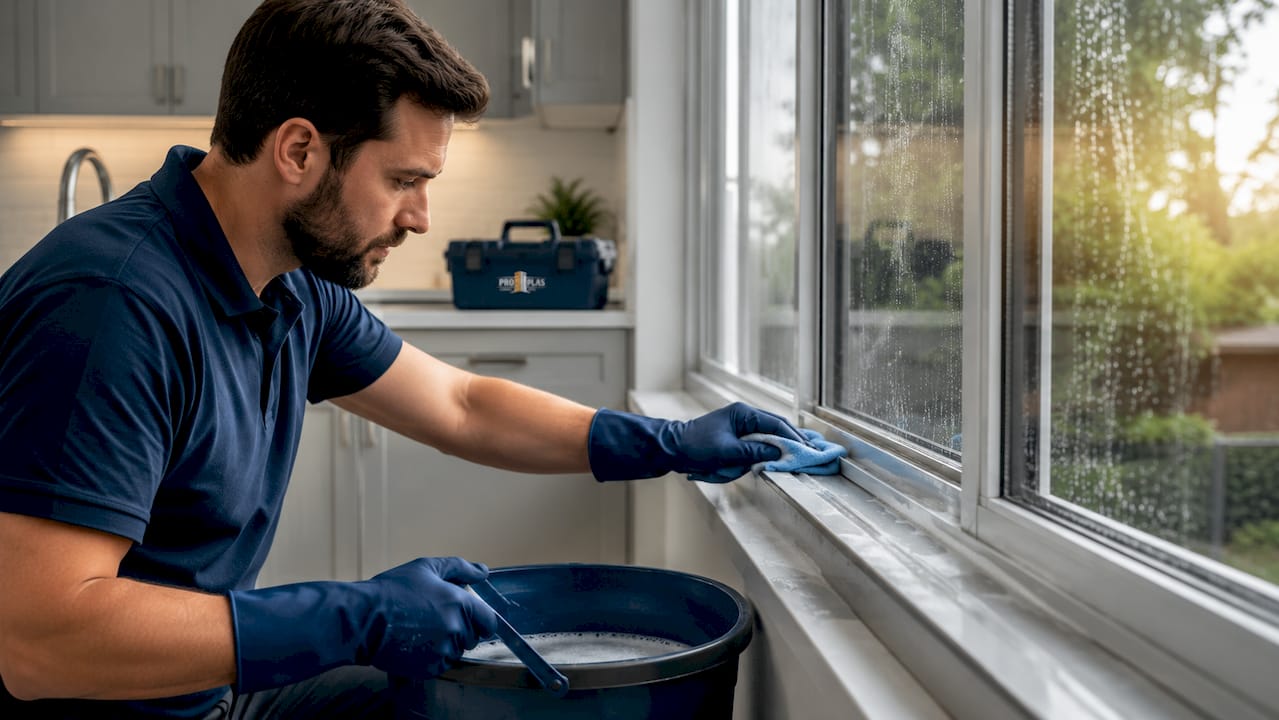
Cleaning glass, frames, and seals
Start with the glass, then move to the frame, and finish with the seals. Use a mild dish soap diluted in warm water for all three surfaces. Avoid abrasive scrubbers, which scratch glass and degrade frame finishes. Wipe seals gently with a damp cloth to remove dirt and check for cracking or separation while you work.
Clearing drainage channels
Drainage holes sit along the bottom of window frames and direct water away from the interior. Cleaning drainage holes twice a year prevents water backup and leaks that homeowners commonly misdiagnose as seal failures. Use a thin brush or a short burst of compressed air to clear debris. This single step prevents internal water pooling and the mould or rot that follows.
Lubricating and adjusting hardware
Lubrication of moving steel parts in window hardware once a year prevents stiffness and alignment issues. Apply a light machine oil or a silicone-based lubricant to hinges, handles, and locking mechanisms. Hardware also needs seasonal adjustment. Windows that close airtight in summer may develop small gaps in winter as frames contract. Learning about seasonal hardware adjustment helps you maintain a proper seal year-round without calling a technician for every minor shift.
Pro Tip: Mark your calendar for two maintenance sessions per year: one in april after winter, and one in october before the cold returns. Consistency matters more than perfection.
How do the best window cleaning techniques get streak-free results?
The best window cleaning results come from correct technique and timing, not costly products. A professional-grade clean requires nothing more than dish soap, warm water, a squeegee, and a microfibre cloth. The approach matters far more than the brand of cleaner you buy.
The most effective cleaning method follows these steps:
- Mix your solution. Dish soap diluted with hot water is a simple, effective cleaning solution. A few drops per litre of water is enough.
- Choose the right time. Cleaning windows in full midday sun causes the solution to dry too quickly, leaving streaks. Clean in the early morning or late afternoon for the best result.
- Apply and squeegee in an “S” pattern. Start at the top corner and pull the squeegee in overlapping “S” strokes across the glass. Wipe the blade with a clean cloth between each pass to avoid redistributing dirt.
- Dry the edges. Use a microfibre cloth to wipe the frame edges and corners where the squeegee cannot reach. This prevents drip marks from forming after you finish.
- Avoid fabric softener on your cloths. Fabric softener reduces the absorbency of microfibre, which leaves smears rather than removing them.
Pro Tip: Never use newspaper to dry windows. The ink transfers to frames and seals, and the paper breaks down when wet, leaving fibres on the glass.
Proper technique also means avoiding steel wool, razor blades, and ammonia-based cleaners on coated or tinted glass. These tools strip protective coatings and create micro-scratches that trap dirt over time. A simple vinegar-and-water solution works well for light mineral deposits on glass, particularly around the edges where hard water collects.
What window maintenance issues do homeowners most often misdiagnose?
Misdiagnosis is the most expensive mistake in window care. Many homeowners mistake clogged drainage for leaking windows, which leads to unnecessary window replacements. The fix in most cases is a brush and five minutes of work, not a new window.
The most commonly misread window problems include:
- Water pooling on the sill. This almost always points to blocked drainage holes, not a failed seal. Clear the channels before assuming the window needs replacing.
- Stiff or hard-to-turn handles. This signals a lack of lubrication or a minor alignment issue, not a broken mechanism. A drop of silicone lubricant and a small adjustment to the hinge screws resolves most cases.
- Draughts around a closed window. This can mean the window needs a seasonal adjustment rather than new weatherstripping. Check the hardware settings before ordering parts.
- Condensation between panes. This is one of the few issues that does indicate a failed seal. The insulating gas between double-pane glass has escaped, and the unit needs replacement. Knowing when windows should be replaced saves you from spending money on repairs that cannot fix a failed sealed unit.
Gasket care is also frequently overlooked. Gaskets are the rubber strips that press against the glass to create an airtight seal. They dry out and crack over time, particularly in Canadian winters. Inspect them during your biannual routine and replace them when they show visible cracking or no longer compress properly. A failed gasket is a $20 fix. Ignoring it turns into a draught, then a moisture problem, then a much larger repair.
How does window frame material affect your care routine?
Frame material determines which cleaning products are safe, how often you need to act, and what failure modes to watch for. PVC, aluminium, and wood each have distinct needs.
| Frame material | Cleaning frequency | Key care priority | Special consideration |
|---|---|---|---|
| PVC | Twice yearly | Seal and drainage maintenance | Avoid solvent-based cleaners that degrade the surface |
| Aluminium | Twice yearly | Corrosion prevention and lubrication | Apply a protective wax after cleaning in coastal or humid areas |
| Wood | 3–4 times yearly | Moisture control and protective coatings | Repaint or re-varnish every 3–5 years to prevent rot |
PVC windows
PVC frames are the most common choice in Canadian homes because they resist moisture and require minimal upkeep. Clean them with mild soap and water. Never use acetone, paint thinner, or any solvent-based product, as these cause the surface to yellow and become brittle. Pay close attention to the seals around the glass unit, as PVC frames can flex slightly with temperature changes and stress the seal over time.
Aluminium windows
Aluminium resists corrosion well but is not immune to it. In areas with high humidity or road salt exposure, the frame surface can develop a white oxidation layer. Clean it off with a mild detergent and apply a thin coat of automotive wax to protect the finish. Lubricate all moving parts with a silicone-based product rather than oil, which attracts dust and gums up the mechanism.
Wood windows
Wood windows require protective coatings and moisture management that PVC and aluminium frames do not. Well-maintained wood windows have the longest lifespan among common frame types, but they demand the most consistent attention. Inspect the paint or varnish layer each spring. Any cracking, peeling, or bare patches must be addressed immediately to prevent moisture from penetrating the wood. Sand, prime, and repaint affected areas before the rainy season begins.
Pro Tip: For wood windows, use a breathable exterior paint rather than a moisture-barrier coating. Wood needs to release moisture as well as repel it. Trapping moisture inside the frame causes rot faster than exposure does.
Proper window sealing and energy efficiency go hand in hand regardless of frame material. A well-maintained seal reduces heat loss, lowers energy bills, and keeps your home comfortable through Canadian winters.
Key takeaways
Consistent, material-specific window care is the single most effective way to extend window lifespan, prevent costly misdiagnoses, and maintain energy efficiency year-round.
| Point | Details |
|---|---|
| Lifespan through maintenance | Proper care extends PVC and aluminium windows to 25–40 years of functional life. |
| Drainage clears most leaks | Blocked drainage holes cause most interior water problems; clear them twice yearly. |
| Technique beats products | Streak-free glass comes from “S” pattern squeegee work and correct timing, not expensive cleaners. |
| Material drives the routine | Wood needs coatings and moisture checks; PVC needs seal care; aluminium needs corrosion protection. |
| Misdiagnosis costs money | Most draught, stiffness, and water issues are maintenance problems, not replacement triggers. |
What 25 years of window care experience actually teaches you
After working with over 10,000 Canadian homeowners, the pattern is clear: the homes with the fewest window problems are not the ones with the most expensive windows. They are the ones where someone cleaned the drainage holes every spring and wiped down the seals every autumn.
The uncomfortable truth is that most window replacements we see are premature. A homeowner notices a draught or a bit of water on the sill, assumes the window has failed, and calls for a quote. In a significant number of those cases, the window is fine. The drainage is blocked, or the hardware needs a quarter-turn adjustment. We always check the simple things first, because the simple things are almost always the cause.
Homeowners also underestimate how much a failed seal costs them in energy. A window that looks fine from the outside can be leaking conditioned air steadily through a cracked gasket. Running a window energy audit once every few years gives you a clear picture of where your heat is going and whether maintenance or replacement is the right call.
My honest advice: adopt a biannual schedule, treat it like a smoke detector check, and do not skip it. The 90 minutes you spend twice a year will save you thousands over the life of your windows. When you do find something beyond a simple fix, consult a professional before assuming the window needs to go. Most issues have a repair. The ones that do not are obvious.
— Proplas
Proplas windows: built for Canadian homes, backed by expertise
Proplas has spent 25 years installing and servicing windows across Toronto and the GTA, and we know that quality installation is the foundation of every effective maintenance routine. A window installed correctly from the start seals properly, adjusts smoothly, and lasts decades with basic care.

Whether you are maintaining what you have or considering an upgrade, Proplas offers fully customised casement windows, picture windows, double hung windows, and fixed casement options, all Energy Star certified and backed by a lifetime warranty. Our installation team works without hidden fees and completes most projects in as little as three days. If your maintenance routine has revealed issues that go beyond a simple fix, our team is ready to help you find the right solution for your home.
FAQ
How often should I clean my windows?
Clean your windows at least twice a year, ideally in spring and autumn. Homes near busy roads or coastal areas may benefit from quarterly cleaning to prevent buildup.
Can I use vinegar to clean window frames?
Vinegar works well on glass for mineral deposits, but avoid it on aluminium frames as it can damage the finish. Use mild dish soap and warm water on all frame types.
What causes condensation between window panes?
Condensation between panes means the sealed unit has failed and the insulating gas has escaped. This issue cannot be fixed with cleaning or maintenance and requires glass unit replacement.
How do I know if my window needs replacing or just maintenance?
Stiff handles, draughts, and water on the sill are almost always maintenance issues. Condensation between panes, visible frame rot, or a window that will not close properly are signs that replacement may be needed.
Is it safe to lubricate window hardware myself?
Yes. Apply a silicone-based lubricant to hinges, locks, and handles once a year. Avoid oil-based products on aluminium hardware, as they attract dust and reduce the effectiveness of the mechanism over time.