
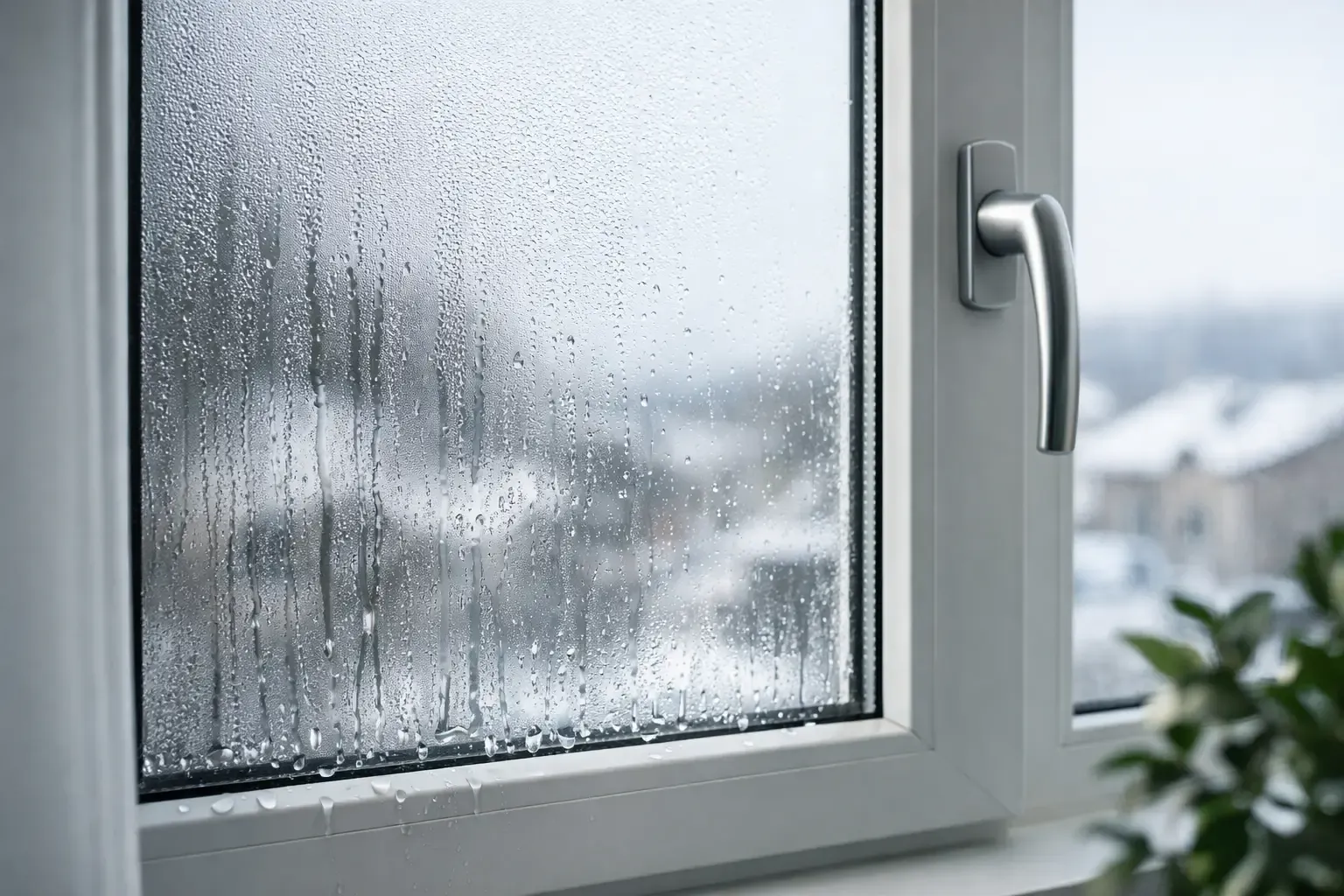
You wake up on a cold morning, pull back the blinds, and the glass is wet again. If you have been wondering what causes window condensation inside, the short answer is simple: warm indoor air is hitting a cooler glass surface and turning into water. The harder part is figuring out whether that moisture is a normal winter nuisance, a humidity problem, or a sign your windows are no longer doing their job.
In Southern Ontario and other cold-weather regions, this comes up often because homes are tightly sealed, families generate a lot of indoor moisture, and winter temperatures push window surfaces well below room temperature. Condensation itself is not always a product defect. Sometimes it means your home is holding heat well. But if it shows up constantly, pools on sills, damages trim, or appears between panes, it deserves attention.
What causes window condensation inside the home?
Indoor condensation happens when humid air meets a surface that is cold enough to drop that air below its dew point. In practical terms, your home may feel comfortable, but the interior glass can still be cold enough for water vapor to turn into droplets.
That is why condensation is usually worse at night and early in the morning. Outdoor temperatures fall, the glass cools, and moisture from everyday living settles on the window. Bedrooms, bathrooms, kitchens, and rooms with limited airflow tend to show it first.
The key point is that condensation needs two things: moisture in the air and a cold surface. Reduce either one, and the problem usually improves.
The most common reasons it happens
High indoor humidity is the biggest driver. Cooking, showering, laundry, humidifiers, plants, and even breathing all add moisture to the air. In a busy household, that adds up quickly, especially during winter when windows stay closed and fresh-air exchange drops.
Cold glass is the second factor. Older windows, basic double-pane units, aluminum frames, worn weatherstripping, or poor installation can all make the interior glass surface colder. Even a good window can collect some condensation if indoor humidity is too high during a deep freeze. That is where context matters.
Air circulation also plays a role. Heavy curtains, tightly closed blinds, furniture placed against windows, or blocked vents can trap cool air near the glass. The room itself may be warm, but the surface temperature at the window stays lower for longer.
Everyday moisture sources homeowners underestimate
A lot of homeowners assume condensation means the windows are faulty, but sometimes the real issue is how much moisture the home is producing. Long hot showers without proper exhaust, drying clothes indoors, running a whole-house humidifier too aggressively, or cooking without a range hood can all tip humidity levels too high.
Newer and recently renovated homes can see this too. Fresh drywall, paint, flooring, concrete, and lumber release moisture as they cure. If a renovation was completed not long ago, temporary condensation may be part of that drying-out period.
Why it gets worse in winter
Cold weather makes the gap between indoor and outdoor temperature much larger. When that happens, the interior glass gets colder, and the chance of condensation rises. A humidity level that feels fine in October may be too high in January.
This is why humidity should not stay fixed all year. As outdoor temperatures drop, indoor humidity often needs to come down as well to keep window surfaces dry.
When condensation is normal and when it is a warning sign
A light film of moisture on the inside of the glass during very cold weather is not unusual. If it clears as the day warms up, if it is limited to certain rooms, and if there is no water damage, the issue may simply be indoor humidity management.
The concern grows when condensation is heavy, frequent, or persistent. Water running down the glass onto the sill can stain wood, damage paint, encourage mold growth, and shorten the life of surrounding trim. At that point, the problem is no longer cosmetic.
You should also separate condensation on the room side of the glass from condensation between panes. Moisture on the room side usually points to indoor humidity, surface temperature, or airflow. Moisture trapped between panes usually means the sealed glass unit has failed and insulating gas has escaped. That is a different issue entirely, and it generally does not improve with ventilation changes.
What causes window condensation inside double-pane windows?
This is one of the most common points of confusion. If you see moisture between the panes of a double-pane window, the insulated glass seal has likely broken down. Once that seal fails, outside air and moisture can enter the space that was meant to stay sealed.
That kind of fogging is not something you wipe away from the room side. It is also a sign the unit is no longer performing as intended. Insulation value drops, visibility suffers, and the problem usually worsens over time.
A failed seal does not always mean the whole home has bad windows, but it does mean that specific unit needs professional assessment. Depending on the window system, the insulated glass may be replaceable. In other cases, especially with older or lower-quality products, full replacement makes more sense.
How to tell whether the window or the house is the issue
Start with pattern recognition. If condensation appears on many windows throughout the home, especially after showers, cooking, or overnight, excess indoor humidity is the likely cause. If it appears on one or two specific windows only, that points more toward localized problems such as poor airflow, an installation issue, or a weaker-performing unit.
Touch the frame and surrounding wall area carefully. Drafts, cold spots, or visible gaps can signal air leakage around the window. If the glass is clear but the frame corners are wet, thermal bridging or air infiltration may be part of the problem.
If the moisture is between panes, not on the room-facing surface, that strongly suggests seal failure. And if you notice peeling paint, swollen trim, black spotting, or soft drywall near the opening, the condensation has already moved from inconvenience to home maintenance problem.
How to reduce indoor window condensation
The first step is controlling moisture levels. Bathroom fans should vent outside and run long enough after showers. Kitchen exhaust should be used during cooking. Dryers must vent properly. If you use a humidifier, it may need to be adjusted down during colder periods.
Improving airflow helps too. Open blinds during the day, leave some space between curtains and glass, and make sure warm air from your HVAC system can reach the window area. In some homes, simply moving furniture away from exterior walls improves circulation enough to reduce moisture buildup.
If condensation is recurring, a hygrometer can help you stop guessing. It gives you a clear reading of indoor relative humidity so you can see whether your home is running too damp for the weather outside.
Better-performing windows can also make a real difference. Energy-efficient glass packages, quality spacers, insulated frames, and proper installation all help keep interior glass surfaces warmer. That does not eliminate condensation in every condition, but it raises the threshold at which it starts.
When replacement is the smarter fix
There is a point where managing humidity is not enough. If your windows are older, drafty, hard to operate, or showing seal failure, the issue may be the product itself rather than just indoor moisture. The same goes for units that were installed poorly and allow air leakage around the frame.
This is where homeowners often get frustrated. They try wiping windows, lowering the humidifier, and running fans, but the problem keeps returning because the underlying window system is underperforming. A professional assessment should look at both sides of the equation: the indoor environment and the condition of the window.
For homeowners planning upgrades, this is worth keeping in mind. Not all replacement windows perform the same in real winter conditions, and not all installation work is equal. A well-made, properly installed window should improve comfort, reduce drafts, and lower the likelihood of chronic condensation at the interior surface.
If you are seeing persistent moisture, damaged trim, or fogging between panes, it is worth having the issue evaluated before the next heating season. The right answer may be as simple as humidity control, or it may point to aging windows that are costing you comfort and efficiency.
A little condensation now and then is part of winter living. Constant condensation is your home asking for a closer look.