
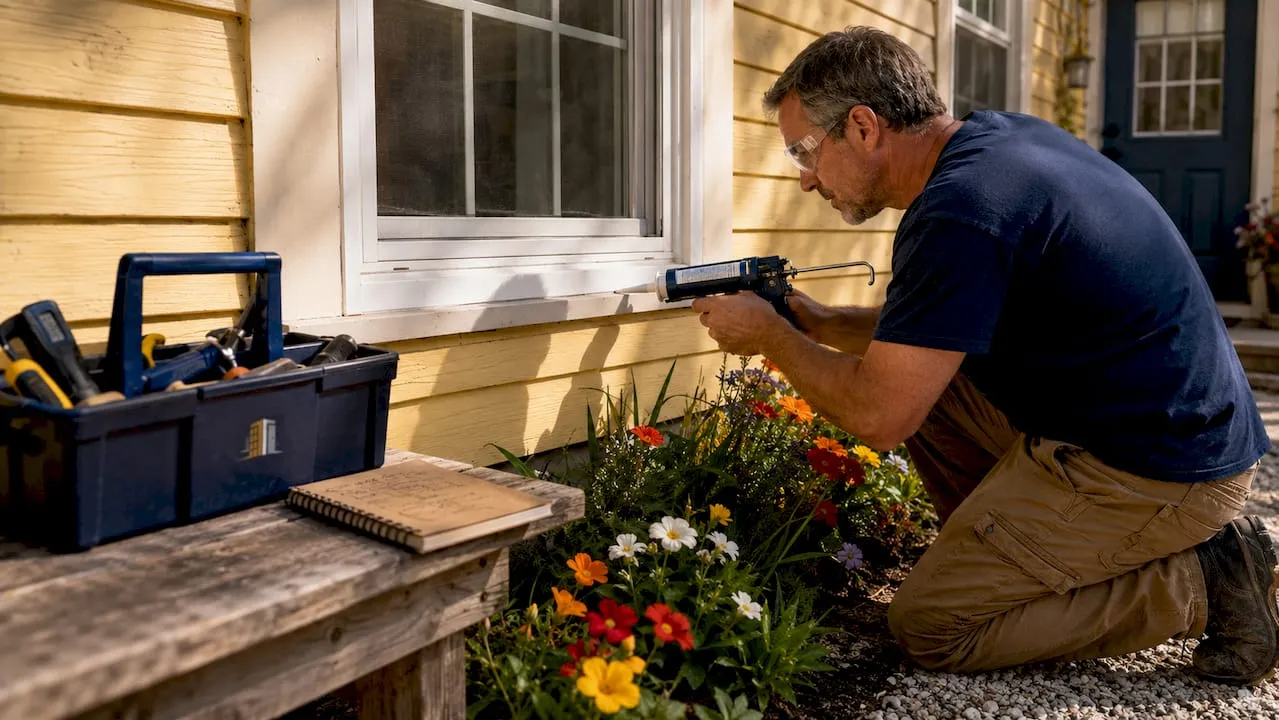
Caulking is one of the most visible parts of a window installation, but its job is often misunderstood.
Exterior window caulking helps seal the joint between the window system and the surrounding building materials. When applied correctly, it helps control water and air at that transition.
Caulking is important, but it is only one part of a complete window installation.
What window caulking does
Exterior sealant is commonly used where a window or its exterior trim meets materials such as:
- brick
- siding
- stucco
- stone
- aluminum capping
- exterior trim
The sealant creates a flexible joint that can accommodate small amounts of movement while helping keep water and uncontrolled air out of the assembly.
Caulking is not the entire waterproofing system
A bead of caulking should not be expected to compensate for poor flashing, incorrect installation, damaged cladding, or a badly prepared opening.
A durable window installation depends on several components working together.
Depending on the project, these can include:
- proper window positioning
- insulation around the frame
- drainage provisions
- flashing or membranes
- exterior trim or capping
- correctly designed sealant joints
Caulking is the final visible seal in many installations, not a substitute for everything behind it.
Why window caulking fails
Exterior sealant is exposed to sun, rain, snow, temperature changes, and movement between different materials.
Failure can occur when:
- the surface was dirty or wet during application
- the wrong sealant was used
- the joint was too wide or too thin
- adhesion was poor
- old failed material was simply covered
- the surrounding material moved excessively
- the sealant aged and lost elasticity
Cracked or detached caulking should be investigated rather than ignored.
Signs the exterior seal needs attention
Look for:
- visible cracks
- gaps between the sealant and frame
- sealant pulling away from brick or siding
- hardened or brittle material
- missing sections
- obvious openings at corners
- recurring moisture around the same area
Interior condensation alone does not prove the exterior caulking has failed. Moisture around windows can have several causes.
Should old caulking be removed?
When an existing bead has failed badly, placing new material directly over it may produce a poor result.
The joint often needs to be cleaned and prepared so the new sealant can bond to suitable surfaces.
The exact preparation depends on the surrounding materials and condition of the existing joint.
Interior and exterior caulking are different jobs
Interior caulking is often used for finish transitions between trim, jambs, drywall, or painted surfaces.
Exterior sealant deals with weather exposure and movement.
A product appropriate for an interior painted joint may not be appropriate for an exterior window perimeter.
Do not block intended drainage
Windows are designed to manage water in specific ways.
Sealant should not be applied blindly over weep openings, drainage paths, or other features intended to allow water to escape.
If you are unsure whether an opening is intentional, identify the window system before sealing it.
Inspect caulking periodically
Exterior joints are maintenance items.
A quick visual inspection is worthwhile after severe weather and as the building ages.
Look particularly at:
- lower corners
- joints exposed to strong sun
- transitions between different materials
- wide joints
- previously repaired areas
Addressing deterioration early is easier than waiting for water to reach interior finishes.
Final point
Good window caulking should form a neat, continuous, properly bonded exterior joint. It is an important part of weather protection, but lasting performance depends on the entire installation—not just the visible bead of sealant.
For more about the full installation process, see the window installation guide.