
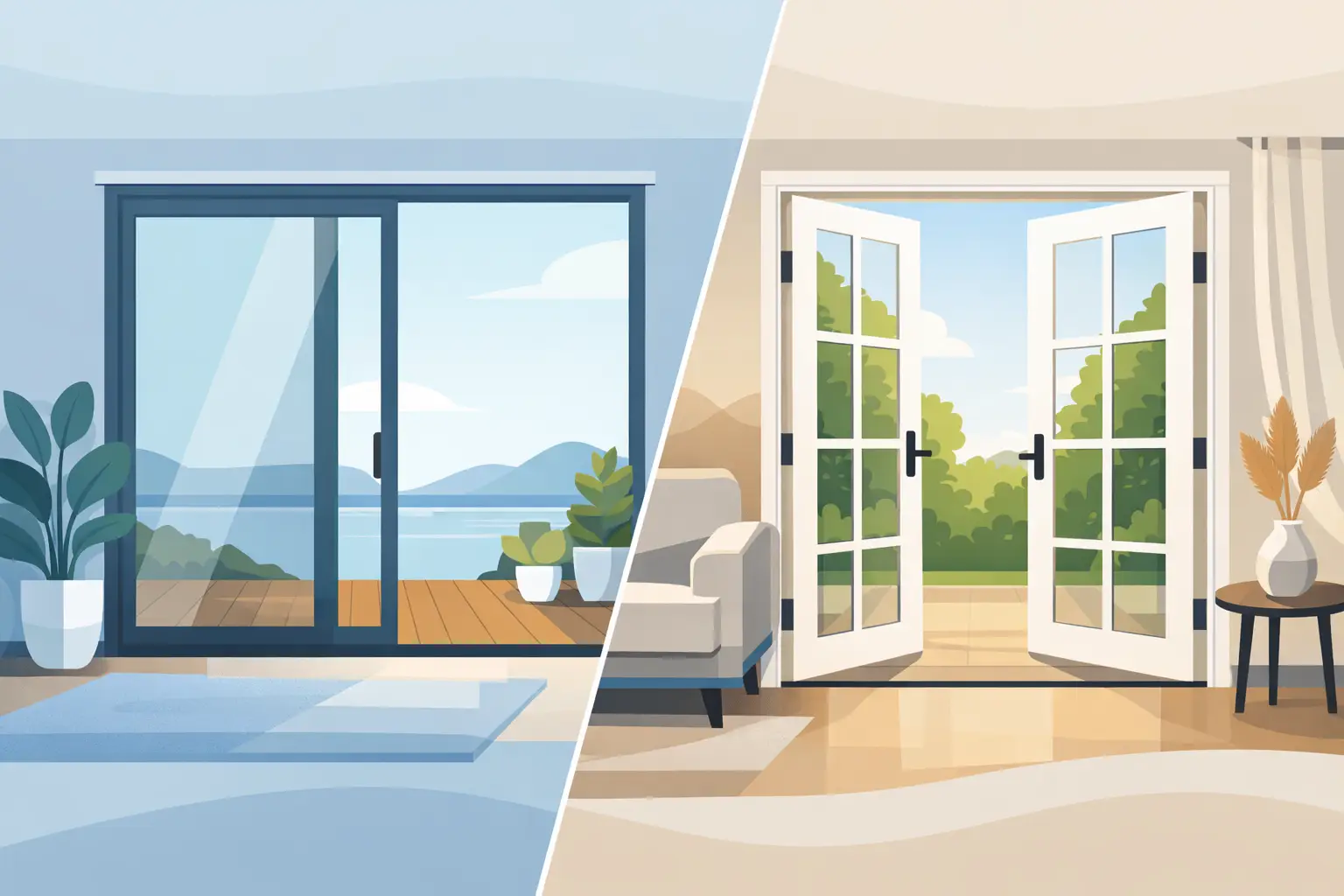
A patio door does more than provide a route to the backyard. It affects how a room feels, how furniture can be arranged, how much daylight enters the home, and how comfortably the opening performs through winter. When comparing sliding doors vs french doors, the better choice usually comes down to the opening itself, your available floor space, and the level of style and performance you expect from the replacement.
For homeowners planning a long-term upgrade, this is not a decision to make based on appearance alone. A well-built, properly installed door can improve comfort, reduce drafts, and provide reliable operation for years. The wrong configuration can leave you with an awkward swing path, limited access, or a door that does not suit how your family uses the space.
Sliding Doors vs French Doors: The Main Difference
Sliding patio doors move horizontally along a track. One panel typically slides while the other remains fixed, although larger configurations can include multiple operating panels. Because the door does not swing into or out of the room, it is a practical solution where usable floor space is limited.
French doors are hinged doors that swing open, usually from the center. They may have one active panel and one fixed panel, or two operating panels that open together for a wider passage. Their divided-glass appearance and traditional proportions make them a popular choice for homeowners who want the patio opening to feel more like a formal architectural feature.
Neither style is automatically better. A sliding door prioritizes space efficiency and broad glass views. A French door prioritizes a classic look and a more open, welcoming entry when both panels are in use.
When a Sliding Patio Door Makes More Sense
A sliding door is often the better fit for kitchens, family rooms, condos, and compact living areas. Since it stays within its own frame while opening, there is no need to keep a clear area for a door swing. You can place a dining table, sofa, or island near the opening without planning around a hinged panel.
Large glass panels are another advantage. Sliding doors can create a wide, uninterrupted view of the yard, deck, or garden. This is especially valuable in rooms where daylight is a priority but wall space is limited. A simple two-panel slider offers a clean, contemporary look, while wider options can create a more expansive connection to an outdoor living area.
Modern sliding doors are also much improved from the difficult, drafty patio doors many homeowners remember. Quality systems use durable rollers, reinforced frames, weatherstripping, multipoint locking hardware, and insulated glass packages. With the right product and professional installation, a sliding door can be secure, energy efficient, and easy to operate.
The trade-off is that a standard slider only opens about half of its total width. If you regularly move large furniture, host outdoor gatherings, or want the widest possible opening, a French door or a larger lift-and-slide configuration may be worth considering.
Best uses for sliding doors
Sliding doors work particularly well when you want to preserve interior space, maximize glass area, or replace an existing sliding patio door without changing the structural opening. They are also a sensible choice when accessibility matters, since many systems can be specified with low-profile sill options and easy-glide operation.
When French Doors Are the Better Choice
French doors bring a different experience to the room. When both panels open, they create a generous, clear passage to a patio, balcony, or backyard. This is useful for entertaining, carrying outdoor furniture, or simply making the transition between indoors and outdoors feel less confined.
Their visual character is a major reason homeowners choose them. French doors suit traditional homes, transitional renovations, and spaces where symmetry matters. They can be customized with grille patterns, glass styles, sidelights, and finishes that coordinate with the rest of the home. In the right setting, they add a more elevated look than a basic patio slider.
However, the swing is a real planning consideration. In-swing doors require clear floor space indoors. Out-swing doors preserve interior room but need a patio or landing that can accommodate the panels safely. Local code requirements, exterior steps, screens, and weather exposure can also influence which swing direction is appropriate.
French doors may require more attention to hardware and weather sealing because there are more meeting points between the panels and frame. That does not mean they are less efficient or less secure. It means product quality, accurate measurement, and careful installation matter even more.
Best uses for French doors
French doors are a strong choice when the opening is a focal point, when a full-width opening is useful, and when the room has enough clearance for the door swing. They are particularly appealing for dining rooms, formal living rooms, and rear entrances leading to a deck or landscaped yard.
Energy Efficiency Depends on the Whole System
Homeowners often assume one door type is inherently warmer than the other. In practice, energy performance depends more on the frame, glass, weatherstripping, hardware, and installation than on whether the door slides or swings.
For cold-weather climates, look for insulated frames, low-emissivity glass, sealed double- or triple-pane units where appropriate, and a door system designed to limit air leakage. The glass package should be selected for the home’s orientation as well. A large south- or west-facing opening may benefit from glass that helps manage solar heat gain, while shaded areas may prioritize maximum daylight.
The installation is just as important as the product. A patio door must be properly leveled, flashed, insulated, and sealed at the rough opening. Even a premium door can develop drafts, water intrusion, or operating problems if the surrounding opening is not prepared correctly. That is why a professional site measurement should happen before the final order, not after a door has been selected from a catalog.
Security and Everyday Use
Both door types can provide dependable security when equipped with quality locking hardware. Sliding doors should have a strong locking mechanism, a secure interlock between panels, and durable track components that resist forced lifting. French doors benefit from multipoint locks and reinforced hardware that secures the active panel at several points.
Think about how the door will be used every day. If children, pets, groceries, and frequent trips to the yard are part of your routine, a sliding door’s one-hand operation may be convenient. If you host family gatherings or frequently bring items in and out, the wider opening of French doors can be more useful.
Screens deserve consideration too. Sliding doors commonly use a sliding screen that operates independently. French door screens may be retractable, hinged, or designed as a separate system. The right choice depends on whether airflow, insect protection, or a clean unobstructed look is most important to you.
Maintenance, Durability, and Cost
Every exterior door needs basic maintenance, but the tasks differ slightly. Sliding doors benefit from keeping the track free of dirt, leaves, and pet hair. Periodic cleaning helps rollers move smoothly and prevents unnecessary wear. French doors need occasional checks of hinges, handles, sweep seals, and the alignment between the two panels.
Cost varies with size, materials, glass upgrades, hardware, configuration, and site conditions. A standard sliding patio door is often the more budget-conscious option, particularly when it fits an existing opening. French doors can cost more because of their hinged construction, hardware, customization options, and installation requirements. Structural changes, enlarged openings, and exterior work can add to the project cost for either style.
The most reliable approach is to compare complete quotes, not just door prices. A clear proposal should identify the product configuration, glass package, installation scope, disposal, trim work, warranty coverage, and any potential site-related costs. That protects you from the frustrating surprise of a low initial estimate that grows once work begins.
Choose the Door That Fits Your Home, Not Just the Trend
Choose a sliding door if your priority is saving floor space, bringing in broad views, and keeping the layout simple. Choose French doors if you want a classic statement, a wider open passage, and have enough room for the panels to swing comfortably. For homeowners who want exceptionally large openings and premium operation, lift-and-slide doors may offer another option worth discussing.
A trusted installer should help you assess the opening, room layout, exterior conditions, energy goals, and budget before recommending a system. ProPlas approaches patio door replacement as a complete project, from measurement and product selection through installation and warranty support, so homeowners can make the decision with fewer unknowns.
The right patio door should feel easy to use on an ordinary Tuesday, not just look good on installation day. Start with how you live in the room, then choose the style that will keep serving that routine season after season.