
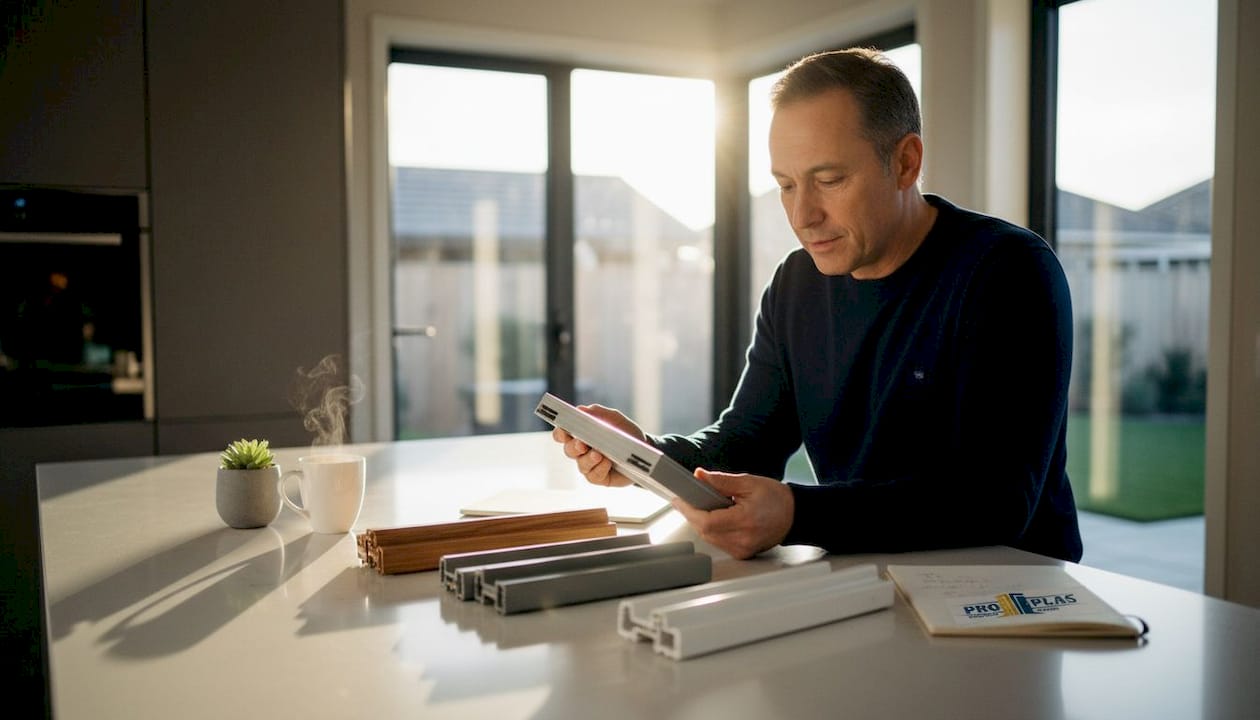
Frame material is the single most underestimated factor in a window’s energy performance. When you replace windows, the glass gets all the attention. Yet the frame determines how much heat escapes, how long seals last, and what your heating bill looks like ten years from now. Understanding the role of frame material in efficiency is the first step toward making a replacement decision you won’t regret.
How does frame material affect window energy efficiency?
Frame material governs thermal performance through a property called thermal conductivity. The lower a material’s conductivity, the less heat it transfers between your warm interior and the cold Canadian outdoors. Industry standards like Passive House certification and Canada’s RETV (Residential Envelope Thermal Value) benchmarks both set strict frame U-value targets, and not every material can meet them without help.
Aluminum conducts heat aggressively. Without a thermal break, an aluminum frame transfers heat roughly 1,000 times faster than wood. Vinyl sits in the middle ground, offering decent insulation at a low upfront cost. Wood performs well thermally but demands consistent maintenance. Fibreglass, also called FRP (fibre-reinforced polymer), is the standout performer: FRP frames achieve thermal conductivity 500 times lower than aluminum, reaching frame Uf values under 1.0 W/m²·K naturally. That means FRP meets Passive House standards without the complex thermal break engineering that aluminum requires.
Frame fraction is a factor most homeowners never hear about. It refers to the percentage of a window’s total area taken up by the frame rather than the glass. Frame fraction can reach 30–40% in smaller windows. At that ratio, the frame material has a larger impact on overall window efficiency than the glazing itself. Choosing a high-performance frame on a small bathroom or basement window is not overkill. It is the correct decision.
Pro Tip: When comparing windows, ask for the whole-window U-value (Uw), not just the centre-of-glass value. The Uw accounts for frame fraction and gives you a true picture of thermal performance.
Thermal bridging is the related problem. A thermally conductive frame creates a direct path for heat to travel from inside to outside, bypassing the insulating air gap in your double or triple glazing. Replacing a high-conductivity frame with a low-conductivity FRP frame can reduce frame heat loss by approximately 40%, improving whole-window efficiency in Canadian climate simulations. That is a meaningful reduction in your heating load, not a marginal gain.
| Frame material | Approximate Uf value (W/m²·K) | Thermal break required? |
|---|---|---|
| Aluminum (no break) | 5.0–7.0 | Yes |
| Aluminum (thermally broken) | 1.5–2.5 | Built in |
| Vinyl (uPVC) | 1.3–2.0 | No |
| Wood | 1.0–1.8 | No |
| FRP (fibreglass) | Under 1.0 | No |
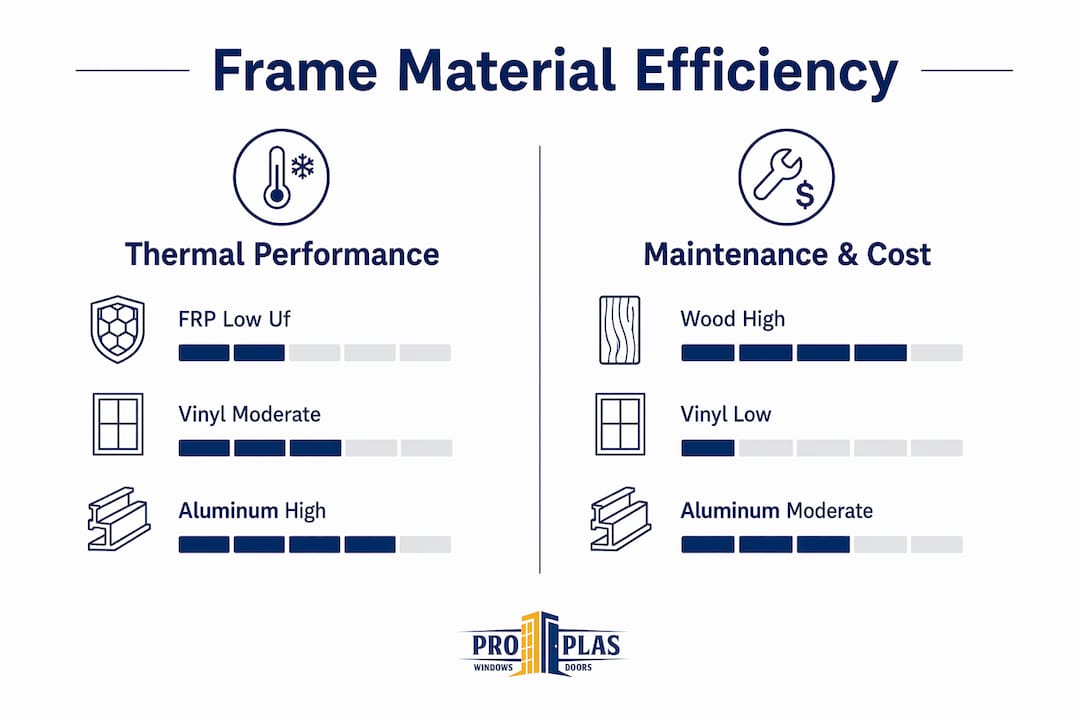
Durability, maintenance, and long-term costs by material
Frame material efficiency is not only about heat loss. It is also about how long the frame keeps performing. A frame that degrades, warps, or loses its seal integrity within a decade costs you money twice: once in maintenance and again in rising energy bills.
Here is how the main materials compare over time:
- Vinyl: Low upfront cost, no painting required, but can warp in extreme heat and become brittle in prolonged cold. Seals generally hold well for 15–20 years with proper installation.
- Wood: Excellent thermal performance but requires repainting or re-staining every few years. Moisture infiltration is the primary failure mode. Lifespan depends heavily on maintenance discipline.
- Aluminum: Powder-coated or anodized aluminum lasts 30–50 years in standard conditions. In coastal climates, salt exposure demands marine-grade coatings, which add cost and maintenance cycles.
- FRP (fibreglass): Dimensionally stable, paint-holds well, and resists moisture. Lifecycle cost studies show FRP frames carry 15–25% lower total cost over 30 years despite a higher purchase price, largely due to HVAC downsizing and reduced maintenance.
Seal integrity is where material choice has a hidden long-term impact. Aluminum expands three times more than glass when temperatures swing, because its coefficient of thermal expansion (23–24 × 10⁻⁶/K) far exceeds glass (8 × 10⁻⁶/K). That mismatch stresses seals repeatedly through Canadian winters and summers. FRP’s expansion rate closely matches glass, which means seals stay intact longer and drafts are less likely to develop over time.
Fire exposure is a safety consideration that rarely appears in standard window buying guides. Wood and vinyl frames show the highest failure rates under wildfire-level fire exposure, with wood igniting and vinyl deforming quickly. Aluminum performs better in fire-prone zones. If you live in a wildfire-risk area of British Columbia or Alberta, this factor belongs in your frame selection decision.
Pro Tip: Wood and metal frames require 2.5 to 4 times their initial purchase cost in upkeep over a 10-year period. Factor that into your budget comparison before choosing based on sticker price alone.
How does embodied energy factor into frame material selection?
Operational energy, the heat you save every winter, gets most of the attention. Embodied energy, the carbon and energy consumed manufacturing the frame in the first place, is equally real but rarely discussed with homeowners.
A life cycle assessment approach considers both:
- Manufacturing impact: Aluminum frames carry embodied energy up to 436% higher than timber alternatives. That is a significant carbon debt that takes years of operational savings to offset.
- Operational savings: A high-performance FRP or thermally broken aluminum frame saves more energy per year than a basic vinyl frame. Over 20–30 years, those savings accumulate substantially.
- Recycling and end-of-life: Aluminum is highly recyclable, which partially offsets its manufacturing footprint. Wood is renewable if sourced responsibly. Vinyl and FRP have more limited end-of-life options.
- Climate zone payback: In a cold Canadian climate like Winnipeg or Edmonton, the operational savings from a high-performance frame pay back the embodied energy gap faster than in a milder climate.
| Scenario | Embodied energy burden | Operational savings over 30 years |
|---|---|---|
| Aluminum (standard) | Very high | Moderate (requires thermal break) |
| Timber | Low | Good (natural insulation) |
| Vinyl | Moderate | Good (low conductivity) |
| FRP (fibreglass) | Moderate | Excellent (lowest Uf, no thermal break) |
The practical takeaway is straightforward. If you plan to stay in your home for 20 or more years, a higher-embodied-energy frame with superior operational performance can still be the better environmental choice. If you are renovating to sell within five years, a lower-embodied-energy option like wood or vinyl may be more appropriate. The material choice and efficiency calculation depends on your timeline.
What should homeowners consider when choosing frame materials?
Frame material selection is not a one-size-fits-all decision. The right choice depends on your home’s design, your local climate, and how you weigh upfront cost against long-term performance.
Key factors to work through before you decide:
- Window-to-wall ratio: Homes with large glazed areas, like picture windows or floor-to-ceiling designs, place more thermal load on the frame. Higher glass proportions make frame thermal performance more critical for meeting RETV energy targets. Pair your frame choice with your glazing specification, not separately.
- Frame fraction and window size: Smaller windows have a higher frame-to-glass ratio. A high-performance frame material matters more on a small casement window than on a large fixed pane where glass dominates the area.
- Climate zone: Cold climates (zones 6–8 in Canada) favour low-Uf frames like FRP or thermally broken aluminum. Coastal climates add corrosion resistance as a requirement. Wildfire zones favour aluminum over vinyl or wood for safety reasons.
- Budget and timeline: Vinyl offers the lowest upfront cost with solid mid-range performance. FRP costs more initially but delivers the best long-term value. Wood suits homeowners who value aesthetics and are committed to maintenance. Thermally broken aluminum suits commercial-style designs where slim sightlines matter.
- Installation quality: Even the best frame material underperforms with poor installation. Gaps, improper flashing, and inadequate sealing around the frame negate thermal gains. Choosing replacement windows from a provider with certified installation practices protects your investment.
The window-to-wall ratio point deserves extra attention. A homeowner adding a large picture window to a living room is making a different thermal decision than one replacing a small bathroom casement. The frame material that is correct for one opening may be unnecessary or insufficient for the other. Treat each window opening as its own efficiency calculation.
Key takeaways
Frame material directly determines a window’s thermal performance, seal longevity, and total ownership cost over its lifespan.
| Point | Details |
|---|---|
| FRP leads on thermal performance | FRP frames achieve Uf values under 1.0 W/m²·K, meeting Passive House standards without thermal breaks. |
| Frame fraction changes the math | In small windows, the frame covers 30–40% of the total area, making material choice more impactful than glazing. |
| Seal failure follows expansion mismatch | Aluminum expands three times more than glass, causing seal degradation and drafts in Canadian climates over time. |
| Embodied energy matters for long-term planning | Aluminum carries up to 436% more embodied energy than timber; operational savings must be weighed against manufacturing impact. |
| Climate zone drives the right choice | Cold, coastal, and wildfire-prone zones each favour different frame materials for safety, durability, and efficiency. |
What 25 years of window installations taught us about frame choices
Most homeowners come to us focused on glass. They ask about triple glazing, low-e coatings, and argon fills. Those are good questions. But the frame is where we see the most preventable performance failures, and it is consistently the part of the window that gets the least scrutiny during a purchase decision.
The misconception we encounter most often is that frame material is a cosmetic choice. Homeowners pick vinyl because it is affordable, or wood because it looks traditional, without realising they are also making a thermal and maintenance decision that will affect their comfort and energy bills for the next 20 years. We have seen vinyl frames in northern Ontario that warped within a decade because the product was not specified for the temperature range. We have seen aluminum frames in coastal British Columbia that corroded through their powder coating within 15 years because marine-grade finishing was not specified.
The other thing we have learned is that proper installation matters as much as material quality. A premium FRP frame installed with gaps or improper flashing will underperform a basic vinyl frame installed correctly. Frame material selection and installation quality are not separate decisions. They are one decision. When you choose a frame, you are also choosing the team that installs it, and that choice carries equal weight.
Our honest recommendation: match your frame material to your climate zone first, your budget second, and your aesthetic preference third. In that order. Most homeowners do it in reverse, and that is why so many window replacements disappoint within a decade.
— Proplas
Proplas custom windows matched to your climate and frame needs
Proplas has spent 25 years helping Canadian homeowners choose window frames that perform in their specific climate, not just on a spec sheet.
Every Proplas window is custom-fitted to your home and climate zone, with frame materials selected to meet Energy Star certification requirements and your long-term efficiency goals. There are no hidden fees and no generic off-the-shelf solutions. Whether you need thermally broken frames for a cold northern climate or corrosion-resistant options for a coastal property, Proplas matches the material to the conditions. Installation is typically completed within three days, and every project is backed by a lifetime warranty. If you want to understand how your current windows are performing before you replace them, a window energy audit is a practical first step.
FAQ
What frame material is most energy-efficient for Canadian homes?
FRP (fibreglass) frames deliver the lowest frame Uf values, under 1.0 W/m²·K, making them the top performer for cold Canadian climates. They meet Passive House standards without requiring thermal breaks.
Does frame material matter more than glass in a window?
In smaller windows, yes. Frame fraction can reach 30–40% of the total window area, meaning the frame material has a greater impact on overall efficiency than the glazing in those cases.
How does frame material affect maintenance costs?
Wood and metal frames require 2.5 to 4 times their initial cost in upkeep over 10 years. FRP and vinyl frames have significantly lower maintenance demands, with FRP showing 15–25% lower total cost over 30 years.
Which frame material is best for wildfire-prone areas?
Aluminum performs best under fire exposure. Wood ignites and vinyl deforms quickly under wildfire-level heat, making aluminum the safer choice for homeowners in fire-prone zones of British Columbia or Alberta.
Does the frame material I choose affect my Energy Star rating?
Yes. Frame U-value contributes directly to the whole-window U-value used in Energy Star and RETV calculations. A high-conductivity frame can disqualify a window from certification even with premium glazing.