

A window upgrade fee is an optional charge on your quote for choosing higher-spec materials, glass packages, or finishes beyond the base product. It covers your choice to step up — triple-pane glass instead of double-pane, Low-E coatings, argon fill, and premium frame materials — not the labour or code work required to install any window correctly. If a line item on your quote is labelled an upgrade, it should represent a product choice you made, not work the installer must do regardless.
Before signing anything, ask about the challenges of DIY door replacement to better understand when professional installation is the wiser choice, and request itemised pricing that separates unit cost, labour, required code items, and optional upgrades.
Quotes that don’t separate these categories are a red flag.
- Unit cost: the base window product price
- Labour: installation work, regardless of product choice
- Code/structural items: flashing, sill pans, permits — required by code or best practice
- Upgrade fees: optional higher-spec choices you select
Table of Contents
- What do window upgrade fees actually cover?
- How upgrade fees differ from installation and code charges
- What do window replacements typically cost in Canada?
- Are window upgrades worth the cost?
- Red flags that signal hidden upgrade fees
- When are windows cheapest, and how do you negotiate?
- Questions to ask your installer before you sign
- How Proplas handles upgrade fees — transparency you can verify
- Key takeaways
- The honest trade-off installers don’t always explain
- Get an itemised quote from Proplas
- Useful sources and where to verify incentives
What do window upgrade fees actually cover?
Installers apply upgrade fees to a predictable set of product categories. Knowing them helps you judge whether a fee reflects a genuine improvement or padding on a low-balled base quote.
- Triple-pane glass: adds a third pane and extra gas fill for improved thermal performance; typically 20–30% more than a comparable double-pane Low-E package
- Low-E coatings: microscopically thin metallic layers that reflect heat; often included in mid-range packages but sometimes priced as an add-on
- Argon or krypton gas fill: inert gas between panes that reduces conductive heat loss; krypton costs more and is mainly used in triple-pane units
- Warm-edge spacers: reduce condensation at the glass edge and improve edge-of-glass U-value
- Premium frame materials: fibreglass and wood-clad frames carry higher unit costs than vinyl but offer better dimensional stability and longevity
- Premium hardware and locks: multi-point locking systems, designer handles, or tilt-wash mechanisms
- Custom sizes or finishes: non-standard dimensions or interior wood stains that require special-order production
Pro Tip: Instead of comparing product names, ask your installer for the U-value, Solar Heat Gain Coefficient (SHGC), and ENERGY STAR rating for each option. Those numbers let you compare performance across brands and decide whether the upgrade fee buys a meaningful improvement for your climate.
How upgrade fees differ from installation and code charges
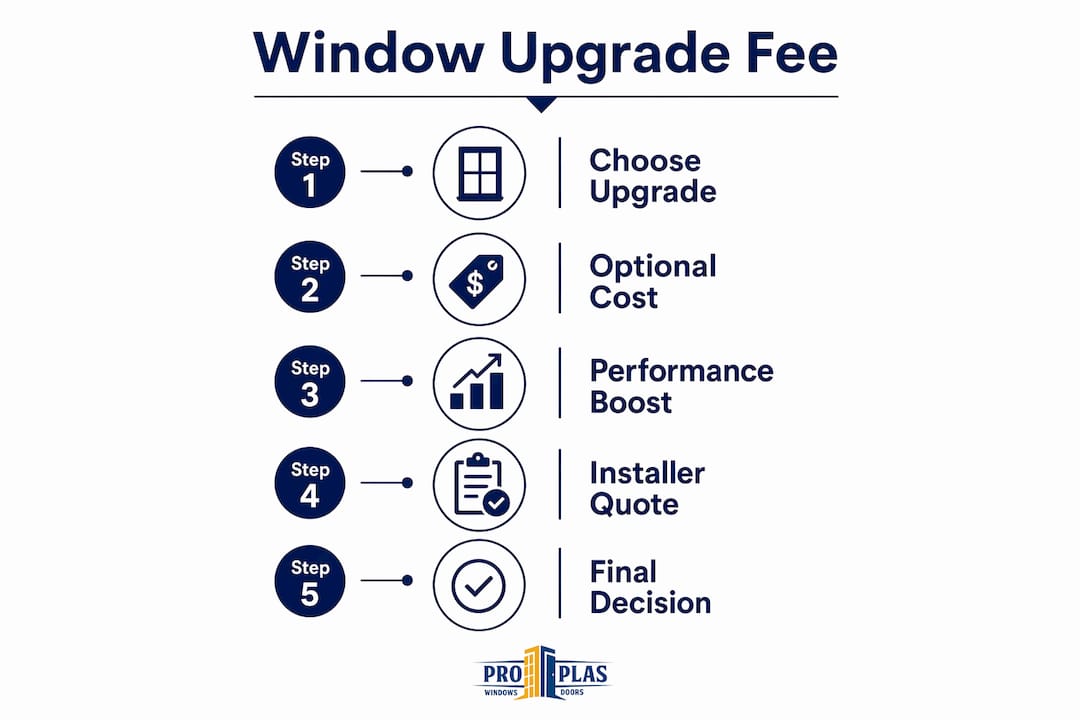
This is where homeowners most often get caught. An upgrade fee should be optional. Installation, structural, and code-related charges are not.
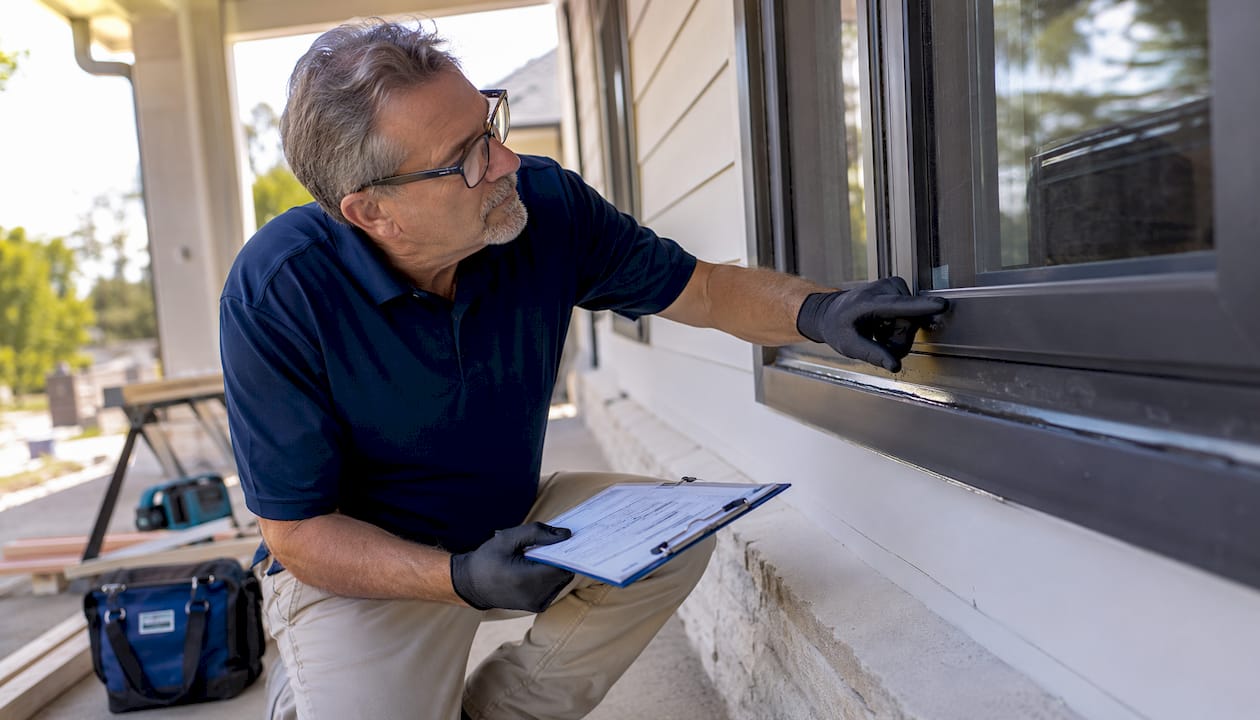
Required installation work includes full-frame removal and replacement, sloped sill pans (which direct water away from the rough opening), quality flashing tape, disposal of old windows, and permit costs. In older homes, lead-safe work and lead-paint testing add to project costs as well. None of these are optional — skipping them creates water intrusion, code violations, or voided warranties.
A common problem is installers labelling essential components as upgrades. Sloped sill pans and high-quality flashing are required to prevent water damage; they belong in the base installation scope, not on an upgrade line. The same applies to engineer-stamped drawings where a municipality requires them, and to HOA review fees where applicable.
Classify each line item before you sign:
- Optional upgrade: glass package, frame material, hardware style, custom colour
- Required installation: flashing, sill pan, caulking, disposal, permit
- Structural/code: framing repair, lead-safe protocol, engineer review
Good installation practice always includes sill pans and proper flashing as baseline, not as extras.
What do window replacements typically cost in Canada?
Canadian installed costs vary by frame material, glass package, and project size. The ranges below reflect typical installed pricing; Ontario tends to sit at the mid-to-upper end of national averages due to labour costs and permit requirements.
| Item | Typical installed cost range (CAD) |
|---|---|
| Triple-pane premium over double-pane | ~20–30% per window |
Project size affects per-window cost significantly. Replacing a single window carries the highest per-unit cost because fixed costs — crew travel, permit application, disposal — are spread across one unit. A five-to-ten window project reaches a more efficient per-window rate, and whole-home replacements of twenty or more windows can reduce per-unit pricing further as installers amortise setup costs across the project.
For Ontario-specific benchmarks, the window replacement cost guide for Ontario homes provides current regional context.
Are window upgrades worth the cost?
The answer depends on your climate, your current windows, and how long you plan to stay in the home.

Replacing single-pane windows with ENERGY STAR-rated double-pane Low-E units typically delivers the fastest payback, because the performance gap between single-pane and modern double-pane is large. Stepping from double-pane to triple-pane is a smaller jump and takes longer to recover through energy savings alone — though it makes more sense in northern Ontario or other cold-climate zones with high heating-degree days, large glazing areas, or noise-reduction needs.
Where to look for rebates and incentives in Canada:
- Canada Greener Homes Affordability Program: Natural Resources Canada administers federal rebate programmes for eligible energy-efficiency upgrades, including windows
- Provincial programmes: Ontario and other provinces periodically offer additional rebates; verify current availability through your provincial energy authority
- Utility rebates: some local utilities offer bill credits for ENERGY STAR-certified window installations
Pro Tip: Before selecting an upgrade, check whether the specific U-value and ENERGY STAR zone rating of the product you’re considering qualifies for any active rebate. A triple-pane unit that earns a rebate can close the payback gap considerably. The energy-efficient windows guide for Ontario homes lists current certification thresholds.
Upgrades that add resale value tend to be those with visible, verifiable performance credentials — ENERGY STAR certification, documented U-value — rather than cosmetic finishes that buyers can’t easily assess.
Red flags that signal hidden upgrade fees
Most surprise charges are avoidable if you know what to look for before signing.
- Lump-sum estimates with no line-item breakdown — you cannot evaluate what you’re paying for
- Verbal-only change orders — any scope change must be documented in writing before work proceeds
- Upgrade requests after installation has started — legitimate upgrades are selected before the job begins, not mid-install
- Large unexplained one-time fees — ask for a written description of every fee over $100
- No site assessment before quoting — a quote without a physical inspection cannot accurately price structural or code items
A single on-site assessment, documented in writing, prevents most disputes. The installer sees the actual opening, identifies any framing issues, and prices the job accurately before you commit.
For a full breakdown of what a replacement quote should include, see what is included in window replacement costs.
When are windows cheapest, and how do you negotiate?
Seasonality affects installer pricing more than most homeowners realise. Demand for window installation drops in late fall and winter (roughly November through February), and many installers offer better pricing or include extras during slow periods. Spring and summer pricing tends to run higher as scheduling fills up.
- Get at least three itemised quotes — comparing line by line reveals which installers are padding upgrade fees versus pricing them fairly
- Ask for equivalent-performance alternatives — if a quote includes a premium brand triple-pane, ask what a different manufacturer’s triple-pane at the same U-value costs
- Bundle multiple windows — per-window labour cost falls as project size grows; replacing five or more windows in one visit is almost always more cost-effective than staggered single-window jobs
- Ask about minimum-job thresholds — some installers have a minimum charge that makes single-window replacements expensive; knowing this helps you decide whether to combine projects
Pro Tip: If you’re planning to replace all your windows eventually, doing them in one project rather than several smaller ones typically saves 15–25% on a per-window basis, according to project-size pricing data. That saving often more than covers the cost of a glass upgrade.
Financing options are worth considering when bundling a larger project; the window replacement financing guide covers current options available to Canadian homeowners.
Questions to ask your installer before you sign
Work through this checklist before committing to any quote that includes upgrade fees.
- Scope: What exactly is included in the base installation — sill pan, flashing, disposal, caulking?
- Itemised pricing: Can you provide a written quote that separates unit cost, labour, code items, and each optional upgrade?
- Site assessment: Will you conduct an on-site inspection before finalising the quote, and will you document any structural findings in writing?
- Performance metrics: What is the U-value and SHGC of the base window and each upgrade option?
- ENERGY STAR certification: Is the product certified, and for which Canadian climate zone?
- Warranty coverage: What does the installation warranty cover, and what voids it?
- Change-order policy: How are scope changes handled mid-project, and will they be documented in writing before work continues?
- Permit responsibility: Who applies for and pays for the building permit, and how does that cost appear on the quote?
On administrative costs: HOA review fees and municipal permit costs are real project expenses. They should appear as named line items on your quote, not buried in a general “upgrade” or “miscellaneous” charge.
Sample phrasing you can use: “Can you show me the U-value for both the base and upgraded glass options, and confirm which ENERGY STAR zone each qualifies for?”
Use the window replacement preparation checklist to organise your documentation before the installer arrives.
How Proplas handles upgrade fees — transparency you can verify
Proplas approaches upgrade fees the way they should work: as documented, optional choices with clear performance justification, not as surprise line items.
- Itemised written quotes that separate unit cost, labour, required installation items, and optional upgrades
- On-site assessments before every quote, so structural and code costs are identified upfront rather than added mid-install
- ENERGY STAR-certified products with documented U-value and SHGC for every option presented
- Explicit change-order rules — no scope changes proceed without written approval
- Lifetime installation warranty backed by 25 years of experience and over 10,000 completed installations
- Typical installation timeline of three days, with scope and schedule confirmed before work begins
The installation warranty guide explains what a strong warranty should cover and what conditions can void it.
Key takeaways
A window upgrade fee is legitimate only when it covers an optional product choice you made — not required installation work or code compliance items that belong in the base quote.
| Point | Details |
|---|---|
| Demand itemised quotes | Every line item should be labelled: unit cost, labour, code item, or optional upgrade. |
| Verify performance metrics | Ask for U-value and ENERGY STAR zone before accepting any upgrade fee. |
| Check rebate eligibility | Federal and provincial programmes may offset the cost of qualifying high-efficiency windows. |
| Bundle for better pricing | Replacing five or more windows in one visit reduces per-window labour costs meaningfully. |
| Proplas provides full transparency | Itemised quotes, on-site assessments, ENERGY STAR-certified options, and a lifetime installation warranty. |
The honest trade-off installers don’t always explain
Most upgrade conversations focus on the product. The more useful conversation is about your specific opening, your climate, and your payback horizon. A triple-pane window in a well-sealed, south-facing opening in Toronto performs very differently from the same unit in a drafty north-facing wall in Sudbury. Proplas’s view is that an upgrade recommendation only makes sense when it’s tied to a specific performance outcome for your home — not a general upsell. Homeowners who ask for the U-value and ENERGY STAR zone rating of every option, and who compare those numbers against their heating costs and rebate eligibility, almost always make better decisions than those who rely on product names alone. The paperwork matters too: a written change-order policy and a lifetime installation warranty are not bureaucratic extras. They are the practical protections that make an upgrade fee worth paying.
Get an itemised quote from Proplas
Hidden upgrade fees are a solvable problem. Proplas gives Toronto and GTA homeowners fully itemised window quotes with no surprise charges — every line separated, every upgrade explained with performance data, and every installation backed by a lifetime warranty.
The process starts with an on-site assessment, typically completed within a few days of your request. The installer documents the opening, identifies any structural requirements, and presents your options with U-value and ENERGY STAR certification confirmed. Installation often completes within three days of your approval.
Request your itemised quote or book an energy audit at proplas.ca to see exactly what your project costs before you commit to anything.
This article is general information for Canadian homeowners and does not constitute professional or legal advice. Verify current rebate programmes, permit requirements, and product certifications with the relevant authority or a qualified installer for your specific situation.
Useful sources and where to verify incentives
- Canada Greener Homes Affordability Program — Natural Resources Canada; verify current federal rebate eligibility and amounts
- HomeStars window replacement price guide — Canadian homeowner cost benchmarks and labour band examples
- NerdWallet replacement windows cost guide — per-window cost ranges and project-size economics
- This Old House window replacement cost — project-size pricing and minimum-job threshold data
- ENERGY STAR Canada — search the product database at nrcan.gc.ca to confirm a specific window’s certification and climate-zone rating
- Your municipal building department — the authoritative source for local permit requirements and fees
- Proplas energy-efficient windows guide for Ontario — Ontario-specific ENERGY STAR thresholds and upgrade considerations