
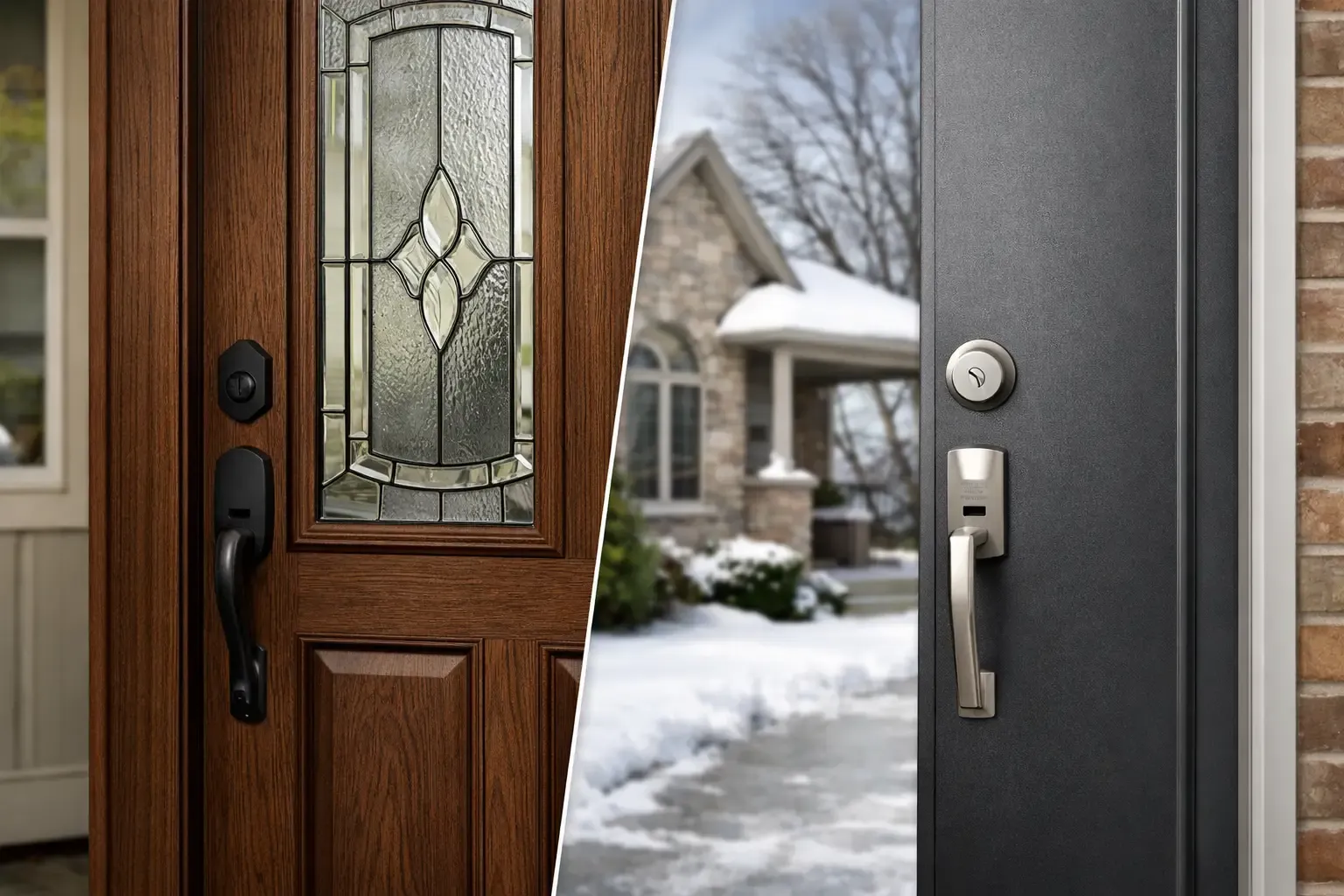
A new front door has to do more than look good from the curb. It needs to close tightly during a January cold snap, stand up to rain and sun, protect the entry, and suit the way your home is built. When comparing fiberglass doors vs steel, the better choice depends less on a single material claim and more on your priorities: appearance, exposure to weather, budget, and long-term maintenance.
For homeowners in Toronto, the GTA, Simcoe Region, and Southern Ontario, both door types can be excellent upgrades when they are properly sized, fitted, and professionally installed. The wrong installation, however, can leave even a premium door drafty, difficult to operate, or vulnerable to moisture around the frame.
Fiberglass Doors vs Steel: The Practical Differences
Fiberglass and steel are both commonly used for insulated exterior doors. Neither should be confused with a solid slab of its face material. Most residential steel doors have a steel skin over an insulated core, while fiberglass doors use a molded composite skin over an insulated core. The quality of the frame, weatherstripping, threshold, glass package, and installation has a major effect on comfort and performance.
The material still changes how the door handles everyday wear, weather, and design choices.
Insulation and comfort in changing weather
A well-built fiberglass door generally offers an advantage in thermal performance because fiberglass does not conduct heat and cold as readily as steel. That can help the inside surface feel less cold in winter and less affected by direct summer sun. It is a meaningful benefit for a front entry exposed to wind or for homes where the door opens into a frequently used living space.
Steel doors can also perform very well, especially models with quality foam insulation, insulated frames, and reliable weatherstripping. But steel is conductive. If the door or frame is poorly built, or if the weather seal is compressed or missing, cold transfer can be more noticeable.
The practical takeaway is not that every fiberglass door is warmer than every steel door. Compare the complete system, including the energy rating, glass inserts, frame construction, and installation method. A high-performing door can lose much of its value if gaps around the opening are not properly sealed.
Security and everyday strength
Steel has a deserved reputation for strength. A quality steel door is difficult to force or damage through ordinary impact, making it a practical option for side entries, garage-to-house doors, and homeowners who want a simple, secure front-door solution. Fiberglass doors are also strong and are widely used as secure exterior entries, but they are not usually selected because they offer the same impact resistance as steel.
Door security is not determined by the slab alone. A reinforced strike plate, long screws anchored into the framing, a solid deadbolt, strong hinges, and correct alignment matter just as much. A poorly secured steel door can still be a weak entry point, while a correctly installed fiberglass system can provide dependable protection.
Resistance to dents, moisture, and wear
This is where fiberglass often earns its higher price. It resists dents and does not rust. If your entry is exposed to road salt, heavy rain, wet footwear, or repeated contact from kids, pets, and deliveries, fiberglass is forgiving. Its molded surface can also mimic wood grain convincingly without the seasonal upkeep of a wood door.
Steel is more likely to dent from a hard impact. Once its paint finish is scratched deeply enough to expose metal, rust can develop if it is not repaired promptly. This does not make steel a poor choice. It means the door needs occasional inspection and touch-up, particularly at the bottom edge, around hardware, and on a weather-exposed entrance.
Fiberglass is not maintenance-free. Its finish can fade over time, and dark colors on a south- or west-facing door may require careful product selection. Extreme heat can affect any door system, especially when a storm door traps heat against it. Still, fiberglass generally requires less worry about corrosion and minor impact damage.
Cost, Value, and What You Are Actually Paying For
Steel is usually the more budget-friendly option upfront. It gives many homeowners a clean appearance, strong security, and solid energy performance without stretching the renovation budget. For a secondary entrance or a rental property where practical value is the priority, a well-made steel door is often the sensible choice.
Fiberglass usually costs more because of the material, construction, and design flexibility. It can be a stronger long-term investment for a prominent front entry, especially when you want a wood-look finish, decorative glass, sidelites, or a door that will see years of heavy use with minimal maintenance.
Do not compare quotes based only on the advertised door price. A complete replacement may include removal of the existing unit, frame preparation, insulation, flashing or exterior finishing, trim, hardware, glass inserts, disposal, and warranty coverage. An unusually low quote can leave out work that is necessary for a durable, weather-tight result.
Appearance and Customization
Steel doors suit homes that call for a crisp, traditional, or contemporary look. They are available in smooth finishes, panel designs, and many paint colors. Their clean lines work particularly well for side doors, modern entries, and simple replacement projects.
Fiberglass offers more design range. It can be smooth, but it is especially popular for embossed wood-grain styles that provide the warmth of stained wood without the maintenance demands of a natural wood slab. This makes it a strong fit for homeowners updating a front façade, matching existing trim, or choosing a door with decorative glass and sidelites.
The best-looking door is one that fits the proportions of the opening and the character of the home. A wide entry with sidelites may benefit from fiberglass detail, while a straightforward rear entrance may not require it. Custom sizing, glass configuration, hardware finish, and exterior color often make a bigger visual difference than the material alone.
Installation Can Decide the Outcome
A door can have a strong energy-performance rating and still underperform if the opening is not measured correctly or the frame is installed out of square. Common symptoms include a draft near the latch side, light visible around the weatherstripping, a threshold that leaks during wind-driven rain, or a door that becomes harder to lock as seasons change.
Professional installation starts with accurate measurement and an honest assessment of the existing opening. The installer should address damaged framing, confirm the sill is properly supported, set the unit level and plumb, insulate gaps without overpacking them, and test the door’s swing, latch, and seals before completing the finish work.
This is particularly important in older Southern Ontario homes, where openings may have shifted over time or previous replacements may have hidden water damage. A replacement should solve the underlying fit issue rather than simply cover it with trim.
Which Door Is Right for Your Home?
Choose a fiberglass door when your front entrance is highly visible, exposed to weather, or central to the home’s curb appeal. It is also a strong choice when you want a wood-inspired appearance, low maintenance, and dependable comfort through seasonal temperature swings.
Choose a steel door when you want proven strength, a practical price point, and a clean, durable solution for a front, side, or utility entry. It can be an excellent value when paired with a quality frame, insulated glass where needed, and careful installation.
For many homes, the answer is not one material throughout the property. A fiberglass door may make sense at the main entrance, while steel is a smart, cost-conscious choice for a side or garage entry. The right plan considers how each door is used, what it faces, and what you expect it to do over the next decade.
Before choosing, ask for a clear written scope that identifies the door system, glass, hardware, installation work, and warranty. At Proplas, that kind of upfront clarity is part of helping homeowners choose an entry system with confidence. A door should feel solid, operate smoothly, and keep the weather outside - not become another renovation problem to manage next season.