
A front door that sticks in January, lets in drafts in February, and starts showing wear after a few seasons is more than an annoyance. It is a sign that your entry doors are not doing the job your home needs them to do. For homeowners making a serious upgrade, the right door has to balance appearance, security, insulation, and long-term reliability.
That balance matters even more in places with real seasonal swings. A door can look great in a showroom and still underperform once it faces freezing temperatures, summer humidity, driving rain, and daily use. This is why choosing a replacement is not just about picking a style. It is about making sure the product, the customization, and the installation all work together.
What good entry doors should actually deliver
Most homeowners start with curb appeal, and that makes sense. The front door is one of the first things people notice. But appearance alone is a poor way to judge value. A good exterior door should also close tightly, resist warping, support modern locking hardware, and help reduce energy loss around the entrance of the home.
That means the best choice is rarely the cheapest one upfront. Lower-cost doors can be tempting, especially when quotes seem to vary widely. But many low-price options leave out details that matter later, such as better cores, stronger frames, quality weatherstripping, reinforced hardware areas, or professional finishing. Those are the details that affect how the door performs after years of use, not just the first few weeks after installation.
For most homeowners, the real goal is peace of mind. You want a door that feels solid, looks right with the house, and does not create new problems after it is installed.
Steel or fiberglass entry doors?
This is usually the first major decision, and there is no one-size-fits-all answer. Both materials can be excellent when sourced well and installed properly, but they serve slightly different priorities.
Steel doors are often chosen for strength, value, and clean, simple styling. They are a practical fit for homeowners who want durability and security at a competitive price point. A quality steel door can perform very well, but it may be more vulnerable to dents and surface damage if it takes hard impacts over time.
Fiberglass doors are often preferred when appearance, stability, and lower maintenance matter most. They can mimic the look of wood more convincingly, resist dents better than steel, and hold up well in varying weather conditions. They do tend to cost more, so the question becomes whether the added visual flexibility and resilience justify the investment for your home.
In many cases, it depends on the design you want and how exposed the entry is. A covered porch creates different demands than a front entrance that takes direct sun, heavy rain, and winter wind. Material choice should reflect those conditions, not just a catalog photo.
Why fit and installation matter as much as the door itself
A premium product cannot make up for poor installation. This is where many door projects go wrong. Homeowners compare slab styles, glass options, and finishes, but the long-term performance of entry doors depends heavily on measurements, framing conditions, leveling, sealing, and trim details.
If the opening is out of square, if the sill is not properly set, or if insulation around the frame is rushed, the result may be drafts, water intrusion, lock issues, or doors that do not swing properly. These problems are frustrating because they often show up after the crew has left and the payment has been made.
That is why a managed replacement process matters. Accurate measuring should happen before the order is finalized, not as an afterthought. Installation should account for the home’s actual opening conditions, and the final result should be tested for operation, seal, and finish. Homeowners are not just buying a product. They are buying accountability for the full result.
Entry doors and energy efficiency
Many people think about windows first when they want better efficiency, but the front entrance is part of the same thermal envelope. Older doors and aging frames can leak air around weatherstripping, thresholds, sidelites, and poorly insulated cores. Even small drafts become noticeable when they are right next to a frequently used entrance.
Modern entry doors can help reduce those issues, especially when paired with insulated glass, quality seals, and proper installation. That does not mean every expensive door automatically produces major savings. Actual performance depends on the full system, including frame construction and the quality of the install.
The practical benefit is often comfort as much as cost. A well-fitted door can reduce cold spots near the entry, help maintain more stable indoor temperatures, and make the home feel tighter overall. For families planning to stay in the house long term, that is a meaningful upgrade.
Style matters, but it should match the home
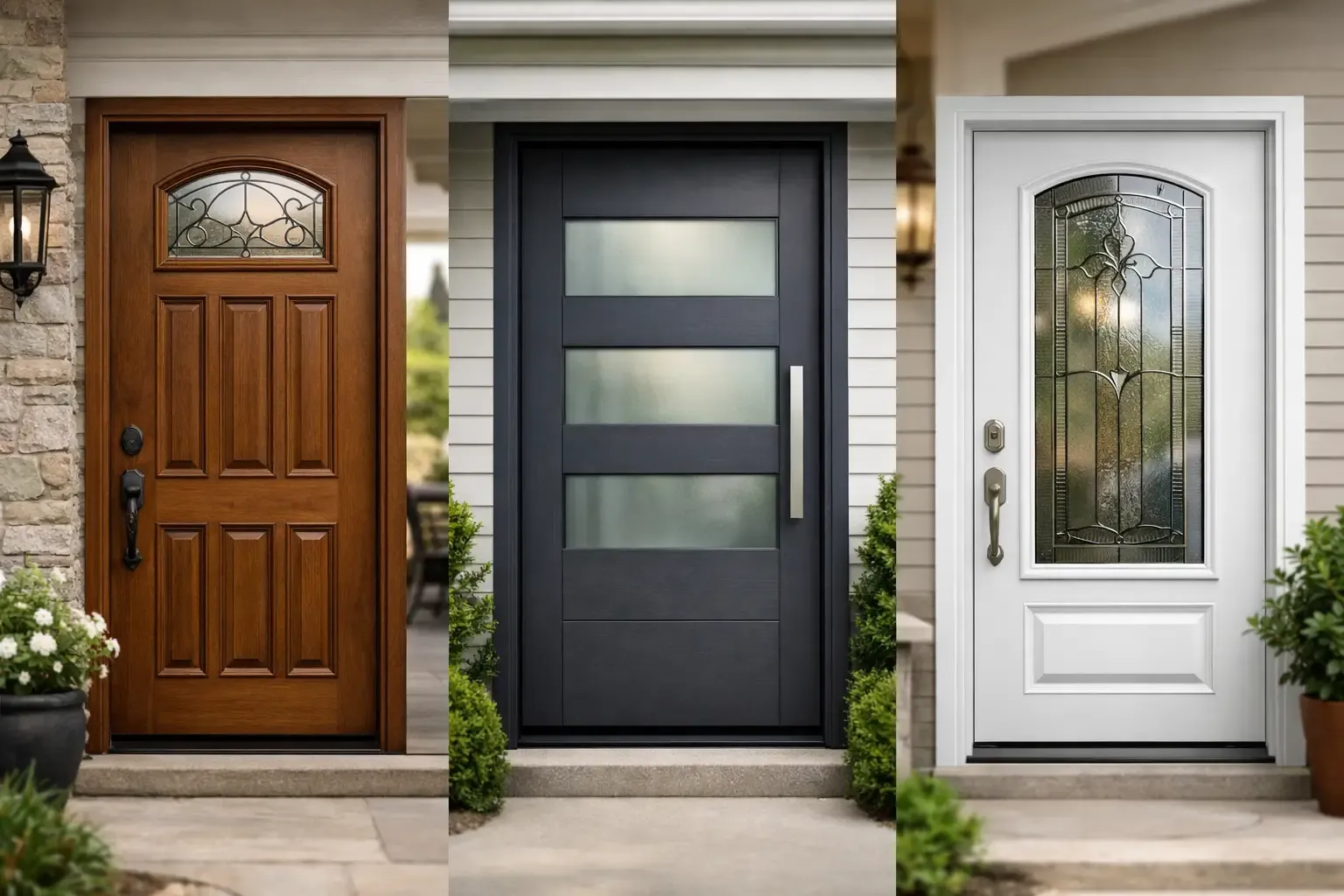
There is plenty of room to customize a front entry. Panel layouts, decorative glass, sidelites, transoms, finish colors, and hardware all affect the final look. The mistake is assuming more detail always means a better result.
The best-looking doors usually feel consistent with the architecture of the home. A modern house may benefit from clean lines, larger glass inserts, and minimal ornament. A traditional home may suit classic panels and more defined detailing. If the door feels disconnected from the rest of the exterior, it can make the entrance look forced rather than elevated.
Glass is another area where homeowners weigh beauty against privacy. Decorative inserts can bring in natural light and create a stronger first impression, but full or oversized glass designs may not suit every location. If the front of the home sits close to the street or faces neighboring properties, privacy glass options may make more sense than clear designs.
This is where customization should be practical, not overwhelming. Good guidance helps narrow the options based on the home, the homeowner’s goals, and the conditions at the entrance.
What to watch for when comparing quotes
Door quotes can look similar until you examine what is included. One contractor may price the slab alone, while another includes frame replacement, glass, hardware prep, finishing details, disposal, and installation. That gap is where hidden costs usually start.
Ask what is actually being replaced. Is it just the door panel, or the full unit including frame and threshold? Are sidelites part of the estimate? Is interior and exterior trim work included? What kind of warranty applies to the product and the labor? These are not minor details. They directly affect the value of the project.
Timelines also matter. A cheaper quote loses its appeal if the order drags on, communication is weak, or service becomes difficult after installation. For a purchase this important, transparency matters just as much as price.
A company like ProPlas stands out when the process is clear from the beginning - measurement, product selection, customization, installation, and follow-up support are handled as one accountable service rather than passed between multiple parties.
When replacement makes more sense than repair
Not every door problem means full replacement is necessary. Minor hardware issues, weatherstripping wear, or finish touch-ups can sometimes be addressed without installing a new unit. But if the door is old, poorly insulated, damaged, or no longer sealing correctly, repeated repairs often become a short-term fix for a long-term problem.
Replacement usually makes more sense when there is visible frame deterioration, ongoing drafts, difficulty locking or latching, or signs of water infiltration. It is also worth considering when the current door no longer matches the security, appearance, or efficiency standards you want for the home.
The key is to assess the whole opening, not just the most visible symptom. A sticking door may be a door issue, a frame issue, or a sign of shifting that affects the full unit. A proper evaluation prevents homeowners from spending money twice.
A better door should lower stress, not add to it
Home improvement projects often become stressful because homeowners are asked to manage too many moving parts on their own. With entry doors, that can mean sorting through product choices, trying to compare uneven quotes, worrying about installation quality, and wondering who will respond if something is not right later.
A better experience is simpler. You should know what you are getting, what it costs, how long it will take, and who is responsible from start to finish. That is what turns a door replacement from a risk into a worthwhile upgrade.
The right front door does more than improve the look of your home. It should feel solid every time it closes, perform well in every season, and give you one less thing to worry about.