

Minimizing home disruption during window replacement is defined as reducing noise, dust, installation time, and household inconvenience through deliberate preparation and the right choice of windows and methods. Most homeowners assume window replacement means days of cold drafts, loud tools, and rooms turned upside down. That assumption is wrong. With the right preparation, the right window type, and a qualified installer, the process can be quiet, fast, and comfortable. Proplas has completed over 10,000 installations across the Toronto and GTA area, and the difference between a smooth job and a chaotic one almost always comes down to planning before the crew arrives.
What do you need to minimize home disruption during window replacement?
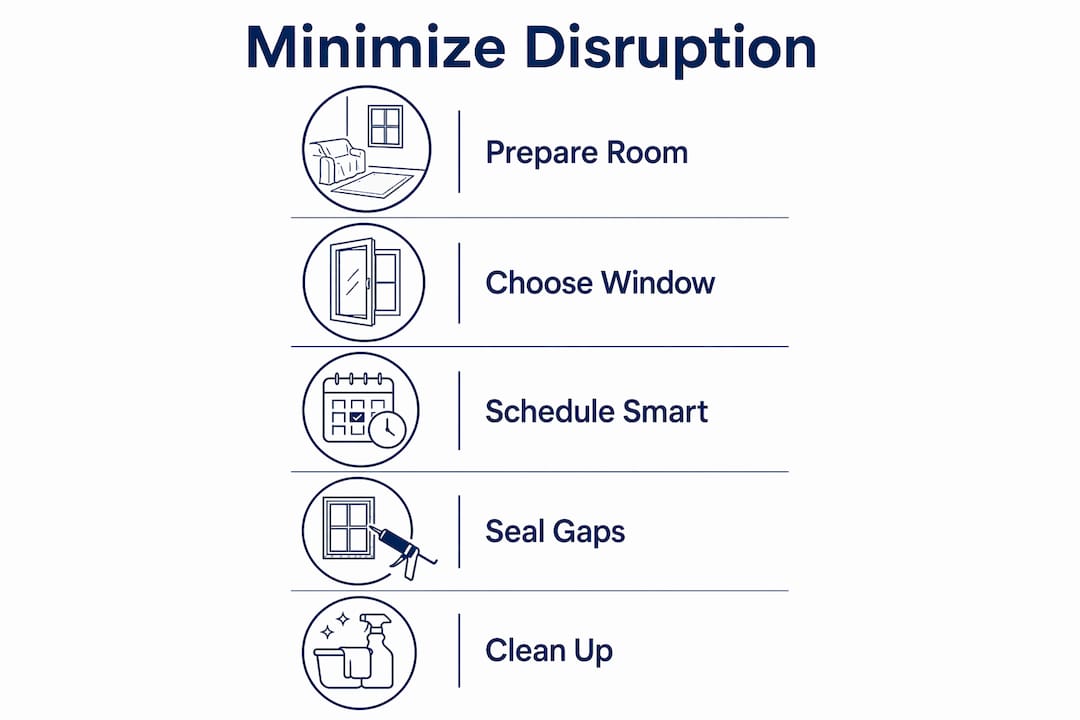
Preparation is the single biggest factor in keeping a window replacement project on track and out of your way. Before any work begins, clear access paths and cover nearby furniture to protect your belongings and give installers room to work efficiently. Move curtains, blinds, and any wall décor within one metre of each window. These small steps prevent damage and cut the time a crew spends working around obstacles.
The tools and materials required for a low-disruption installation include:
- Measuring tape and level to confirm the rough opening is plumb, level, and square before the new window arrives
- Shims to adjust fit without forcing the frame
- Flashing tape and acoustic sealant to seal the perimeter and block both air and sound
- Non-corrosive pan-head screws for secure, weather-tight fastening
- Dust sheets and painter’s tape to contain debris inside the work zone
Timeframes matter when you are planning around work, children, or pets. Professional installation takes 1–2 hours per window, while a first-time DIY attempt can take around six hours per window including removal and sealing. That gap is significant. Choosing professional installation is the fastest path to getting your home back to normal. Keep in mind that custom windows require a 6–8 week manufacturing lead time, so order early and plan your installation date accordingly.
Pre-inspection of the rough opening is non-negotiable. Measure height and width at three points each, and check for rot or water damage in the framing. Discovering a problem after the old window is out creates delays, noise, and cold air inside your home.

Pro Tip: Book your installation for a mild weekday in late spring or early autumn. Temperatures are stable, sealants cure properly, and your home loses less heat during the brief open-window period.
Which window types reduce noise and speed up installation?
Not all windows are equal when it comes to keeping your home quiet and your installation short. The choice between an insert replacement and a full-frame replacement is the first decision that shapes how disruptive the project will be.
| Feature | Insert replacement | Full-frame replacement |
|---|---|---|
| Existing frame | Kept in place | Fully removed |
| Installation time | Shorter | Longer |
| Interior disruption | Minimal | Moderate to significant |
| Best suited for | Sound frames, quick upgrades | Rotted or damaged frames |
| Noise during install | Lower | Higher |
Insert replacements fit inside the existing frame, which means no exterior cladding removal and far less mess. Full-frame replacements are necessary when the frame itself is damaged, but they take longer and open more of the wall to the elements during installation.
For noise reduction, the glazing type is the most important specification. Upgrading from single-pane to double-pane windows reduces noise by 30–50%, and acoustic glazing can achieve reductions up to 49 dB. Triple-pane glass adds a further 10–20% reduction compared to double-pane. For Toronto-area homeowners near busy roads or transit corridors, triple-pane or acoustic-rated glass is worth the added cost.
Retrofit glazing is a faster alternative to full replacement. It fits inside the existing window frame as a secondary layer, creating a decoupled air gap that significantly improves acoustic isolation. The original window stays in place, which means no structural modification and far less downtime. Occupants can remain home throughout the process.
Frame quality also affects both noise and comfort. Vinyl and fibreglass frames with multi-chamber profiles reduce thermal transfer and dampen vibration better than basic aluminium frames. Proplas offers Energy Star certified windows that meet both thermal and acoustic performance standards.
Pro Tip: Ask your installer for the Sound Transmission Class (STC) rating of any window you are considering. An STC of 35 or higher is the threshold for meaningful noise reduction in urban Canadian homes.
Step-by-step guide to a disruption-free window installation
A well-run installation follows a clear sequence. Each step below is designed to keep noise, dust, and inconvenience to a minimum.
-
Communicate with everyone in the home. Tell family members which rooms will be affected and for how long. Arrange for pets and young children to be in a separate area of the house during the noisiest phase, which is the removal of the old window.
-
Prepare the workspace. Lay dust sheets on the floor and tape plastic sheeting across the doorway of the room being worked in. This contains dust and debris to one area and makes cleanup faster.
-
Remove the old window carefully. Score the interior and exterior caulk with a utility knife before prying. Cutting the sealant first reduces the force needed, which means less vibration through the wall and less risk of damaging the surrounding drywall or trim.
-
Inspect and prepare the rough opening. Check that the opening is plumb, level, and square before placing the new window. A misaligned opening forces the frame out of shape, causing sashes to stick and requiring follow-up service calls.
-
Install flashing tape before the window goes in. Apply self-adhesive flashing tape to the sill first, then the sides, following the shingle-lap sequence so water drains outward at every layer. This step prevents water intrusion and the long-term disruption of rot or mould.
-
Set and shim the new window. Place the window in the opening, shim the corners until the frame is perfectly level, and check that the sash operates smoothly before fastening. Use non-corrosive pan-head screws rather than roofing nails for a secure, weather-tight fit.
-
Seal the perimeter with acoustic sealant. Apply sealant around the full interior and exterior perimeter. Gaps as small as 1–2 mm can reduce sound insulation by up to 10 dB, so a thorough seal is not optional. It is the last line of defence against both noise and drafts.
-
Clean up and do a final check. Remove dust sheets, wipe down the frame and glass, and operate the window several times to confirm smooth function. Check for any cold air movement around the perimeter with your hand before the installer leaves.
Pro Tip: Keep the room temperature above 10°C during and after installation. Sealants and adhesives cure poorly in cold conditions, which can leave gaps that let in noise and cold air.
What common mistakes increase home disruption and how do you avoid them?
Most disruption during window replacement is preventable. These are the errors that consistently cause delays, noise, and follow-up visits.
-
Skipping the rough opening inspection. Forcing a window into an opening that is not plumb or square causes sash sticking and operational failures that require a return visit. Measure three times before ordering.
-
Using inadequate sealant or skipping it entirely. Acoustic sealant around the frame is one of the most cost-effective ways to reduce noise ingress. Skipping it leaves gaps that let in both sound and cold air, and fixing it later means disturbing the finished trim again.
-
Using the wrong fasteners. Improper fasteners and damaged flanges lead to water intrusion and air leakage. Non-corrosive pan-head screws are the correct choice. Roofing nails are not.
-
Neglecting dust containment. Without plastic sheeting across doorways and dust sheets on floors, fine construction dust spreads through the entire home via air circulation. Cleanup then takes far longer than the installation itself.
-
Poor communication with occupants. Failing to tell everyone in the home when and where work is happening leads to unnecessary stress and safety risks. A simple five-minute briefing before work starts prevents most of these issues.
-
Ordering windows without confirming measurements. Custom windows have a 6–8 week lead time. An incorrect measurement means starting that wait over again. Warranty coverage from a reputable installer protects you if a manufactured unit does not fit as specified.
Experts advise prioritising sealing and small-scale interventions before committing to a full replacement. If your frames are structurally sound, acoustic inserts or retrofit glazing may deliver the noise reduction you need at a fraction of the cost and disruption.
Key takeaways
Choosing the right window type, preparing the rough opening correctly, and sealing every gap are the three steps that most reliably reduce noise, dust, and installation time during window replacement.
| Point | Details |
|---|---|
| Preparation cuts disruption | Clear access paths, cover furniture, and inspect the rough opening before work begins. |
| Professional installation is faster | A qualified installer completes each window in 1–2 hours versus up to six hours for a first-time DIY attempt. |
| Window type shapes noise outcome | Double-pane and acoustic glazing reduce noise by 30–50%; insert replacements cause less mess than full-frame removals. |
| Sealing is non-negotiable | Gaps of 1–2 mm reduce sound insulation by up to 10 dB, so full perimeter sealing with acoustic sealant is required. |
| Avoid common errors | Wrong fasteners, skipped sealing, and poor rough opening prep are the top causes of callbacks and ongoing disruption. |
Proplas’s perspective on low-disruption window upgrades
After 25 years of installing windows across the Toronto and GTA area, we have seen the same pattern repeat itself. Homeowners who prepare their space, ask the right questions about glazing, and choose professional installation almost never call us back with complaints. The ones who do call back are usually dealing with the consequences of a rushed job, a skipped seal, or a window that was forced into a rough opening that was never properly checked.
Our honest recommendation: do not underestimate sealing. Homeowners often focus entirely on the glass specification and then wonder why they can still hear traffic after spending thousands of dollars. The glass matters, but a 1 mm gap in the sealant undoes much of that investment. We apply acoustic sealant on every job, and we check it before we leave.
For Toronto-area homeowners near the Gardiner or the 401, we consistently recommend triple-pane or acoustic-rated glass combined with a full perimeter seal. The cost difference over double-pane is modest. The comfort difference is not. If budget is a constraint, retrofit glazing is a legitimate middle ground that we are happy to discuss during a consultation.
— Proplas
How Proplas keeps your window replacement fast and tidy
Proplas brings 25 years of installation experience to every job, and our process is built around getting your home back to normal as quickly as possible. We complete most installations in as little as three days from start to finish, and our crews arrive prepared with dust containment, proper tooling, and Energy Star certified window options suited to your home and budget.

Every Proplas installation is backed by a lifetime warranty, so you are protected if anything does not perform as it should. Our team handles everything from measuring and ordering to final sealing and cleanup, with no hidden fees and no bureaucratic delays. If you are ready to replace your windows with minimal disruption, explore our window options or visit Proplas to request a free quote and get your project started.
FAQ
How long does a professional window replacement take?
Professional installation takes 1–2 hours per window. A full home project with multiple windows is typically completed within one to three days.
What is the best window type to reduce noise during replacement?
Double-pane and acoustic glazing windows are the most effective options. Acoustic glazing can reduce noise by up to 49 dB, and triple-pane adds a further 10–20% reduction over standard double-pane.
Can I stay home during window replacement?
Yes, in most cases. Insert replacements and retrofit glazing installations are designed to allow occupants to remain home throughout the process, with disruption limited to the immediate work area.
What causes the most disruption during window replacement?
Skipping rough opening preparation and inadequate sealing are the top causes. A misaligned rough opening leads to operational failures and return visits, while poor sealing allows noise and drafts to persist after installation.
Do acoustic inserts work as well as full window replacement for noise?
Acoustic inserts create an air gap that dampens sound without removing the original window. They deliver meaningful noise reduction at lower cost and with far less disruption than a full replacement.