

Window glazing is defined as the complete engineered glass system installed within a window frame, designed to control heat transfer, sound, UV radiation, and light. Most homeowners assume glazing simply means glass. In fact, modern glazing is a full assembly) that includes multiple panes, insulating gas fills, Low-E coatings, and spacer bars working together. Getting this distinction right matters because glazing is the single biggest factor in how well your windows perform, not the frame style or colour.
What is window glazing made of?
Window glazing is not raw glass. It is a factory-engineered insulated glass unit, commonly called an IGU, built from several components that each serve a specific function. Older glazing used putty or compound) to hold glass in place. Modern units are factory-sealed and far more energy-efficient by design.
The main components of a modern glazing system include:
- Glass panes. Single, double, or triple panes form the core of the unit. Typical IGUs feature 2–3 panes) with 12–19mm air gaps between them to improve thermal performance.
- Insulating gas fills. Argon and krypton gas are injected between panes. These gases are denser than air, which slows heat movement through the window.
- Low-E coatings. Low-emissivity coatings are microscopically thin metallic layers applied to the glass surface. They reflect infrared heat while allowing visible light through, reducing both heat gain in summer and heat loss in winter.
- Spacer bars. These run along the edges of the IGU, separating the panes and sealing the gas fill inside. Material choice matters here: warm-edge spacers reduce condensation at the glass edge.
Pro Tip: Do not confuse glazing with window tinting. Glazing includes built-in factory coatings that outperform aftermarket tint films in both durability and energy control.
Glazing experts recognise that glazing drives window performance more than any other component, including the frame. Choosing the right glazing system at the start saves you from costly upgrades later.

How does window glazing improve energy efficiency?
Glazing reduces energy costs by limiting how much heat moves through your windows in either direction. Windows are one of the weakest points in a home’s thermal envelope. Upgrading to a high-performance glazing system directly addresses that weakness.
Upgrading window glazing reduces 25–30% of HVAC energy costs by minimising heat gain and loss through windows. Triple-pane units achieve U-factors between 0.8 and 1.2, compared to 1.4–1.8 for standard double-pane units. A lower U-factor means less heat escapes in winter and less enters in summer.
That reduction in heat transfer translates directly to lower heating and cooling bills year-round. For Canadian homeowners dealing with harsh winters and warm summers, this is not a minor gain. Proper window sealing and insulation compounds those savings further by preventing air leakage around the frame.
Glazing also controls sound and UV radiation. Low-E coatings reduce UV exposure and glare compared to untreated glass. This protects furniture, flooring, and fabrics from fading over time. Multi-pane units with gas fills also dampen outside noise, which matters if you live near a busy road or in a dense neighbourhood.
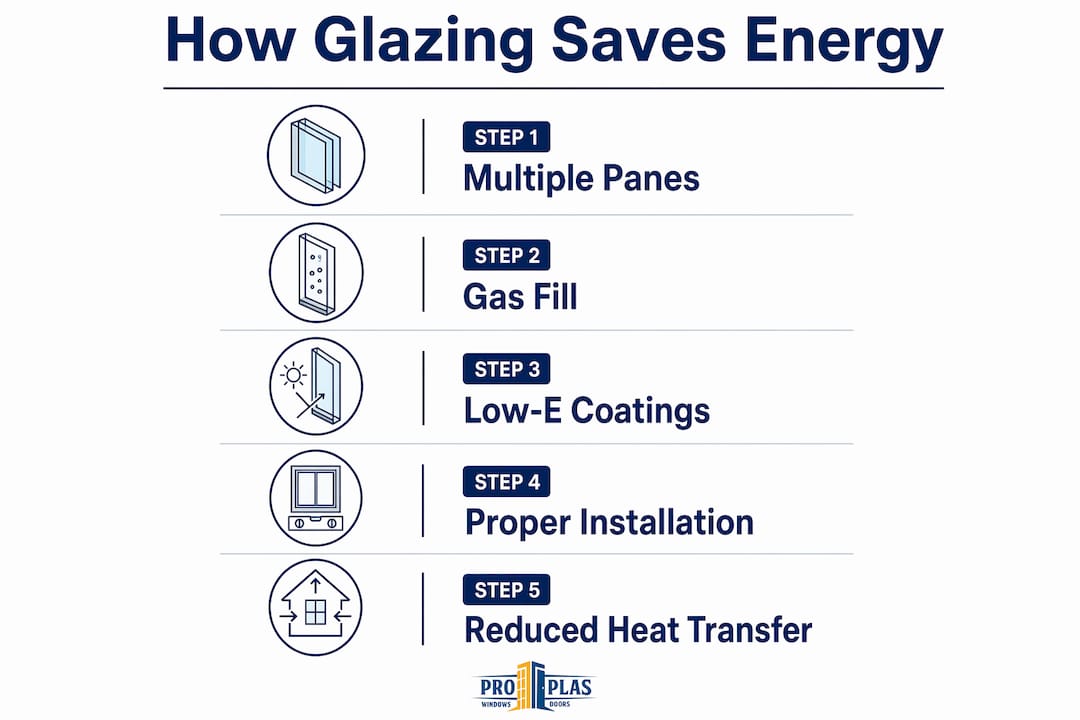
One important limitation: glazing performs only as well as its installation. A high-quality IGU fitted poorly into a mismatched frame will still allow drafts and moisture ingress. The glass unit and the installation must both be correct.
What are the types of window glazing?
Choosing the right glazing type depends on your climate, your home’s structure, and your budget. Each type offers a different balance of performance and practicality.
Single, double, and triple glazing compared
- Single glazing uses one pane of glass with no gas fill or coating. It offers minimal insulation and is rarely used in new residential construction in Canada. It remains common in older homes and unheated structures like garages.
- Double glazing is the standard for Canadian homes. Two panes with an argon-filled gap deliver a meaningful improvement in thermal performance over single glazing. Most Energy Star certified windows use double-pane IGUs as a baseline.
- Triple glazing adds a third pane and a second gas-filled cavity. It provides the best insulation available in residential windows. Triple glazing adds weight that may overwhelm older or lightweight frames, so a structural assessment is required before retrofitting.
| Glazing type | Panes | Typical U-factor | Best suited for |
|---|---|---|---|
| Single | 1 | Above 3.0 | Unheated spaces, heritage buildings |
| Double | 2 | 1.4–1.8 | Most Canadian homes |
| Triple | 3 | 0.8–1.2 | Cold climates, high-performance builds |
Speciality glass options
Beyond pane count, glass type also matters. Tempered glass is heat-treated to shatter into small, blunt pieces rather than sharp shards, making it the required choice for doors, low windows, and bathrooms. Laminated glass bonds two panes with a plastic interlayer, holding the glass together on impact and providing superior sound reduction. Tinted glass reduces solar heat gain and glare but does not offer the same UV protection as a proper Low-E coating.
For casement windows or picture windows with large glass areas, Low-E double or triple glazing is the most practical choice for Canadian climates. The larger the glass surface, the more glazing performance matters.
Pro Tip: Upgrading to triple glazing without checking your existing frame’s structural capacity risks mechanical damage and operational failure over time. Always have a professional assess the frame first.
What affects window glazing installation and maintenance?
Correct installation determines whether your glazing system delivers its rated performance. A well-made IGU installed poorly will underperform from day one.
Key installation factors include:
- Frame compatibility. The frame must be structurally sound and dimensionally correct for the IGU being installed. Glazing success depends on integration with the wall system, including the frame, sealing, and flashing.
- Proper sealing and flashing. Sealants around the frame prevent water infiltration and air leakage. Flashing directs water away from the window opening. Both must be correctly applied to protect the glazing unit.
- Drainage. Proper weeping in the window frame is as important as the IGU specification itself. Without adequate drainage, moisture accumulates and accelerates seal failure.
- Material compatibility. Using improper spacer or sealant materials in climates with large temperature swings causes premature seal failure. In Canada, material selection must account for freeze-thaw cycles.
- Moisture management. Temperature fluctuations and moisture are the primary stressors on glazing sealants. A failed seal causes fogging between panes, which cannot be cleaned and requires full unit replacement.
Maintenance is straightforward when installation is correct. Clean the glass with a non-abrasive cleaner. Inspect the sealant around the frame annually, particularly after winter. Check for condensation between panes, which signals a failed seal. Lubricate hardware on operable windows once a year to reduce stress on the frame and glazing.
Neglecting frame and sealing integration causes glazing to fail prematurely, leading to fogging, drafts, and energy loss. Poor installation also voids most manufacturer warranties, leaving you with no recourse for early failure.
Key takeaways
Window glazing is the engineered glass system that determines how well your windows insulate, block UV radiation, reduce noise, and lower energy costs.
| Point | Details |
|---|---|
| Glazing is a full system | Modern IGUs include panes, gas fills, Low-E coatings, and spacer bars, not just glass. |
| Energy savings are significant | Upgrading glazing reduces HVAC costs by 25–30% by limiting heat transfer through windows. |
| Triple glazing requires assessment | Adding a third pane adds weight; always check frame capacity before retrofitting. |
| Installation quality is critical | Improper sealing, flashing, or frame fit causes premature failure regardless of glazing quality. |
| Maintenance extends glazing life | Annual sealant inspections and hardware lubrication protect your investment over time. |
Proplas’s take on glazing upgrades for Canadian homes
After 25 years of installing windows across the Toronto and GTA area, we have seen the same pattern repeat itself. Homeowners focus on the window style and colour, then treat glazing as an afterthought. That order of priorities is backwards. The glazing system is what you are actually paying for when you invest in new windows. The frame holds it in place, but the IGU does the work.
The most common misconception we encounter is that double glazing is always enough. For most Canadian homes, it is. But for properties facing north, exposed to heavy wind, or located in areas with extreme winter temperatures, triple glazing pays for itself within a few years through heating savings alone. The calculation is not complicated, but it requires honest input about your home’s specific conditions.
We also see homeowners who purchased quality glazing units but had them installed by whoever offered the lowest quote. The result is fogged glass within two or three years, drafts along the frame, and a warranty that does not cover installation errors. Glazing quality and installation quality are not separable. One without the other does not hold up.
Our advice: before you commit to any glazing upgrade, check your existing frames for rot, warping, or inadequate structural depth. Review the window replacement preparation checklist to make sure your home is ready. Then choose glazing based on your climate zone and energy goals, not just on price.
— Proplas
Proplas window glazing solutions for Canadian homeowners
Proplas has helped over 10,000 Canadian homeowners choose and install the right glazing systems for their homes. Our Energy Star certified windows come with high-performance double and triple-pane glazing, argon gas fills, and Low-E coatings selected for Canadian climate conditions.

Every installation includes proper frame assessment, professional sealing, and flashing to protect your glazing investment from day one. We back our work with a lifetime warranty, so you are covered if anything goes wrong. If you are ready to see which glazing options make financial sense for your property, visit our replacement windows guide to get started. Our team can walk you through the right choice without pressure or hidden costs.
FAQ
What is the window glazing definition in simple terms?
Window glazing is the complete glass assembly inside a window frame, including the panes, gas fills, coatings, and spacer bars that control heat, light, and sound.
What is double glazing and how does it differ from single glazing?
Double glazing uses two glass panes with an insulating gas-filled gap between them, delivering significantly better thermal performance than a single pane of glass.
How does window glazing work to save energy?
Glazing limits heat transfer through the window using multiple panes, insulating gas, and Low-E coatings. Upgrading glazing reduces HVAC energy costs by 25–30%.
Can I add glazing to my existing windows?
In most cases, replacing the full IGU is more effective than retrofitting. Older frames may not support modern glazing units, particularly triple-pane options, without structural reinforcement.
How long does window glazing last?
A properly installed IGU with quality sealants typically lasts 20 years or more. Premature failure, such as fogging between panes, usually results from poor installation or incompatible materials rather than glazing defects.