
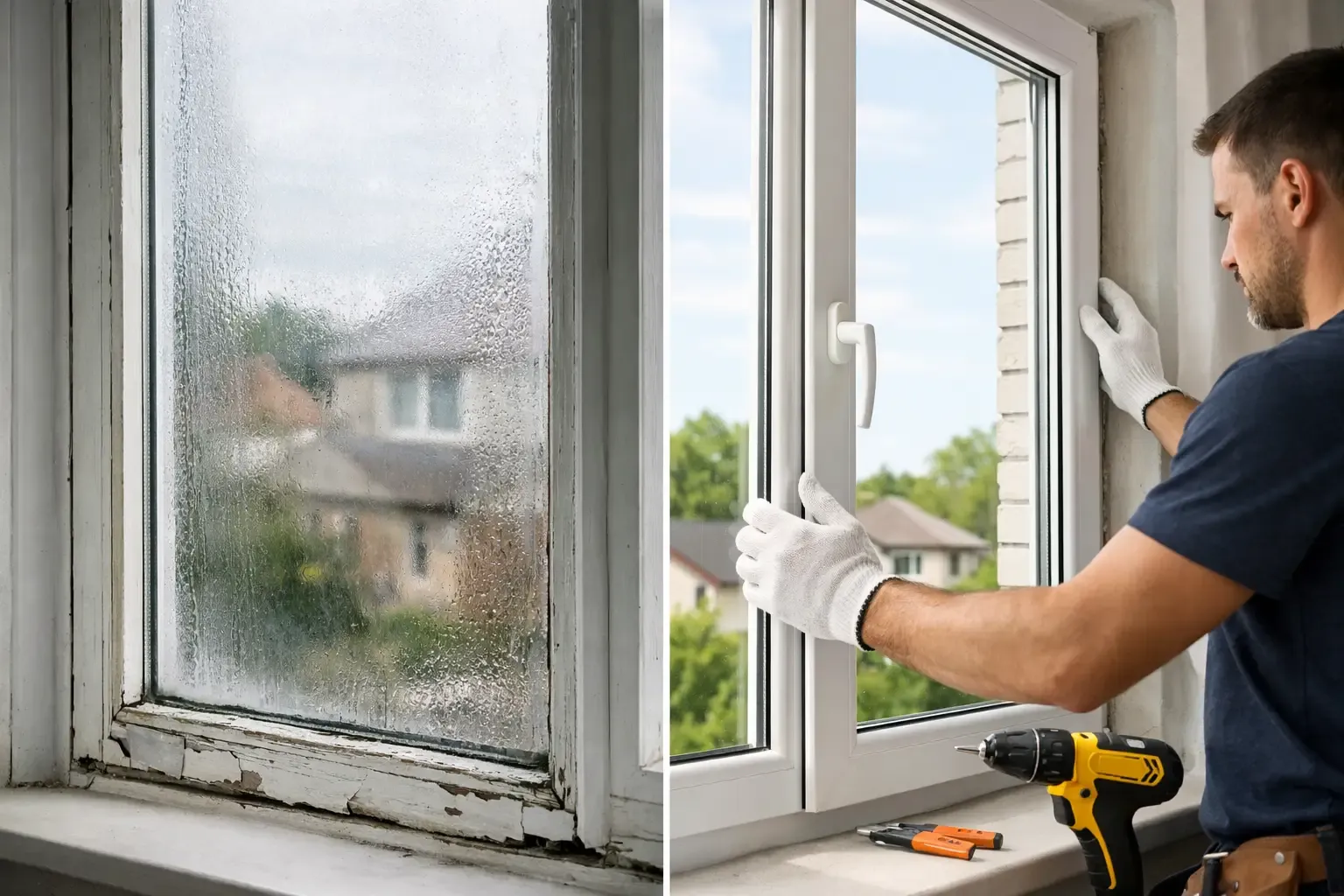
You usually notice it on a cold morning first. The room near the window feels several degrees cooler, the glass has a film of condensation, and the furnace seems to run longer than it should. If you are asking when should windows be replaced, the answer is rarely about age alone. It comes down to performance, comfort, condition, and whether the windows are still doing their job in a climate with hot summers, freezing winters, and everything in between.
For many homeowners, window problems build slowly. A draft here, a sticky sash there, a little moisture between panes that seems easy to ignore. But replacement becomes the smarter choice when those small issues start affecting energy bills, daily comfort, noise levels, or the condition of the surrounding wall. Good windows should open properly, seal tightly, resist weather, and help your home stay comfortable year-round. When they stop doing that consistently, repair is not always enough.
When should windows be replaced instead of repaired?
This is the question that matters most. Not every window problem means you need a full replacement. If the issue is isolated, such as worn weatherstripping, minor hardware failure, or small trim damage, a repair may buy you more time. But if multiple windows are showing the same symptoms, or if the core structure of the window is failing, replacement is usually the better long-term investment.
A failed sealed unit is a common example. If you see persistent fog or moisture between panes, the insulating seal has broken. That glass is no longer performing as intended, and while there are limited repair options in some cases, repeated seal failures across older windows often point to a broader system issue. The same goes for frames that are rotting, warping, softening from water exposure, or no longer sitting square in the opening.
Homeowners also reach a tipping point when repairs become repetitive. If you have already patched drafts, adjusted locks, repainted damaged wood, or dealt with recurring leaks, replacing the window often becomes more cost-effective than continuing to maintain a product that has reached the end of its useful life.
The clearest signs it is time
Drafts are one of the strongest indicators. If you feel moving air around a closed window in winter or summer, the seal is likely compromised. That affects comfort immediately, but it also forces your heating and cooling system to work harder. In older homes, homeowners sometimes assume drafts are just part of the house. They are common, but they are not something you have to live with.
Condensation can also tell you a lot, but context matters. A little condensation on the inside of the glass can be related to indoor humidity. Condensation between panes is different. That usually means the insulated glass unit has failed. Once that happens, the window loses much of its thermal performance.
Operation is another practical test. A window that sticks, will not stay open, will not lock properly, or requires force to move is no longer functioning the way it should. In a daily-use product that also serves as part of your home’s weather barrier and security system, that matters.
Outside noise is another overlooked signal. If traffic, neighbors, or street sounds seem unusually present indoors, older or lower-performing windows may not be insulating your home well. Many homeowners notice the difference after replacement right away, especially in busy urban and suburban areas.
Visible damage matters too. Cracked frames, rotted wood, water staining around the opening, and soft interior trim may indicate more than cosmetic wear. They can point to moisture intrusion that needs to be addressed before it affects surrounding materials.
How long do windows usually last?
There is no single lifespan that applies to every window. Material, manufacturing quality, installation quality, sun exposure, maintenance, and local weather all affect longevity. Some windows perform well for many years, while others develop problems sooner because of product quality, installation, exposure, or maintenance.
That is why age should be treated as one factor, not the only factor. A window that is airtight, easy to operate, and free from seal failure may not need replacement, while a newer window with moisture intrusion, drafts, or hardware problems may already need attention.
In regions with demanding seasonal weather, durability and installation quality carry even more weight. Freeze-thaw cycles, wind-driven rain, strong sun exposure, and long heating seasons can expose weaknesses faster than homeowners expect.
When should windows be replaced for energy efficiency?
If your energy bills have been rising and your home still feels uneven from room to room, windows may be part of the problem. Older windows often allow more heat transfer, especially if they are single-pane, poorly sealed, or using outdated glass technology. That does not mean every old window must be replaced immediately, but it does mean performance should be evaluated honestly.
The biggest energy-efficiency gains usually come when older units are replaced with modern, well-installed windows designed for your climate. Better glass packages, tighter seals, and improved frame construction can reduce drafts and help stabilize indoor temperatures. Homeowners often expect only lower bills, but comfort tends to be the first benefit they notice. Rooms feel less cold in winter, less overheated in summer, and less dependent on constant thermostat adjustments.
If you are planning to stay in your home for years, that comfort improvement alone can justify moving sooner rather than later. Waiting until a window fully fails may not be the most practical choice if the house has already been underperforming for several seasons.
Replacement timing depends on the house, not just the season
Many people assume windows should only be replaced in spring or summer. In reality, professional replacement can be done successfully in multiple seasons with the right planning and installation process. The better question is whether your current windows are causing active problems now.
If you have water leaks, major drafts, failed locks, or visible frame deterioration, delaying replacement can allow the problem to spread. Moisture damage around the opening is especially worth addressing quickly because hidden damage inside the wall can become more expensive than the window itself.
There is also a planning advantage to acting before failure becomes urgent. Homeowners who replace on their own schedule have more time to compare styles, discuss customization, understand pricing clearly, and avoid rushed decisions. That usually leads to a better result than waiting until the middle of a severe weather event or a sudden leak.
What homeowners often underestimate
The condition of the installation matters as much as the condition of the window. A quality product installed poorly can still draft, leak, or wear out early. That is one reason window replacement should be treated as a full-system project, not just a product purchase.
Homeowners also sometimes focus only on the glass and overlook function. If windows are hard to clean, hard to open, or no longer suit how the room is used, replacement can improve daily living in practical ways. A bedroom window that opens reliably for ventilation, a kitchen window that is easier to operate over a sink, or a front-facing window that improves curb appeal all add value beyond efficiency alone.
Cost hesitation is understandable, but piecemeal repairs on failing units can become expensive without solving the root problem. A transparent quote and a clear installation scope help homeowners compare the true short-term and long-term costs.
How to decide with confidence
If you are unsure when should windows be replaced, start with a straightforward assessment. Look at how the windows feel, operate, and perform across different seasons. Ask whether the problems are isolated or repeated, cosmetic or structural, annoying or expensive. Most importantly, consider whether the current windows still meet the standard you want for comfort, efficiency, appearance, and peace of mind.
For homeowners who want a low-risk path forward, the best next step is a professional evaluation that includes measurements, product options, installation details, and clear pricing without pressure. That gives you real information instead of guesswork. Companies like Proplas build trust by handling the process end to end, which matters when the goal is not just to replace a window, but to avoid delays, hidden costs, and poor follow-up.
Windows rarely fail all at once. They give warnings. When you notice those warnings early and act before minor issues become major ones, replacement feels less like a disruption and more like a smart upgrade for the way you want your home to perform.