
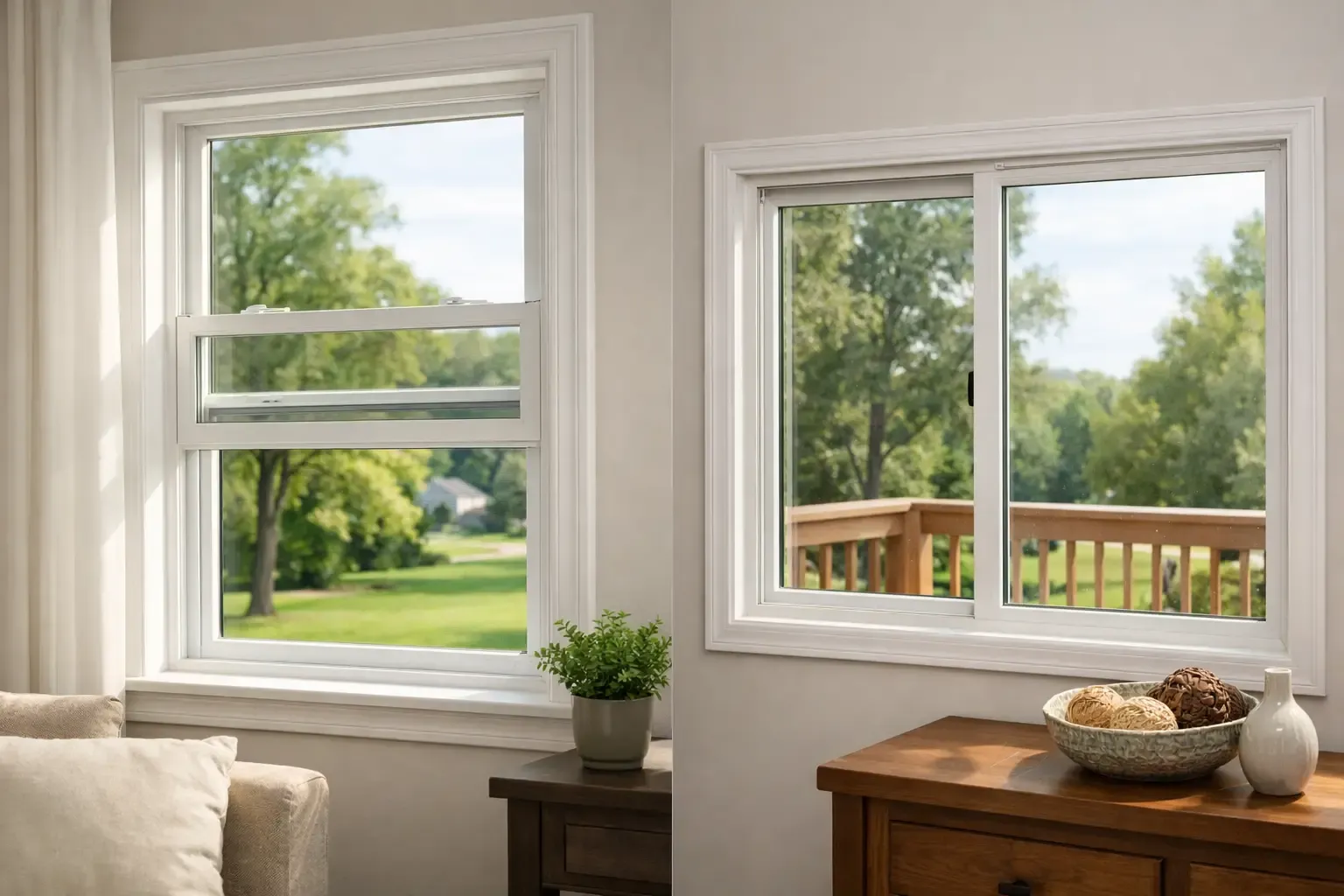
A window over a kitchen sink, beside a narrow walkway, or facing a covered porch can make the choice more specific than a catalog photo suggests. When comparing double hung vs slider windows, the better option is usually the one that suits how the room is used, how the window will be cleaned, and how well it needs to perform through changing seasons.
Both styles are practical, familiar choices for replacement projects. Both can provide reliable ventilation, clean sightlines, and strong energy performance when they are properly manufactured and professionally installed. The real difference is in how they operate and where they make the most sense.
Double Hung vs Slider Windows: The Core Difference
A double hung window has two vertical sashes. The lower sash slides upward, and the upper sash slides downward. This gives homeowners the option to open the window from the bottom, the top, or both at once.
A slider window operates horizontally. One sash may slide while the other remains fixed, or both sashes may move in a double slider design. An end-vent slider uses a fixed center panel with operating sections on each side, making it a useful option for wider openings.
Neither style is automatically better. Double hung windows are often selected for their traditional appearance and flexible ventilation. Slider windows are valued for their simple operation, wide openings, and low-profile design. Your room layout, exterior clearance, and preferred architectural style should lead the decision.
Ventilation: Flexible Airflow or a Wider Opening?
Double hung windows offer one of the most versatile ventilation setups. Opening the lower sash brings in fresh air, while lowering the upper sash lets warmer indoor air escape. With both sashes partially open, air can circulate naturally through the room. This can be especially appealing in bedrooms, living rooms, and upper-floor spaces where homeowners want adjustable airflow.
Slider windows can provide a broad, direct opening, particularly in wider window frames. They are a practical choice where horizontal airflow is useful, such as over a countertop, in a basement, or along the back of a home. A double slider can also allow ventilation from either side of the opening.
The trade-off is simple: double hung windows give more control over where air enters and exits, while sliders can create a larger side-to-side opening. If your priority is cross-breezes through a wide room, a slider may be the better fit. If you want more ways to fine-tune ventilation, double hung windows deserve a closer look.
Cleaning and Everyday Operation
For many homeowners, cleaning access is a deciding factor. Modern double hung replacement windows commonly use tilt-in sashes. From inside the home, the sashes can tilt inward so you can clean the exterior glass without leaning out of a second-story window. This is a meaningful advantage for bedrooms and upper-level rooms.
Slider windows are also straightforward to maintain, but cleaning the exterior of a fixed panel may be less convenient depending on the window location. Some slider designs allow the operating sash to be removed or lifted out for cleaning. The exact function varies by manufacturer and configuration, so this should be confirmed before ordering.
Operation is also worth considering. A well-built slider moves smoothly on its track with a simple push. Double hung windows require lifting or lowering a sash, which most homeowners find easy when balances and hardware are working properly. Quality matters in both cases. Poor installation, out-of-square framing, or low-grade components can turn either style into a frustrating window.
Energy Performance Depends on More Than Window Style
Homeowners sometimes assume one operating style is always more energy efficient than another. In practice, the window's overall construction has a greater effect than whether it slides vertically or horizontally.
Look at the glazing package, Low-E glass, insulated frame, weatherstripping, spacer system, and air-tightness ratings. A properly specified Energy Star-compliant double hung or slider window can help reduce drafts, improve indoor comfort, and lessen the strain on heating and cooling equipment.
That said, every operable sash creates potential areas for air leakage if seals are weak or the unit is not installed correctly. A fixed picture window generally offers the highest potential for airtightness because it does not open, but it provides no ventilation. Between double hung and slider windows, choosing a reputable product and having it measured and installed correctly will matter far more than choosing based on style alone.
For homes exposed to strong winter winds or intense summer sun, glass selection and installation details should be part of the conversation from the start. The right window must suit the orientation of the wall, not just the appearance of the room.
Where Double Hung Windows Work Best
Double hung windows are a natural fit for homes with traditional, colonial, farmhouse, or heritage-inspired architecture. Their vertical proportions work well in bedrooms, front-facing elevations, dining rooms, and spaces where exterior appearance is a priority.
They are also a sensible choice for upper floors because of the tilt-in cleaning feature. If the window is close to a patio, deck, or walkway, the vertical operation can be helpful because nothing projects outward when opened.
A double hung window may not be the best choice for a very wide opening. Multiple units can be combined, but a wide slider or end-vent slider may create a cleaner view with fewer vertical divisions. It also may not be ideal for a homeowner who wants the largest possible clear opening from one window.
Where Slider Windows Work Best
Slider windows are often chosen for wide, low openings. They are popular in basements, kitchens, family rooms, and rooms that benefit from a broad view of the yard. Because the sashes move sideways within the frame, they do not interfere with exterior walkways, landscaping, or outdoor seating areas.
They can also be a practical solution in spaces where reaching up to operate a double hung sash would be less convenient. A horizontal handle and smooth-gliding sash can be easier to use over a counter or in a lower wall opening.
The style is generally more contemporary and streamlined, although it can work well on many home designs when the proportions are right. A slider is not automatically a budget choice or a compromise. With the right frame, glass, hardware, and installation, it can be a durable, attractive replacement window for a long-term home upgrade.
Do Not Overlook Screens, Safety, and Room Use
Screens work differently between these styles. On many double hung windows, the screen covers the lower portion because the bottom sash is the most common opening position. Slider screens usually cover the operating side of the window. If insects are a concern during warmer months, ask to see how the screen will function in the exact configuration you are considering.
For bedrooms, window size and egress requirements may also affect the choice. A window must provide an adequate clear opening where emergency escape requirements apply. The rough opening size alone does not tell the full story, since the sash and frame reduce the usable opening. A professional measurement and product review can prevent an expensive mistake.
Finally, consider furniture placement. A double hung window may be easier to operate behind certain furnishings, while a slider needs clear side-to-side movement and accessible hardware. Small details like this often determine whether a window feels convenient years after installation.
Choose the Window That Solves the Room's Problem
The most reliable way to decide is to evaluate the opening in person. Consider the window's width and height, the floor it is on, whether outside cleaning is difficult, where the wind comes from, and how much ventilation the room actually needs. Then compare the available configurations, glass options, finishes, grids, and hardware before accepting a quote.
A clear estimate should explain what is included in the product, installation, finishing work, disposal, and warranty coverage. At ProPlas, the goal is to match each opening with a properly measured replacement solution, not push one window style into every room.
A double hung window can be the right choice for flexible airflow and easy upper-floor cleaning. A slider can be the better choice for a broad view and uncomplicated operation in a wide opening. Choose the option that will make the room more comfortable to live in, not simply the one that looks best in a sample photo.