
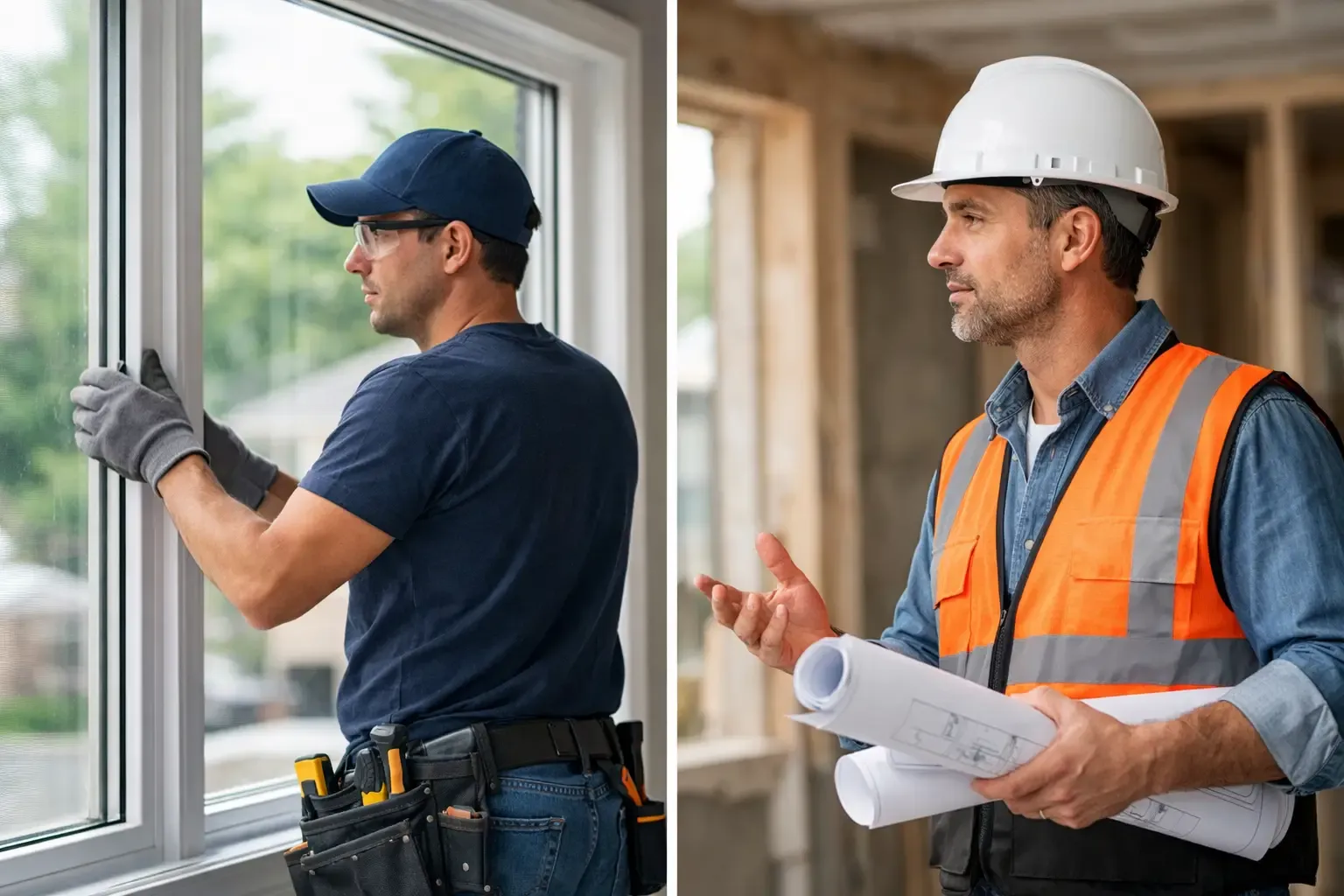
A drafty bedroom window, failing seal, or water stain around a frame is rarely just a cosmetic issue. The choice between window installers vs general contractors affects how well the new window fits, how the opening is protected from moisture, and who is accountable if a problem appears later.
For a straightforward replacement, a specialist window company is usually the more direct choice. For a broader renovation involving structural changes, siding, masonry, or interior rebuilding, a general contractor may be necessary. The right answer depends on the scope, not simply who offers the lowest estimate.
What Specialized Window Installers Do Differently
Window installers focus their work on exterior openings and the systems that make replacement windows perform as intended. That includes measuring the opening accurately, identifying whether an insert or full-frame replacement is appropriate, preparing the opening, installing the unit level and square, insulating gaps correctly, sealing exterior joints, and finishing trim.
That specialization matters in a climate with cold winters, wind-driven rain, and significant temperature swings. A high-quality window can still underperform if it is installed with poor flashing, oversized gaps, incomplete insulation, or sealant applied to the wrong areas. Those details can lead to drafts, condensation concerns, water intrusion, and difficult warranty conversations.
A dedicated installer also understands the practical differences among window styles. A casement window, for example, has different operating hardware and clearances than a double-hung or sliding window. Specialty shapes, large picture windows, patio doors, and lift-and-slide doors each create their own measurement, handling, and finishing requirements.
For homeowners replacing several windows or exterior doors, a specialist can provide a more coordinated process. The same team can help match products, glass options, exterior colors, grille patterns, hardware, and trim details across the home. That reduces the risk of a finished project that looks pieced together.
When a General Contractor Is the Better Choice
A general contractor is not automatically the wrong choice for windows. In fact, they are often essential when window replacement is one part of a larger construction project.
If you are moving a window, enlarging an opening, repairing extensive rot, rebuilding a wall, modifying structural headers, replacing siding, or remodeling a kitchen or addition, a general contractor can coordinate the full scope. They manage multiple trades, sequencing, permits where required, structural work, drywall, insulation, electrical adjustments, and final finishes.
The benefit is one point of coordination. You are less likely to be left with a new window installed but unresolved framing, siding, or interior trim work around it.
The trade-off is that windows may be only one line item in a much larger project. Some general contractors subcontract installation to a window crew, while others use a carpenter or labor team that handles many types of work. That can work well, but homeowners should ask who will actually install the products and what window-specific experience that team has.
Window Installers vs General Contractors: Key Differences
The biggest difference is not whether one professional is more capable than the other. It is where their expertise is concentrated and how the project is managed.
A window installation specialist is typically built for replacement work. Their estimating process should focus on opening conditions, product performance, installation method, exterior finishing, disposal, and warranty coverage. Because windows and doors are their core work, scheduling and crews are often organized around completing that type of project efficiently.
A general contractor is built for coordination. They are usually the better fit when the window work depends on framing changes, building-envelope repairs, or several other trades. Their estimate may cover the broader renovation, but it is worth separating the window portion of the scope so you understand exactly what product, installation method, and finishing work are included.
Neither model excuses vague documentation. A clear proposal should state whether the work is an insert replacement or full-frame replacement, who removes and disposes of old units, how exterior capping or trim is handled, what interior finishing is included, and what happens if hidden damage is found after removal.
The Installation Method Matters More Than Many Homeowners Expect
One of the most common sources of confusion is the difference between insert replacement and full-frame replacement.
An insert replacement places a new window into an existing, sound frame. It can be efficient and less disruptive when the original frame is structurally solid and the existing trim can remain. However, it may slightly reduce visible glass area, and it does not address concealed issues outside the existing frame.
A full-frame replacement removes the old window and frame down to the rough opening. This gives the installer access to inspect framing, install or correct flashing, improve insulation, and replace exterior and interior trim as needed. It is often the better option when there is rot, water damage, poor previous installation, a desire for more glass area, or a major change to the exterior finish.
A reliable contractor should explain why they recommend one method over the other. Be cautious if a quote assumes the same approach for every opening without a careful onsite measurement. Homes can have very different conditions from one room to the next.
Compare Estimates by Scope, Not Just Price
Two quotes can look similar at first glance but cover very different work. A lower price may exclude trim, capping, disposal, repairs, upgraded glass, permit coordination, or post-installation service. It may also be based on a basic product line that does not match the energy performance or design features you expect.
Before comparing quotes, ask each provider to clarify these practical points:
- What window or door manufacturer, model, and glass package are included?
- Is the price for insert replacement, full-frame replacement, or a combination of both?
- How will the opening be insulated, sealed, flashed, and finished?
- Are exterior aluminum capping, interior trim, debris removal, and disposal included?
- Who handles unexpected rot, damaged framing, or masonry repairs?
- What warranty applies to the product, installation labor, and service work?
A detailed quote protects both sides. It helps the homeowner avoid surprise charges and gives the contractor a clear standard for completing the work.
Warranties and Accountability After Installation
Windows are long-term components of the home, so the sale should not be the end of the relationship. Product warranties may come from the manufacturer, while installation warranties come from the company that performed the work. Those are separate responsibilities.
With a specialized window company, product selection, measuring, installation, and service are often managed under one roof. That can make a future concern easier to diagnose. If a sash does not operate properly, a seal fails, or a trim detail needs attention, there is a defined team to contact.
With a general contractor, warranty responsibility can be more layered, particularly if windows were supplied by one company and installed by another subcontractor. That does not mean service will be poor, but it makes documentation especially important. Ask for written confirmation of who handles manufacturer claims, installation defects, and any damage connected to adjacent renovation work.
ProPlas approaches replacement projects as a complete service, from measurement and product selection through professional installation and after-sales support. For homeowners, that single-source accountability can be valuable when the priority is a durable, energy-conscious replacement without managing several vendors.
Questions to Ask Before You Hire Anyone
The strongest contractors welcome specific questions because they have a clear process. Ask to see the proposed product specifications and ask how the crew will protect floors, landscaping, and interior finishes during removal. Confirm whether work is performed by trained in-house crews or subcontractors, and whether the company carries appropriate insurance for the project.
You should also ask how scheduling works. Window and door projects may depend on custom manufacturing timelines, weather conditions, product availability, and the number of openings involved. A dependable provider will give you a realistic sequence instead of promising an unusually fast completion date without explaining the process.
Finally, pay attention to how the company responds to concerns before you sign. If basic questions about pricing, installation methods, or warranty coverage receive vague answers during the sales process, communication is unlikely to improve once the project begins.
Choose the Team That Matches the Work
For a planned window or door replacement, a dedicated installer generally offers the focused product knowledge, installation discipline, and service structure homeowners want. For a renovation that changes the wall itself or involves many connected trades, a general contractor may be the right lead, ideally working with an experienced window specialist.
Your home does not need the broadest contractor or the cheapest quote. It needs a team that can explain the work clearly, document the scope honestly, and stand behind the opening long after the new window is installed.