
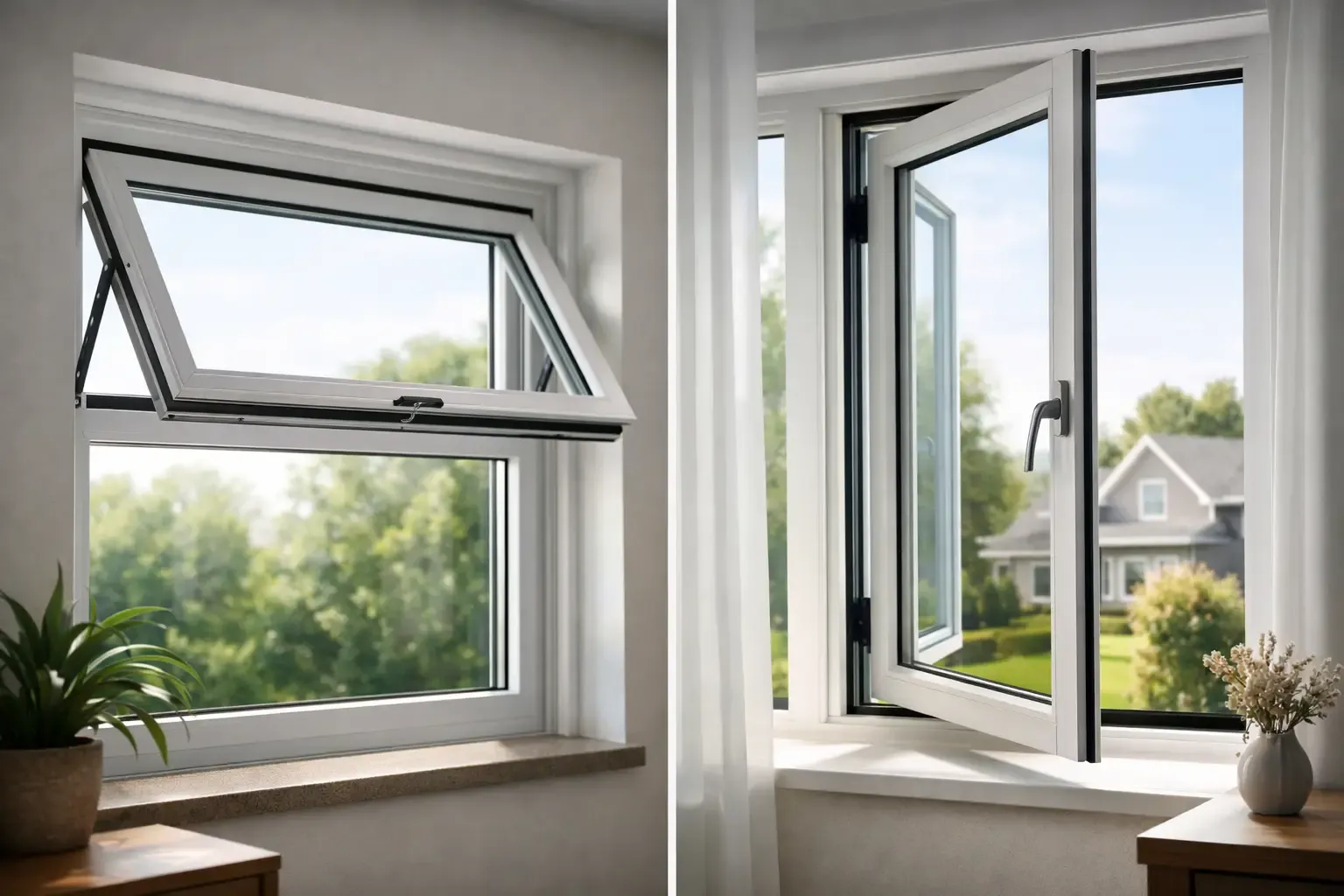
A window replacement decision can feel simple until you stand in front of the opening and picture how you actually use the room. In the awning vs casement windows decision, both styles offer strong ventilation, clean sightlines, and excellent energy performance when properly made and installed. The better choice comes down to the window’s location, the direction it needs to open, and how your household lives with the space.
For homeowners planning a long-term upgrade, this is not just a question of appearance. The right operating style can make a bathroom less humid, a kitchen easier to air out, and a bedroom more comfortable without compromising security or efficiency.
Awning vs Casement Windows: The Main Difference
The operating hinge is the clearest difference. An awning window is hinged at the top and opens outward from the bottom. When open, the glass creates a small canopy over the opening. A casement window is hinged vertically on one side and swings outward like a door, usually operated with a crank.
Both styles close tightly against compression seals. That is a meaningful advantage over window types that slide along a track, where air sealing can be more difficult. Quality hardware, proper weatherstripping, and accurate installation still matter just as much as the style itself.
Casement windows generally provide a taller, wider clear opening for their size. Awning windows usually have a more horizontal shape and a shallower outward projection. These basic traits influence ventilation, access, views, and where each style works best.
When Awning Windows Make More Sense
Awning windows are often the practical choice where ventilation is needed even during light rain. Because the sash opens from the bottom while remaining attached at the top, it helps shield the opening from rainfall. It will not keep every drop out during a wind-driven storm, but it can provide more weather protection than a side-hinged window left open in the same conditions.
This makes awning windows especially useful in bathrooms, laundry rooms, kitchens, and lower-level spaces. They are also a good fit above a countertop, sink, or piece of furniture, since the crank can be easier to reach than a window that must be lifted or pushed.
Their compact shape works well in wide, short openings. Homeowners often combine multiple awning units in a row to bring fresh air into a room without changing the overall architectural balance of the home. They can also be paired with fixed picture windows when the goal is to preserve a broad view while adding targeted ventilation.
There are trade-offs. An awning window opens outward into exterior space, so it may not suit a walkway, deck area, or location where the projecting sash could interfere with people passing by. The opening is also typically not large enough to serve as an emergency exit from a bedroom. Building code and egress requirements should always be confirmed before choosing an operable window for a sleeping room.
When Casement Windows Are the Better Choice
Casement windows are a strong option when maximum airflow is the priority. Their side-hinged design allows the full sash area to open, creating a generous path for fresh air. In some placements, an open casement sash can catch side breezes and direct them indoors, which is useful in rooms that tend to feel warm or stale.
They are a natural fit for bedrooms, living rooms, home offices, and other spaces where homeowners want both ventilation and an unobstructed view. A casement window has no meeting rail across the center, so the glass area can feel open and clean when closed. For a larger opening, a double casement configuration can create a balanced look with two operable panels.
Casements may also be the better answer where emergency egress is required, provided the selected unit delivers the required clear opening and is installed at the correct height. The overall window size alone does not determine compliance. Frame dimensions, sash operation, and the clear opening after the window is fully opened all need to be considered.
The main consideration is swing clearance. A casement sash can extend farther outward than an awning sash, particularly on larger units. It needs to be planned carefully near sidewalks, patios, narrow side yards, garden beds, and exterior mechanical equipment. Handedness matters too. A left-hinged or right-hinged window should open in a way that makes the crank easy to reach and supports the room’s furniture layout.
Ventilation, Rain, and Everyday Comfort
If you want fresh air during mild rain, awning windows have a clear practical advantage. Their top-hinged design offers a degree of cover that side-hinged units cannot match. They are a sensible choice for rooms that need frequent ventilation regardless of changing weather.
If you want the largest possible opening and stronger cross-ventilation, casement windows usually lead. Opening windows on opposite sides of a home can help move air through the interior, but placement matters. A casement near the prevailing breeze may bring more noticeable airflow into the room than a smaller top-hinged unit.
Neither style should be left open in severe weather or when the home is unattended. Screens keep insects out, but they are not a security feature. A thoughtful replacement plan considers the habits behind the window: who opens it, how often it is used, and whether furniture or landscaping will make operation inconvenient over time.
Energy Efficiency Depends on More Than Style
Homeowners often hear that casement and awning windows are among the most energy-efficient operable styles. There is truth in that, because both can use compression seals that tighten when the sash locks. But a high-performing window is a complete system, not a hinge type alone.
For Southern Ontario homes, look at the frame construction, insulated glass package, low-emissivity coatings, gas fill, spacer system, weatherstripping, and hardware quality. The product should be selected for the home’s exposure and comfort concerns, whether that means winter heat loss, summer sun, condensation risk, or exterior noise.
Installation is equally important. Even an Energy Star-compliant window can underperform if the opening is measured incorrectly, insulation is incomplete, flashing is neglected, or exterior sealing is poorly finished. A reliable installer should assess the existing opening, explain any necessary repairs, and provide a clear scope before work begins. This is where transparent pricing matters: homeowners should know what is included instead of discovering added costs after removal starts.
Appearance and Placement Considerations
Awning and casement windows can be customized to suit traditional, transitional, or contemporary homes. Frame color, grille patterns, glass options, and interior finishes can change the final look substantially. The best visual choice is usually the one that respects the home’s existing proportions rather than forcing every opening into one style.
Use awning windows where the opening is naturally low and wide, or where rain-friendly ventilation is valuable. Use casement windows where the opening is taller, a wide viewing area is desirable, or egress and maximum airflow are concerns. In some homes, the strongest solution is a combination: fixed windows for light and views, with awning or casement units placed where ventilation is genuinely needed.
Do not overlook cleaning access. Both styles can be easier to clean from inside than many fixed exterior configurations because the sash opens outward. Still, upper-floor windows, deep landscaping, and difficult exterior elevations should be reviewed during the measurement appointment.
How to Make the Right Choice Before Ordering
A professional consultation should begin with the room, not a catalog. Identify why the existing window is being replaced. Is there a draft near the bed, bathroom moisture, a difficult-to-reach opening above the sink, poor ventilation, damaged hardware, or a need for a larger emergency exit? Those answers narrow the choice quickly.
It also helps to ask about swing direction, screen placement, locking points, glass performance, and warranty coverage before approving the order. Custom windows take planning, and the best outcome comes from measuring the opening accurately before manufacturing begins. ProPlas helps homeowners work through these details so the selected window fits the home, the budget, and the expectations for long-term performance.
A well-chosen window should feel easy to use on an ordinary morning, not just look good on installation day. Choose the style that gives each room the fresh air, clearance, and comfort it needs, then make sure the product and installation are built to deliver on that decision for years to come.