
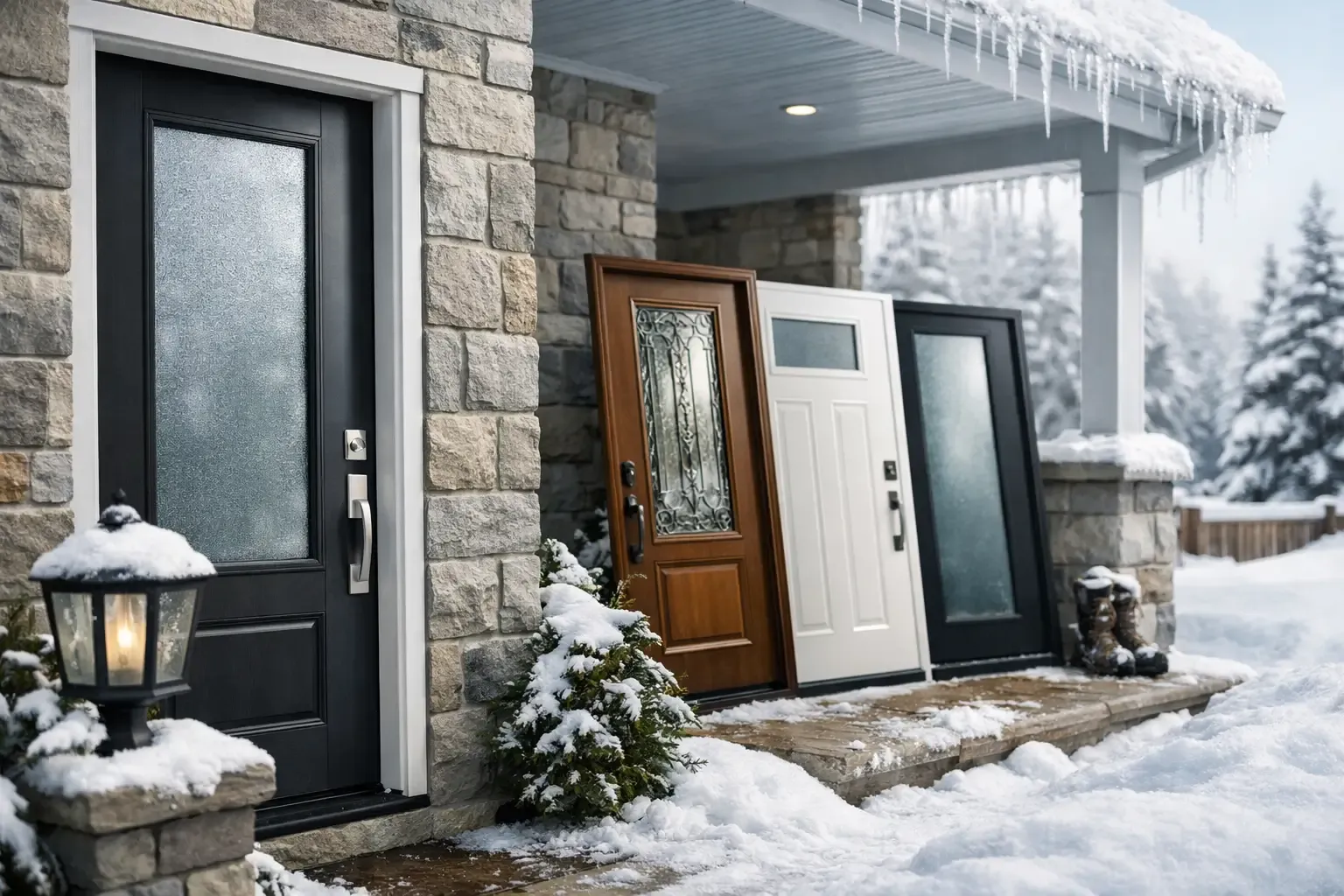
A front door that feels cold to the touch, lets in a draft, or sticks every winter is more than a minor annoyance. It affects comfort, energy costs, security, and the first impression your home makes. Knowing how to choose entry doors means looking beyond a showroom photo and selecting a system built for your opening, your home’s style, and the weather it will face.
For homeowners in Toronto, the GTA, Simcoe Region, and Southern Ontario, the right choice usually comes down to four things: material, energy performance, configuration, and installation quality. A good door should look right on day one and continue to close, seal, and protect your home years later.
Start With the Conditions Around Your Door
Before choosing a style or color, look at what your existing entryway is asking the new door to do. Is the entrance exposed to wind-driven rain or snow? Does it face direct afternoon sun? Is there an overhang? Does the door connect to a busy street, an attached garage, or a frequently used family entrance?
These details affect which material and glass options make sense. A protected front entrance gives you more flexibility. An exposed opening needs a door, frame, sill, and weatherstripping system that can handle repeated moisture, temperature swings, and wind pressure.
Also consider the opening itself. Replacing a standard single door is straightforward in many homes, but sidelights, transoms, double doors, and unusual brick or stucco conditions require precise measurement. The goal is not to force a stock-size door into an old opening. It is to build a properly fitted entry system that creates a dependable seal.
How to Choose Entry Doors by Material
Material is one of the biggest decisions because it influences appearance, maintenance, durability, and cost. There is no single best option for every house.
Steel doors: practical security and value
Steel entry doors are a popular choice for homeowners who want a strong, clean-looking door at a sensible price point. They provide excellent security, can be finished in many colors, and work well with modern, traditional, and transitional homes.
The trade-off is that steel can dent if it takes a hard impact, and damaged paint should be repaired promptly to protect the surface. Quality construction matters here. Look for a well-insulated core, durable finish, reinforced lock areas, and a frame designed to resist weather exposure.
Fiberglass doors: durability with flexible design
Fiberglass doors are often a strong fit for exposed entrances and homeowners who want the appearance of painted wood or a wood-grain texture without the same upkeep. They resist dents well, do not rust, and perform reliably through cold winters and humid summers.
Fiberglass generally costs more than basic steel, but it can be a worthwhile long-term choice when durability, low maintenance, and design flexibility are priorities. It is especially appealing when the front door is a major architectural feature rather than a simple utility entrance.
Wood-look finishes and painted doors
Appearance still matters, but the finish needs to suit the exposure. Dark colors can absorb heat in direct sun, while highly detailed finishes may need more maintenance over time. A trusted supplier can explain which finish options are appropriate for the door material and location.
Instead of selecting a color from a small sample alone, consider it against your brick, siding, stone, roof, and exterior trim. The most successful entry doors feel intentional within the whole front elevation, not separate from it.
Prioritize Energy Performance and Weather Protection
An entry door is part of your home’s exterior envelope. Even a beautiful door can underperform if the perimeter seal, threshold, frame, or installation is weak.
Ask about insulated cores, compression weatherstripping, adjustable thresholds, and low-emissivity glass if your design includes glazing. Energy Star-compliant products are a practical starting point because they are designed to meet recognized efficiency standards. However, product ratings alone do not guarantee results. The installed system has to be square, plumb, insulated correctly, and sealed to the wall opening.
Glass deserves special attention. Decorative glass, clear glass, frosted panels, and sidelights can add light and curb appeal, but they also change privacy, heat gain, and insulation. For a street-facing entrance, obscured or textured glass can bring daylight into a foyer without putting the interior on display. For a sheltered entrance with a great view, larger glass panels may be the better fit.
Choose a Configuration That Works for Daily Life
The front entry needs to support how your household actually uses it. A single door may be enough for most homes, while a wider door or double-door configuration can make moving furniture, welcoming guests, or handling a busy family routine easier.
Sidelights can make a narrow foyer feel brighter, but they need to be proportioned carefully. Too much glass may reduce privacy or overwhelm a modest facade. A transom can add height and daylight without widening the opening, which can work well on homes with taller ceilings or a formal entryway.
Think about door swing, too. An inswing door should not interfere with stairs, closet doors, or a tight foyer. Hardware placement matters for accessibility and everyday convenience. These details are easy to miss until installation day, which is why an on-site consultation is more valuable than choosing from photos alone.
Do Not Treat Security as an Add-On
A secure entry door is a system, not simply a strong slab. The lockset, deadbolt, strike plate, hinges, frame reinforcement, and installation all contribute to real-world security.
Choose quality hardware that suits the door’s weight and daily use. For doors with glass, the glass placement and locking arrangement should be considered together. A professional can help you balance natural light with privacy and security rather than assuming one feature automatically rules out the other.
If you are replacing an older door, inspect the surrounding frame and wall condition as well. A new door installed into a deteriorated frame will not deliver the protection or performance you expect.
Compare Quotes on More Than the Bottom Line
The lowest quote can become the most expensive option if it leaves out necessary work or uses vague allowances. When comparing proposals, make sure you understand exactly what is included from measurement through cleanup.
A clear quote should identify the door and frame system, glass and hardware selections, removal of the existing unit, installation work, exterior and interior finishing where applicable, disposal, warranty coverage, and any conditions that could change the price. If a contractor cannot explain the scope in plain language, that uncertainty is worth addressing before you sign.
Lead times should be discussed honestly as well. Custom size, decorative glass, specialty colors, and complex configurations can affect production schedules. A reliable contractor will set realistic expectations and keep you informed rather than promising a date that cannot be met.
Installation Determines Whether the Door Performs
Even a premium door can draft, bind, or leak if it is installed poorly. Proper installation begins with accurate measurements and an assessment of the existing opening. The installer should address framing issues, use appropriate shimming and fastening methods, insulate gaps without distorting the frame, and apply exterior sealing suited to the wall system.
After installation, the door should operate smoothly, latch without force, and have even, consistent reveals around the frame. The threshold and weatherstripping should make full contact. A professional team should also protect the work area and leave the opening clean and finished, not leave you with unexplained gaps or unfinished trim.
This is where turnkey service matters. ProPlas helps homeowners coordinate measurement, customization, product selection, and installation so the door is specified as a complete system rather than a collection of separate decisions.
A Simple Decision Checklist Before You Order
Before approving your entry door, confirm that you can answer these questions clearly:
- Does the material suit the door’s exposure and the level of maintenance you want?
- Is the size and configuration practical for your household and entryway?
- Are the glass, hardware, and finish choices right for privacy, security, and curb appeal?
- Does the quoted system include energy-efficient components and a properly fitted frame?
- Is the installation scope, timeline, and warranty explained in writing?
A new entry door should make coming home feel better every day, not create another renovation concern. Take the time to choose a complete, well-fitted system, and you will get a stronger first impression, a more comfortable interior, and confidence each time the weather turns.