
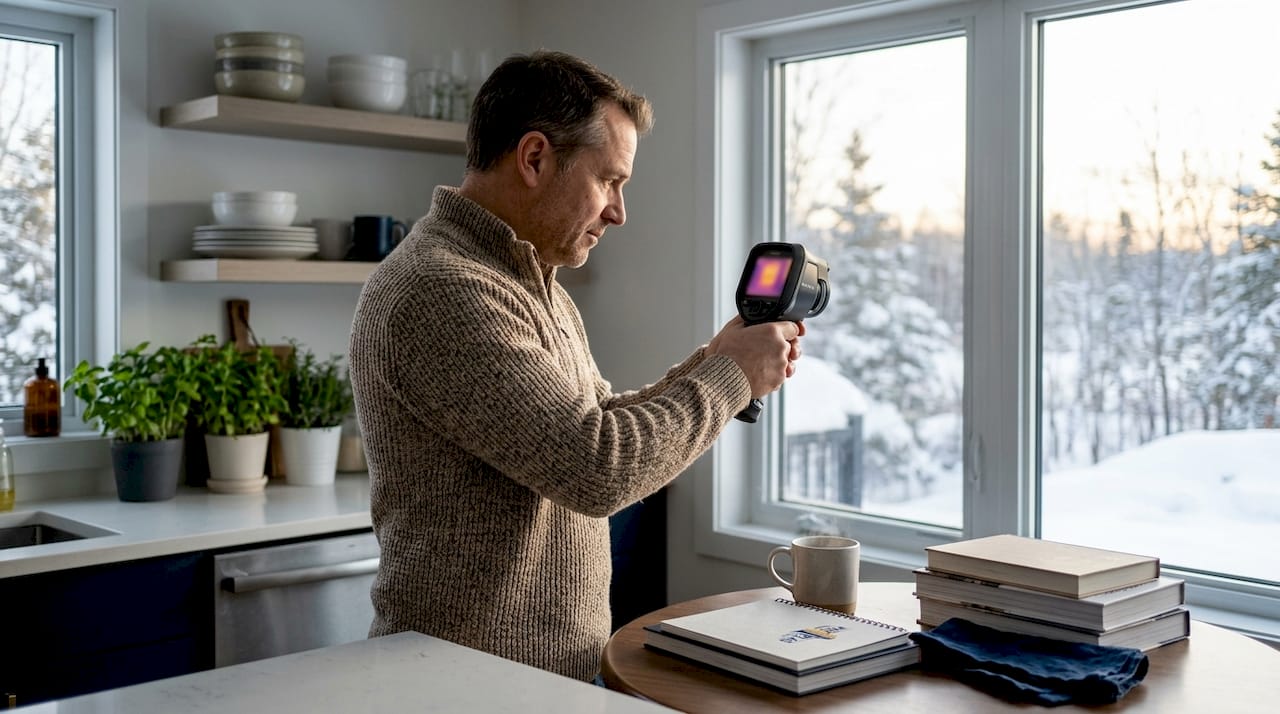
Window heat loss is defined as the transfer of thermal energy from inside your home to the outdoors through window glass, frames, and seals. It is one of the leading causes of high heating bills in Canadian homes, where winters are long and temperatures drop well below freezing. Understanding how this process works gives you the knowledge to act on it. The three core mechanisms are conduction, convection, and radiation, and heat transfer through windows must be addressed across all three to meaningfully improve energy efficiency.
What is window heat loss explained: the three mechanisms
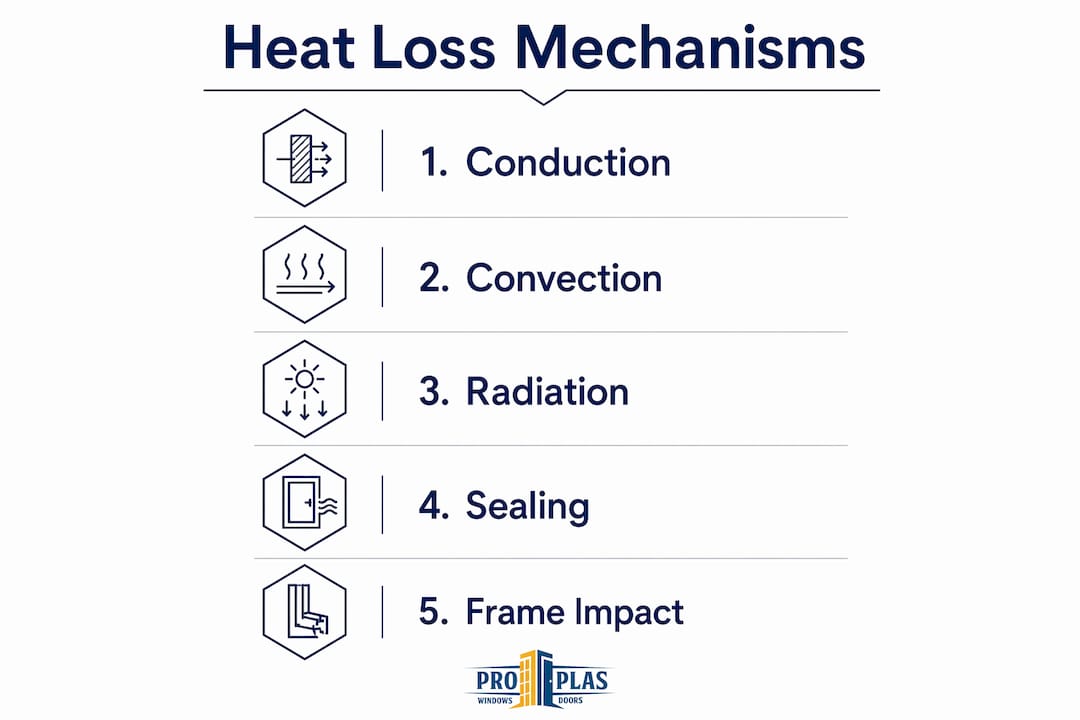
Heat moves through windows in three distinct ways. Each one operates differently, and each one demands a different solution.
Conduction is the direct transfer of heat through a solid material. Glass conducts heat readily, which means warmth from your living room passes straight through the pane and into the cold air outside. The frame compounds this problem. Aluminium frames conduct heat intensively, acting as thermal bridges that bypass any insulation the glass provides. Frames made from uPVC or fibreglass resist this transfer far more effectively.
Convection happens when air moves. Cold air near a window surface sinks, warm air rises to replace it, and a circulation loop forms that continuously pulls heat away from your room. Gaps around window frames, worn seals, and poorly fitted weatherstripping all accelerate this process by letting cold outdoor air infiltrate directly.
Radiation is the transfer of infrared heat through glass without any physical contact. Your walls, furniture, and body all emit infrared energy, and standard glass allows a significant portion of it to pass straight outside. Low-E (low-emissivity) coatings address this by reflecting interior infrared heat back into the room during winter while blocking exterior infrared in summer, optimising year-round thermal efficiency.
- Conduction: heat moves through glass and frame materials directly
- Convection: air movement around gaps and seals carries heat away
- Radiation: infrared energy escapes through uncoated glass
Pro Tip: Run your hand slowly around your window frame on a cold day. If you feel a temperature drop or a faint draught, convective heat loss is already costing you money.
How window construction affects heat loss
The components of a window determine how much heat it loses. Glass type, frame material, and sealing quality each play a measurable role.
Glass glazing and U-values
The U-value measures how quickly heat passes through a window. A lower U-value means better insulation. Single-glazed windows carry a U-value of around 5.7 W/m²K, which is poor by any modern standard. Double glazing drops that figure to approximately 2.8 W/m²K, and triple glazing can reach 1.5 W/m²K or lower. That difference translates directly into less heat escaping and lower heating costs each month.
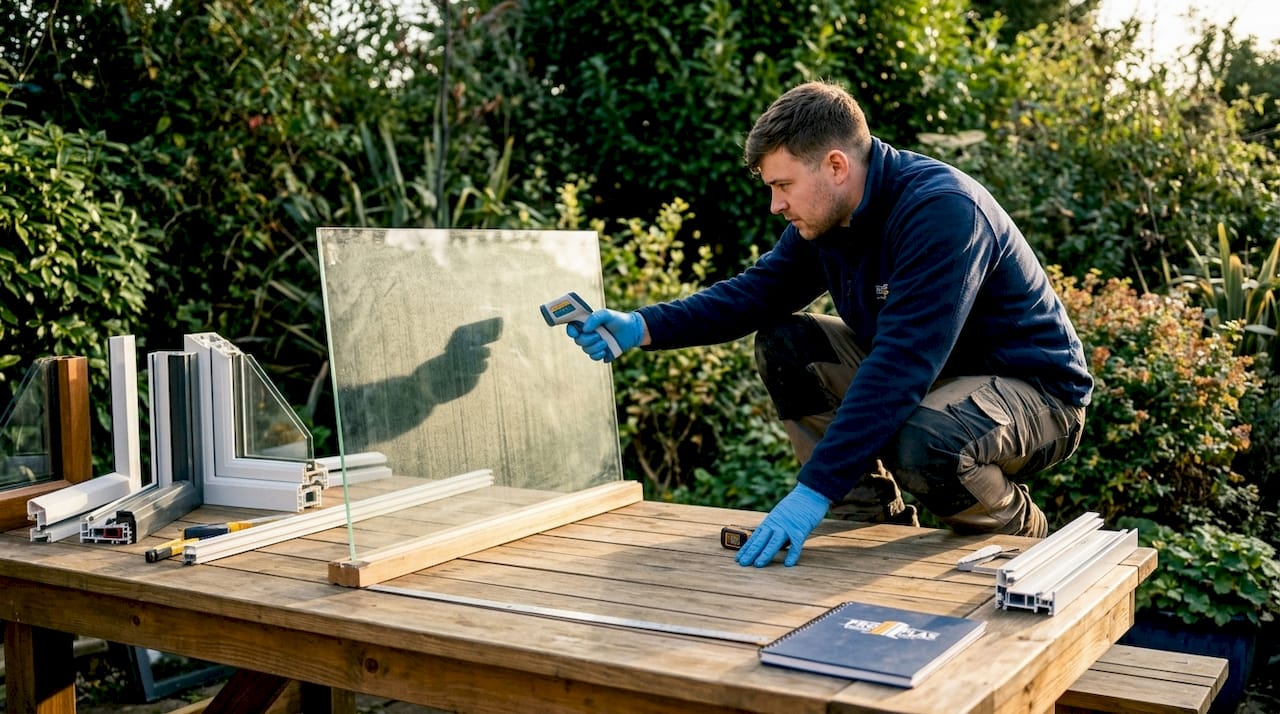
The gap between panes matters too. Double and triple-glazed units filled with argon gas slow conduction further because argon transfers heat less readily than air. Combined with Low-E coatings, this approach can improve U-factor by 40–50% compared to standard double glazing. Annual energy savings from this combination typically range from $80 to $400 depending on climate and heating system.
| Glazing type | Approximate U-value (W/m²K) | Relative heat loss |
|---|---|---|
| Single glazed | 5.7 | High |
| Double glazed | 2.8 | Moderate |
| Triple glazed | Below 1.5 | Low |
Frame materials and thermal bridging
Frames account for a larger share of total window heat loss than most homeowners expect. High-performance frames incorporate thermal breaks, which are insulating barriers inserted into metal frames to interrupt the conductive path. Without a thermal break, an aluminium frame transfers heat almost as fast as the glass itself. uPVC and fibreglass frames are inherently insulating materials that require no thermal break to perform well in cold climates.
Pro Tip: When comparing replacement windows, ask for the whole-window U-value, not just the centre-of-glass figure. The whole-window number accounts for the frame and is a more accurate measure of real-world performance.
Seals, weatherstripping, and air leakage
A well-glazed window with a failing seal still loses heat. Proper sealing and weatherstripping reduce convective heat loss by eliminating the gaps where cold air enters and warm air escapes. Seals degrade over time from UV exposure, temperature cycling, and general wear. Inspecting and replacing weatherstripping is one of the lowest-cost, highest-return actions a homeowner can take.
How to measure window heat loss and its effect on energy bills
Understanding the numbers behind heat loss helps you prioritise where to spend money and effort.
Key ratings to know
Three ratings guide window selection for Canadian homeowners:
- U-value: measures the rate of heat transfer. Lower is better. Canadian Energy Star certification sets minimum U-value thresholds based on climate zone.
- Solar heat gain coefficient (SHGC): measures how much solar radiation passes through the glass. The SHGC value determines how much heat solar radiation transmits into your home, which matters for both winter warmth and summer cooling.
- Air leakage rate: measures how much air passes through the window assembly. A lower air leakage rate means better draught resistance and less convective heat loss.
Estimating your heat loss
Heat loss through a window is calculated using the formula: Heat loss (W) = U-value × Window area (m²) × Temperature difference (°C). For a Canadian home in january with an outdoor temperature of minus 15°C and an indoor temperature of 21°C, the temperature difference is 36°C. A single-glazed window measuring 1.5 m² would lose approximately 307 watts continuously. Replacing it with a triple-glazed unit cuts that figure to roughly 81 watts. That reduction, sustained across an entire heating season, produces meaningful savings on your energy bill.
Draught-proofing windows and doors can save a typical household approximately $60 per year in heating costs from convective heat loss alone. Glazing upgrades add further savings on top of that figure.
Practical solutions for reducing heat loss through windows
Canadian homeowners have several proven options for cutting window heat loss. The right combination depends on your budget, your home’s age, and your climate zone.
- Upgrade to double or triple glazing: this is the single most effective long-term solution. Upgrading window glazing and frames in a typical Canadian detached home reduces energy costs and improves thermal comfort across every room.
- Choose Energy Star certified windows: Energy Star ratings for Canada are climate-zone specific, so a window rated for zone C (the coldest zones) performs to a higher standard than one rated for zone A. Look for the zone rating on the label, not just the Energy Star logo.
- Seal gaps and replace weatherstripping: this costs very little and delivers immediate results. Check the perimeter of every window frame, the meeting rails on double-hung windows, and the sill area.
- Apply Low-E window film: for windows you cannot yet replace, Low-E film reduces infrared radiation loss and can lower heat loss noticeably. It is not as effective as factory-applied coatings on new glass, but it is a practical interim measure.
- Use thermal curtains: heavy, lined curtains create a still air buffer between the glass and the room. Closing them at dusk and opening them during sunny winter days reduces both radiation and convection losses.
- Consider window orientation: north-facing windows provide consistent solar gain in winter, while west-facing windows risk overheating on summer afternoons. When planning upgrades or new construction, orientation should inform both glazing type and SHGC selection.
Pro Tip: Prioritise the windows you use least for low-cost fixes like film and curtains. Put your upgrade budget toward the largest windows in your most-used rooms, where the heat loss and comfort impact are greatest.
Window energy ratings like U-value, SHGC, visible light transmittance, and air leakage rate guide you to select the right product for your specific climate and home orientation. Use all four, not just one.
Key takeaways
Effective window heat loss reduction requires addressing conduction, convection, and radiation together, not treating any single mechanism in isolation.
| Point | Details |
|---|---|
| Three mechanisms drive heat loss | Conduction, convection, and radiation each require a targeted solution to reduce heat loss effectively. |
| U-value is the core performance metric | Triple-glazed windows reach U-values below 1.5 W/m²K, cutting heat loss to a fraction of single-glazed levels. |
| Frames and seals matter as much as glass | Aluminium frames without thermal breaks and worn seals can undermine even high-quality glazing. |
| Low-E coatings deliver year-round savings | Combined with argon gas fill, Low-E coatings can improve U-factor by 40–50% and save $80–$400 annually. |
| Sealing is the fastest, lowest-cost fix | Draught-proofing alone saves approximately $60 per year and can be done without replacing any windows. |
What 25 years of window installations has taught us
Most homeowners come to us focused on glass. They ask about triple glazing, argon fills, and U-values, which are all worth knowing. What they rarely ask about is the frame, the seal, or the installation quality. Those three factors determine whether a high-performance window actually performs.
We have seen Energy Star certified windows installed with gaps at the sill, no backing rod, and inadequate sealant. Within two winters, those homeowners were back with draught complaints and condensation problems. The glass was fine. The installation was not.
The other misconception we encounter regularly is treating window upgrades as a single decision. Homeowners either replace everything at once or do nothing. The smarter approach is to assess each window individually. A south-facing double-glazed window in good condition may not need replacement yet. A failing single-glazed north-facing window in a bedroom loses heat all night, every night, and should be the first priority.
Solar heat gain is also underestimated in Canadian homes. Some homeowners choose the lowest possible SHGC to block summer heat, then wonder why their heating bills stay high in winter. In most Canadian climate zones, a moderate SHGC on south-facing windows is an asset in january and february, not a liability. Balancing U-value and SHGC for your specific orientation is where real efficiency gains come from.
The upfront cost of quality windows is real. So is the return. Lower heating bills, fewer draught complaints, and a more comfortable home year-round are not abstract benefits. They show up every month on your energy statement.
— Proplas
How Proplas can help you reduce window heat loss
Proplas has been helping Toronto and GTA homeowners improve window energy efficiency for 25 years, with over 10,000 satisfied customers and a lifetime warranty on every installation.

Every Proplas window is Energy Star certified and fully customised to your home’s dimensions, orientation, and climate zone. There are no hidden fees and no lengthy approval delays. Installation typically completes in as little as three days. If you are ready to stop losing heat through ageing windows, explore our window solutions or book a window energy audit to find out exactly where your home is losing the most heat and what it will cost to fix it.
FAQ
What is window heat loss?
Window heat loss is the transfer of thermal energy from inside a home to the outdoors through window glass, frames, and seals via conduction, convection, and radiation. It is a primary cause of high heating costs in Canadian homes.
Why do windows lose more heat than walls?
Windows have far lower thermal resistance than insulated walls. A single-glazed window carries a U-value of around 5.7 W/m²K, while a well-insulated wall typically performs many times better, meaning heat escapes through glass much faster.
What is the most effective way to reduce window heat loss?
Upgrading to triple-glazed, Low-E coated windows with uPVC or fibreglass frames addresses all three heat loss mechanisms. Combined with proper sealing, this approach delivers the greatest reduction in heat loss and energy costs.
How does a Low-E coating reduce heat loss?
A Low-E coating reflects interior infrared heat back into the room during winter and blocks exterior infrared radiation in summer, reducing radiation-based heat loss without reducing the amount of visible light entering the home.
How do I know if my windows need replacing?
Signs include visible condensation between panes, cold spots near the glass, audible draughts, and rising heating bills. A professional window energy audit can confirm which windows are underperforming and quantify the potential savings from replacement.