
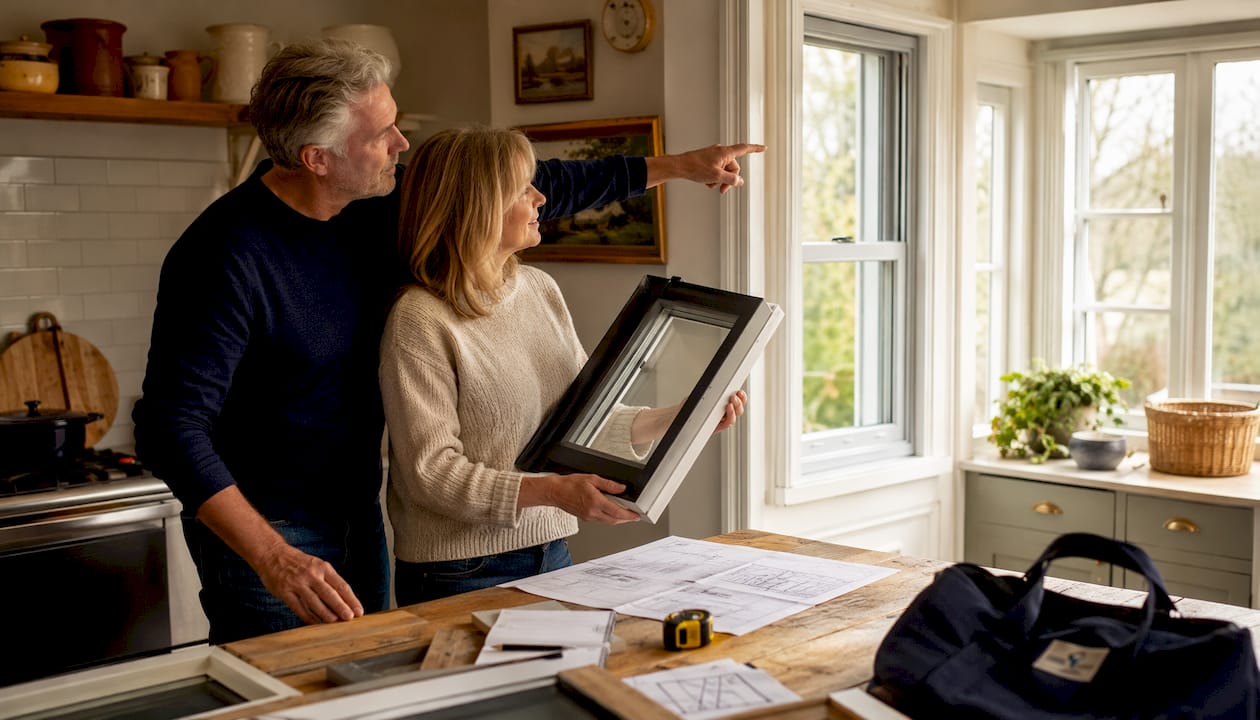
Custom windows matter because they deliver a precision fit, measurable energy performance, and design flexibility that standard off-the-shelf units simply cannot match. For Canadian homeowners dealing with older framing, non-standard openings, or high-performance targets, the difference between a custom unit and a forced-fit stock window shows up in your heating bills, your comfort, and the long-term condition of your walls.
Here is what makes custom windows worth serious consideration:
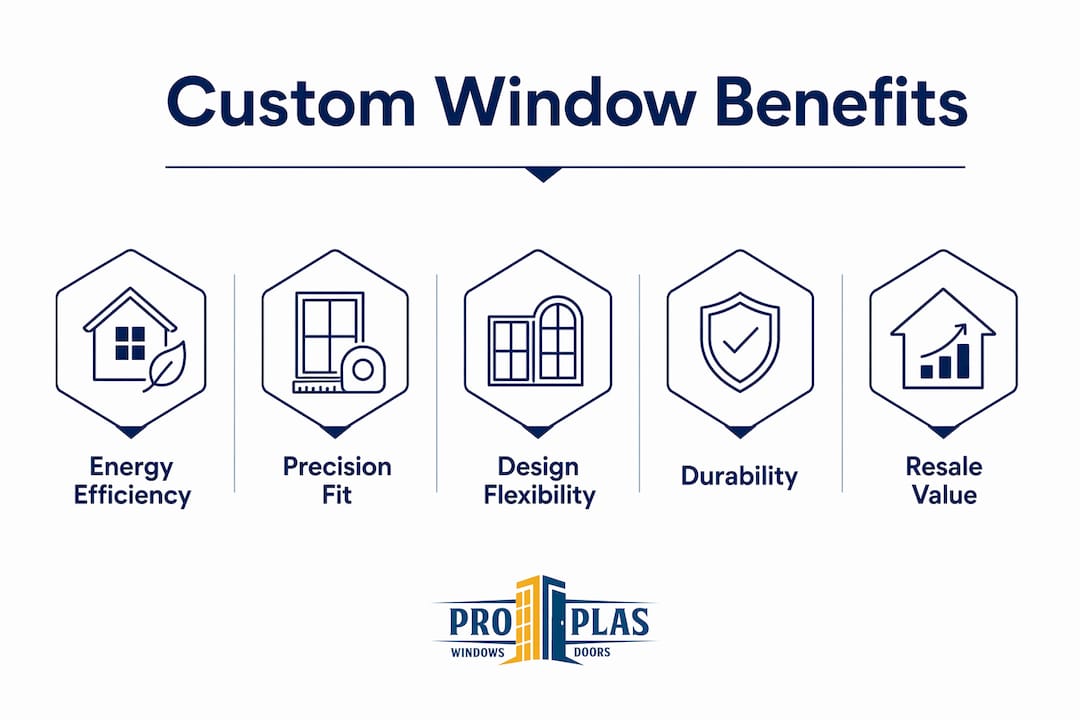
- Precision fit: Custom units are fabricated to your exact rough-opening dimensions, eliminating the air and moisture paths that come with excessive shimming.
- Energy performance: You choose the glazing package, including low-E coatings, argon or krypton fills, and double or triple panes, to meet Energy Star Canada criteria for your climate zone.
- Design flexibility: Arched tops, trapezoids, true-divided-lite sashes, and custom colour finishes are only available through custom manufacture.
- Durability and warranties: Higher-grade materials and tighter fabrication tolerances translate to a longer service life and stronger manufacturer accountability.
- Long-term value: Properly fitted, energy-rated windows are a selling point buyers notice and appraisers recognise.
Custom is the right call when you have an older or settled home, non-standard openings, historic details worth preserving, or performance targets a stock line cannot reach. Proplas has been helping Toronto and southern Ontario homeowners navigate exactly these decisions for many years and numerous completed installations.
Table of Contents
- What are the real benefits of custom windows?
- How do custom windows actually deliver better performance?
- Are custom windows worth the cost for Canadian homeowners?
- How do you choose the right custom window supplier?
- What maintenance do custom windows need in Canadian conditions?
- What 25 years and 10,000+ installs have taught us about custom windows
- Key takeaways
- The Proplas view on when custom windows are worth it
- Custom windows from Proplas: transparent pricing, lifetime warranty, and fast installation
- Useful sources and further reading
What are the real benefits of custom windows?
The benefits of custom windows fall into four categories that map directly to what most homeowners care about: comfort, energy costs, appearance, and resale value.
Energy and comfort
A properly specified custom window reduces drafts, cold-radiation discomfort near the glass, and condensation on the frame. The combination of a tight factory fit and the right glazing package, verified against Energy Star Canada criteria, is what actually delivers those results. Stock windows can carry an Energy Star label too, but they are manufactured to fit a range of openings, which means the installer often compensates with shims and extra caulk rather than a true fit.
Fit and building envelope protection
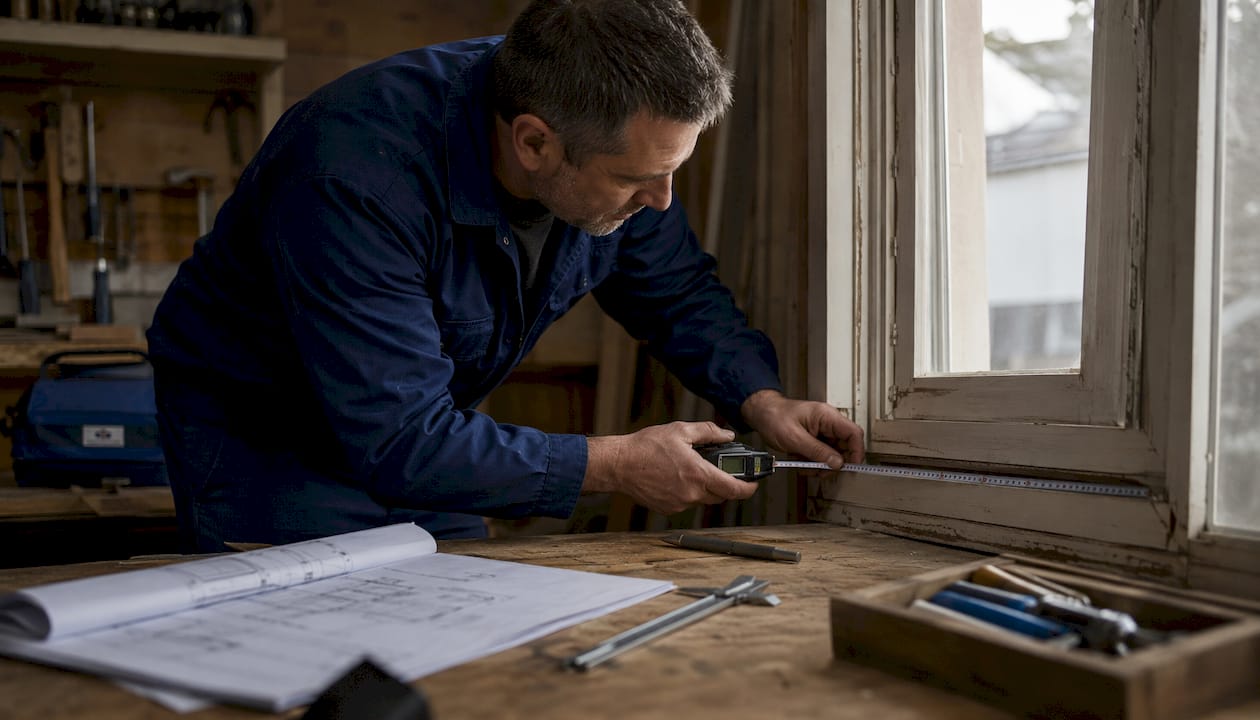
Precision measurement eliminates forced fits, reduces air infiltration, and avoids the disruptive retrofit work that comes when a standard unit is shimmed into a non-standard opening. In older Toronto-area homes where framing has settled over decades, rough openings are rarely perfectly square or plumb. A custom unit accounts for those variances at the factory, not on the job site.
Design and curb appeal
Stock window lines cover maybe a dozen standard sizes and three or four finishes. Custom manufacture opens up unusual shapes and historic profiles that stock lines cannot replicate: arched tops, trapezoids, matching mullion patterns for period homes, and true-divided-lite sashes. If you are renovating a century home or trying to match existing windows on a heritage property, custom is often the only practical path. Interior door design follows a similar logic, and the same principle applies when you are thinking about how openings shape your interior aesthetic.

Durability and resale
Custom windows are typically built to tighter fabrication tolerances than mass-produced stock units, with higher-grade materials and better quality control at the factory. That translates to a longer service life and fewer warranty disputes. Buyers in the Toronto and southern Ontario market increasingly ask about window age and energy ratings during home inspections. A set of properly fitted, Energy Star-certified windows with documented warranties can be a solid selling point.
Pro Tip: Prioritise sightline width and operation type over the lowest unit price. A narrower sightline lets in more light and looks better from the street; the right operation type (casement vs. awning vs. slider) affects ventilation, cleaning access, and long-term hardware reliability far more than a small price difference.
How do custom windows actually deliver better performance?
The performance advantage of custom windows comes from three connected factors: glazing specification, frame design, and installation quality. Getting one right without the others leaves money on the table.
Glazing choices and what they mean for Canadian climates
Custom glazing configurations allow lower U-factors and better solar heat gain coefficient (SHGC) control than most stock lines. In practical terms:
- Double vs. triple glazing: Triple panes lower the U-factor further, which matters most in northern Ontario or any home with large north-facing windows. Double panes with a quality low-E coating and argon fill are often the right balance for the Toronto climate zone.
- Low-E coatings: Applied to the inner glass surfaces, low-E coatings reflect long-wave heat back into the room in winter and block solar heat gain in summer. The coating position (surface 2 vs. surface 3) changes the balance between heating and cooling performance.
- Gas fills: Argon is standard; krypton is denser and performs better in thinner units where triple glazing would otherwise be too heavy.
- SHGC: South-facing windows benefit from a higher SHGC to capture passive solar heat in winter. North-facing windows need a lower SHGC to avoid heat loss. Custom specification lets you match the glazing to the orientation, something a single stock SKU cannot do. Proplas’s window placement guidance covers this in more detail.
Frame materials and thermal breaks
Frame choice affects both thermal performance and maintenance over the life of the window:
- Vinyl (uPVC): Low maintenance, good thermal performance, and cost-effective. The most common choice in Ontario residential work.
- Fibreglass: Dimensionally stable across temperature swings, stronger than vinyl, and closer to the thermal performance of wood. A good choice for large units or extreme climates.
- Wood-clad: Wood interior with an aluminium or fibreglass exterior cladding. Excellent aesthetics, good insulation, but requires more maintenance attention at the cladding joints.
- Aluminium with thermal break: Used mainly in commercial or contemporary residential work. The thermal break is the critical detail; without it, aluminium frames conduct cold directly into the room.
Why measurement and installation are non-negotiable
Forcing stock sizes into non-standard openings can require additional trim, shims, and structural adjustments that create long-term performance problems. Measuring the rough opening in three places, top, middle, and bottom, reveals whether the framing has racked or settled. A custom unit is fabricated to the smallest dimension, giving the installer a true fit with minimal shimming.
Even a perfectly specified custom window underperforms if the installation is poor. Proper flashing at the sill, correctly lapped air and vapour barriers, and continuous sealant at the perimeter are what prevent water infiltration and air leakage. Good installation practice is the final step that realises the theoretical performance of the unit.
Performance chain: Accurate measurement → custom fabrication → correct glazing selection → professional installation with proper flashing and sealing → verified performance.
Are custom windows worth the cost for Canadian homeowners?
Custom windows typically carry a 25–50% premium over comparable stock replacement units. That premium reflects one-off factory fabrication, higher-grade materials, and the labour involved in precision measurement and professional installation.
Where the cost goes
The total installed cost of a window replacement includes more than the unit price. Consider:
- Unit cost: The window itself, including glazing package and frame finish.
- Installation: Labour, flashing materials, and interior/exterior trim.
- Structural adjustments: If you try to force a stock unit into a non-standard opening, you may need framing modifications, extra shimming, and additional trim to cover the gaps. Those costs often close the price gap between stock and custom.
- Long-term maintenance: A poorly fitted stock window may need recaulking, hardware adjustment, or early replacement. A well-fitted custom unit with a solid warranty reduces those future costs.
Payback and long-term value
The total installed performance matters more than unit cost alone. Correct glazing, frame choices, and installation together determine how much energy you actually save. For a Toronto-area home with drafty, single-pane or failed double-pane windows, upgrading to Energy Star-certified custom units with proper installation typically reduces heating and cooling loads noticeably. The payback period depends on your current window condition, the size of the upgrade, and your energy costs.
Rebates can shorten that payback. Check the Canada Greener Homes Initiative for current federal loan and grant programmes, and confirm provincial eligibility separately. Energy Star certification at the product level is a common prerequisite for rebate programmes, so verify that the windows you are purchasing carry that certification before signing a contract.
| Consideration | What to know |
|---|---|
| Cost premium | Custom units typically cost 25–50% more than comparable stock windows before installation |
| Structural adjustment risk | Forcing stock sizes into non-standard openings adds trim, shim, and framing costs that narrow the price gap |
| Rebate eligibility | Energy Star certification is a common prerequisite; check federal and provincial programmes before purchasing |
| Lead time | Custom orders require factory fabrication; plan your schedule accordingly |
Custom is clearly worth the premium for historic homes, homes with settled or non-standard framing, large or unusual openings, and any project where matching existing custom units is required.
How do you choose the right custom window supplier?
Choosing a custom window supplier is as much about vetting the installer as it is about comparing unit specifications. Here is a practical checklist to use during supplier calls and site visits.
Numbered checklist for evaluating suppliers
- Confirm the measurement process. Ask how many points they measure in each rough opening and whether they account for out-of-square framing.
- Ask about factory tolerances. What is the acceptable gap between the unit and the rough opening? How is that gap managed at installation?
- Clarify the installation warranty. Who covers the installation workmanship, the manufacturer or the installer? Are they the same company?
- Ask whether they subcontract. If installation is subcontracted, who is accountable for warranty claims?
- Request flashing details. Ask specifically how they handle sill flashing and air/vapour barrier integration.
- Verify Energy Star certification. Ask for the product certificate, not just a verbal claim.
- Check lead times in writing. Custom fabrication takes longer than stock orders; confirm the delivery window before signing.
- Ask for references and a project gallery. Recent projects in similar home types are the most relevant.
Red flags to watch for
- Vague or verbal-only warranty terms with no written documentation.
- Pressure to accept standard sizes without a site measurement visit.
- Unusually short quoted lead times for custom units.
- No proof of Energy Star-certified products.
- Quotes that exclude installation, trim, or finishing from the scope.
Comparing quotes fairly
Scope parity matters more than headline price. Two quotes for the same window can differ significantly if one includes installation, flashing, and interior trim while the other covers only the unit. Ask each supplier to itemise: unit cost, installation labour, flashing materials, interior and exterior trim, and disposal of old units. Then compare the glass unit specifications: glazing type, low-E coating position, spacer type, gas fill, and U-factor. A lower headline price with inferior glazing specs is rarely the better deal over a 20-year service life.
Pro Tip: Ask each supplier for a written installation scope that specifies flashing details and air-sealing methods. If they cannot provide one, that tells you something important about how they approach quality control.
What maintenance do custom windows need in Canadian conditions?
Custom windows are built to last, but Canadian freeze-thaw cycles, road salt exposure, and temperature swings do put real demands on hardware, seals, and frames. A simple annual routine keeps them performing well for decades.
Routine maintenance tasks
- Lubricate hardware annually. Casement cranks, tilt latches, and sliding hardware benefit from a light silicone-based lubricant each spring. Avoid petroleum-based products, which degrade vinyl and rubber seals.
- Clean weep holes. Weep holes in the sill track drain condensation and wind-driven rain. Clear them each spring with a thin wire or compressed air.
- Inspect perimeter seals and caulking. Check the exterior caulk bead at the frame-to-wall joint each fall. Cracked or missing caulk is the most common entry point for water infiltration.
- Clean frames per manufacturer instructions. Most vinyl and fibreglass frames need only mild soap and water. Avoid abrasive cleaners that scratch the surface and accelerate UV degradation.
Realistic lifespan by material
High-quality custom windows are engineered for multi-decade service life when properly specified and installed. Material choice and installation quality have a disproportionate impact on longevity:
- Vinyl: 25–40 years with routine maintenance. The most common choice in Ontario; performs well across freeze-thaw cycles.
- Fibreglass: 40+ years in most conditions. Dimensionally stable and resistant to warping.
- Wood-clad: 30–50 years when the exterior cladding is maintained. The wood interior requires periodic inspection for moisture at joints.
What a good warranty should cover
A solid window replacement warranty covers the sealed glass unit against failure (fogging, seal failure), the frame against defects in materials and workmanship, and the hardware against operational failure. Ask specifically about transferability if you plan to sell the home, and check the void conditions carefully. Common void conditions include improper cleaning products, third-party modifications, and installation by an uncertified contractor.
When repairs make sense versus full replacement: if you see persistent fogging between panes, the sealed unit has failed and needs replacing. Operational failure (a crank that will not turn, a sash that will not lock) is usually a hardware fix. Rot around a wood-clad frame or water staining on the interior drywall below a window means the installation seal has failed and needs professional assessment.
Seasonal checklist for Canadian homeowners
- Spring: Lubricate hardware, clear weep holes, inspect exterior caulk, wash frames.
- Fall: Check weatherstripping for compression loss, inspect interior seals for condensation signs, confirm locks engage fully.
- After severe weather: Check for any movement in the frame or cracked glazing after major ice storms or hail events.
What 25 years and 10,000+ installs have taught us about custom windows
Proplas has completed numerous window and door installations across Toronto and southern Ontario over many years. That volume of real-world projects reveals patterns that no specification sheet captures.
Common pitfalls that custom work prevents
The most frequent problems Proplas sees in homes with previously installed stock windows are:
- Forced fits and excessive shimming. When a stock unit is shimmed into an opening it was not made for, the shim stack compresses unevenly over time, creating air gaps at the frame perimeter.
- Mixed sightlines. Replacing one window at a time with whatever stock unit is available creates a mismatched streetscape that affects both curb appeal and resale value.
- Poor flashing at the sill. This is the single most common source of water infiltration around windows. A proper sill pan flashing, correctly lapped under the weather-resistant barrier, prevents the water damage that shows up years later as rot or mould.
- Warranty gaps. When the unit manufacturer and the installer are different companies, warranty claims often fall into a gap where each party points to the other. A supplier who handles both manufacture and installation carries a single accountable warranty.
- Mismatched hardware. Custom units can be specified with hardware that matches the home’s existing style and meets the operational requirements of the window type.
Trust signals to request from any supplier
Before signing a contract, ask for:
- Energy Star product certificates for the specific units being installed.
- A sample warranty document covering both the unit and the installation.
- A photo gallery of completed projects in similar home types.
- Two or three references from recent customers.
- A written installation scope specifying flashing details, air-sealing methods, and trim responsibilities.
Typical end-to-end timeline
What to expect from measurement to sign-off: Initial site measurement (1–2 hours) → written quote and specification review (2–5 business days) → order placement and factory fabrication (varies by supplier; custom orders take longer than stock) → delivery confirmation → installation day (most residential projects complete in one day) → final inspection and sign-off.
Key takeaways
Custom windows deliver precision fit, verified energy performance, and design options that stock units cannot match, making them the right choice for many Canadian homeowners replacing windows in older or non-standard homes.
| Point | Details |
|---|---|
| Precision fit prevents problems | Custom fabrication eliminates forced fits and the air and moisture paths that come with excessive shimming. |
| Glazing spec drives energy savings | Choose low-E coatings, gas fills, and pane count to match your climate zone and window orientation. |
| Installation quality is decisive | Proper flashing and sealing are required to realise the performance the unit is rated for. |
| Verify Energy Star certification | Confirm product-level Energy Star certification before purchasing; it is a common rebate prerequisite. |
| Proplas for Toronto and southern Ontario | Proplas offers fully custom sizing, Energy Star products, professional installation, and a lifetime warranty with 25 years of local experience. |
The Proplas view on when custom windows are worth it
The question we hear most often is: “Do I really need custom, or will a standard window do the job?” The honest answer depends on your home, not on a general rule.
For a newer home with standard framing and square openings, a quality stock window installed correctly can perform well. But for the majority of Toronto and southern Ontario homes built before 1980, the framing has moved. Openings are rarely perfectly square, and the difference between the top measurement and the bottom measurement of a rough opening is often enough to make a stock unit a poor fit. In those cases, custom is not a luxury. It is the practical choice that avoids future problems.
What we have seen consistently over 25 years is that homeowners who focus on total installed performance, correct glazing for their orientation, a true fit, and professional installation with proper flashing, get windows that last and perform. Homeowners who focus only on unit price often find themselves revisiting the decision sooner than they expected.
Custom windows from Proplas: transparent pricing, lifetime warranty, and fast installation
Replacing windows is a significant investment, and you deserve a supplier who is straightforward about what you are getting and what it costs. Proplas offers fully custom window sizing, Energy Star-certified products, and professional installation across Toronto and southern Ontario, with no hidden fees and a lifetime warranty that covers both the unit and the workmanship.
With 25 years of experience and more than 10,000 completed installations, Proplas handles measurement, fabrication coordination, installation, and after-sales support under one roof. That means one accountable warranty, one point of contact, and no finger-pointing between a manufacturer and a separate installer. Installation is often completed in as little as three days once your units are ready.
Whether you are replacing a single failed window or upgrading every opening in a century home, the process starts with a proper site measurement. Request your measured quote at the Proplas custom windows page and get a written specification you can compare with confidence.
Useful sources and further reading
The sources below informed this guide and are worth bookmarking for your own research.
| Source | What it covers |
|---|---|
| Canada Greener Homes Initiative | Federal loan and grant programmes for energy-efficient home upgrades, including windows |
| Energy Efficient Windows Guide for Ontario Homes | Energy Star Canada criteria, glazing choices, and rebate guidance for Ontario homeowners |
| Custom Windows That Fit Your Home and Climate | Proplas custom sizing options and climate-appropriate specifications |
| What Good Window Installation Should Include | Detailed breakdown of flashing, sealing, and installation scope expectations |
| Window Replacement With Warranty Explained | What a solid manufacturer and installer warranty should cover and common void conditions |
| Replacement Windows That Actually Pay Off | Long-term value analysis and ROI considerations for Canadian homeowners |
Additional reading:
- Why standard windows fail older homes: A Proplas guide to framing irregularities and why custom solutions are often necessary in pre-1980 homes.
- Window features reducing heat loss: A detailed breakdown of thermal features, frame options, and maintenance considerations.
- How new interior doors improve energy efficiency in older homes: A useful companion read on whole-house envelope improvements beyond windows alone.