
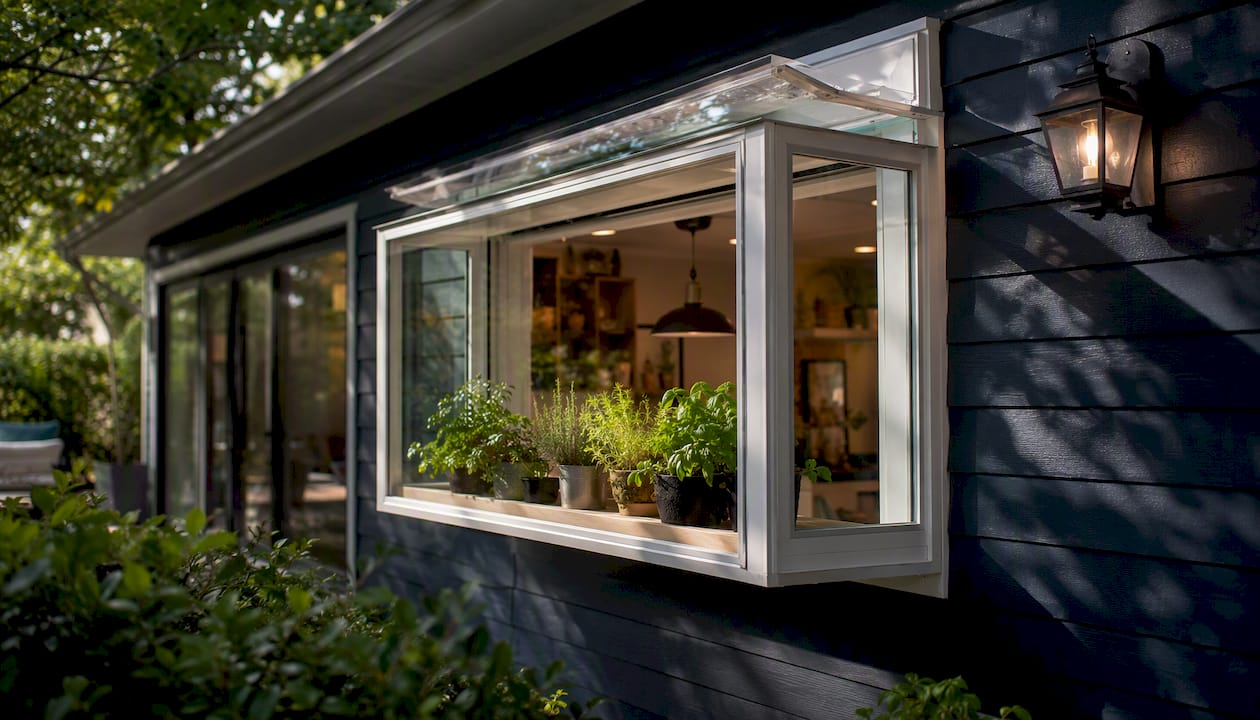
A garden window is a box-shaped window that projects outward from your exterior wall, with glass panels on three sides and a sloped glass top. It creates a small, light-filled alcove inside your home — part window, part mini-greenhouse. Proplas installs custom garden windows for homeowners across Toronto and Southern Ontario, and the questions we hear most often come down to three things:
- More natural light — three glass faces flood the room with daylight from multiple angles.
- A dedicated spot for plants and herbs — the built-in interior shelf is sized perfectly for small pots, herb gardens, and succulents.
- Visual interest and curb appeal — the outward projection adds dimension to an otherwise flat façade.
Key takeaways
A garden window is one of the most practical window upgrades available to Canadian homeowners — it adds light, plant space, and ventilation in a single compact unit, and it performs best when specified with the right glazing for your climate zone.
| Point | Details |
|---|---|
| What a garden window is | A box-shaped projecting window with glass on three sides, a sloped top, and a built-in interior shelf. |
| Top homeowner benefits | Adds natural light from multiple angles, creates shelf space for herbs and plants, and improves ventilation. |
| Canadian glazing recommendation | Choose low-e coatings, argon fill, and double or triple glazing; confirm ENERGY STAR Canada certification for your climate zone. |
| Projection depth | Units typically extend 16–24 inches from the exterior wall — verify exterior clearances before ordering. |
| Next step with Proplas | Request a written quote from Proplas for custom sizing, ENERGY STAR glazing options, and installation with a lifetime warranty. |
Table of Contents
- What is a garden window, exactly?
- Key features and benefits worth knowing
- Where should you put a garden window?
- Frame materials and customisation options
- Energy performance for Canadian climates
- Installation, maintenance, and what it costs
- How garden windows compare to bay, bow, and picture windows
- What to grow in a garden window
- When does a garden window actually make sense?
- Proplas garden windows: custom installation for Toronto homeowners
- Sources
What is a garden window, exactly?
According to Wikipedia’s definition, a garden window is an exterior projection that provides display space and typically houses small potted plants, with a front panel, two side panels, and a sloped top. Think of it as a compact greenhouse box built directly into your wall opening.
The anatomy is straightforward. The front glass panel faces outward and is usually fixed. The two side panels flank it at roughly 90 degrees, and these are often operable — most open as casement-style cranks or sliding vents to allow ventilation even though the top panel stays fixed. The sloped glass top sheds rain and snow while letting in overhead light. Inside, a built-in sill shelf runs the full width of the unit, typically at the same height as your existing windowsill. Projection depth generally runs 16–24 inches from the exterior wall, which is enough for a row of herb pots without eating into your counter space.
How does it differ from a bay or bow window? A bay window uses an angled, multi-panel assembly that often extends closer to the floor and is designed primarily for seating or a wider view. A bow window curves across four or more panels to create a sweeping arc. A garden window, by contrast, is compact and box-like, positioned at counter or sill height, and built around the shelf and plant-growing function rather than floor-to-ceiling drama.
Key features and benefits worth knowing
Garden windows earn their place in a home because each design feature translates directly into a homeowner benefit.
- Three-sided glass floods the room with daylight from the front and both sides simultaneously, reducing the need for artificial lighting during the day.
- Sloped glass top allows natural overhead light to reach the shelf while shedding precipitation — a practical detail that matters in Canadian winters.
- Interior sill shelf gives you a dedicated, waterproof surface for plants, herbs, small decorative items, or even a row of spice jars.
- Operable side vents or casement sashes let you control airflow without opening a large window — particularly useful above a kitchen sink where steam and cooking odours build up.
- Outward projection adds exterior visual interest and can contribute to resale appeal, since buyers often respond positively to distinctive architectural details.
Pro Tip: Kitchens are the strongest candidate for a garden window, not hallways or utility rooms. The combination of cooking steam, natural light, and a convenient shelf height makes the kitchen the one room where all the features work together. For plants, start with compact herbs — basil, thyme, chives — or succulents. Both tolerate the temperature swings near a window better than tropical varieties.
Where should you put a garden window?
Placement determines how much value you actually get from the investment.
- Kitchen above the sink — the most popular location by a wide margin. The shelf sits at a natural working height, the light is welcome, and the ventilation helps with steam and odours.
- Breakfast nook or dining area — a garden window here adds morning light and a pleasant focal point without requiring a full renovation.
- Home office — a compact projection at desk height brings in daylight and gives you a small green space that can reduce eye strain from screens.
- Bathroom — works well when privacy glass or frosted side panels are specified; the humidity actually benefits moisture-loving plants like ferns.
- Sunroom addition — if you are already planning a sunroom-style addition, a garden window on an adjacent wall extends the light further into the main living space.
Orientation matters in Canada. South-facing placements capture the most winter sun, which is exactly when you want it most. East-facing works well for morning light and suits herbs that prefer bright but not intense afternoon heat. Avoid north-facing placements unless you are specifically growing shade-tolerant plants. Before ordering, check exterior clearances — the 16–24 inch projection must clear walkways, decks, and any utility lines running along the wall. Also confirm the sill height allows comfortable access to the shelf; too high and watering becomes awkward.
Frame materials and customisation options
The frame material you choose affects maintenance, appearance, and long-term performance. Here is a practical comparison:
| Frame material | Strengths | Considerations |
|---|---|---|
| Vinyl | Low maintenance, good thermal performance, cost-effective | Limited colour options without cladding; cannot be repainted |
| Wood | Classic appearance, paintable, excellent insulation | Requires periodic painting or staining; higher cost |
| Aluminium | Slim sightlines, very durable, low maintenance | Lower thermal performance unless thermally broken |
| Composite | Combines wood appearance with vinyl durability | Higher upfront cost; fewer suppliers offer it |
Beyond the frame, customisation options include sill depth (deeper shelves suit larger pots), interior shelving finishes in glass or painted wood, grille patterns for a traditional look, exterior colour matching to your existing trim, and custom sizing for non-standard rough openings. Proplas’s custom window options cover all of these variables, which matters when you are replacing a window in an older Toronto home where openings rarely match standard catalogue dimensions.
Energy performance for Canadian climates
A garden window projects beyond the insulated wall envelope, which means its thermal performance deserves more attention than a standard flat window. Two numbers matter most.
- U-factor measures how much heat escapes through the glass assembly. Lower is better. In Canada’s colder climate zones, look for a U-factor of 1.4 W/m²·K or lower for double glazing, and lower still for triple.
- Solar Heat Gain Coefficient (SHGC) measures how much solar energy passes through. A higher SHGC is useful on south-facing windows in winter; a lower one suits west-facing glass in summer.
For Canadian conditions, the practical recommendations are:
- Low-e coatings on the glass surface reflect heat back into the room in winter and reduce solar gain in summer — a meaningful upgrade for a projecting unit exposed on three sides.
- Argon gas fill between panes improves insulation without adding visible thickness.
- Double glazing is the standard minimum; triple glazing is worth the added cost in colder Ontario regions or if the window faces north.
- ENERGY STAR Canada certification, administered through Natural Resources Canada, is the clearest signal that a window meets Canadian climate performance standards. Look for the ENERGY STAR label and confirm the climate zone rating matches your location.
You can also consider UV-protective window film as an add-on to protect plants and interior furnishings from excessive UV exposure on south-facing units. For a deeper look at glazing performance metrics specific to Ontario, Proplas’s energy-efficient windows guide for Ontario homes covers U-factor targets and certification requirements in plain language.
Installation, maintenance, and what it costs
What the installation process looks like
A professional garden window installation follows a clear sequence: site measurement, custom manufacturing to your rough opening dimensions, removal of the existing window, structural preparation of the opening (which may include adding a header or extending the sill), installation and flashing of the new unit, interior and exterior finishing, and a final inspection. Proplas typically completes installations in as few as three days once the unit is manufactured, with transparent pricing and no hidden fees throughout the process. For a full breakdown of what a professional installation should include, the Proplas installation guide is a useful reference.
Maintenance checklist
- Clean glass panels inside and out with a non-abrasive glass cleaner; avoid pressure washers on the seals.
- Inspect weatherstripping and perimeter seals each spring and autumn — a failed seal is the most common cause of condensation between panes.
- Lubricate casement hardware and sliding vent tracks annually with a silicone-based lubricant.
- In winter, remove or protect plants on the shelf if overnight temperatures drop significantly; the glass projection offers less insulation than an interior wall.
- Avoid DIY modifications to the frame or flashing — these can void your warranty. Proplas’s window care guide for Canadian homeowners details exactly which maintenance tasks are owner-safe and which require a professional.
Cost guidance
Garden window pricing in Canada varies with frame material, glass specification, custom sizing, and installation complexity. Vinyl units at standard sizes sit at the lower end of the range; wood or composite frames with triple glazing and custom dimensions cost considerably more. Always request a written quote that itemises the window unit, installation labour, and any structural work separately. Confirm what the warranty covers — both the product and the installation — before signing. Getting at least two quotes from local installers gives you a realistic baseline for your specific opening and home.
How garden windows compare to bay, bow, and picture windows
Choosing the right window style comes down to what you need the window to do.
- Garden vs bay window: A bay window uses three or more angled panels, often floor-to-ceiling or seat-height, to create a wider interior alcove suited to seating or panoramic views. A garden window is compact, shelf-focused, and positioned at counter height — a functional choice rather than an architectural statement.
- Garden vs bow window: A bow window curves across four or more panels to create a sweeping, rounded projection. It adds significant interior floor space and visual drama. A garden window is far more compact and practical for smaller rooms or walls where a bow assembly would be structurally impractical.
- Garden vs picture window: A picture window is flat, fixed, and designed to frame an uninterrupted view. It adds no shelf space and does not project. If your priority is a clear view of the backyard, a picture window delivers that better. If you want light, plant space, and ventilation, the garden window is the stronger choice.
For homeowners still weighing their options, the Proplas replacement window guide walks through the decision framework across all common window styles.
What to grow in a garden window
The shelf space and three-sided light make a garden window one of the most plant-friendly spots in the home. Research from Piedmont Healthcare notes that indoor plants can support well-being and improve the feel of interior spaces — and a garden window gives them the light they need to actually thrive.
Best plant choices:
- Culinary herbs — basil, thyme, rosemary, chives, and parsley all do well in the bright, warm conditions a south- or east-facing garden window provides.
- Succulents and cacti — low water needs and high light tolerance make these ideal for homeowners who travel or forget to water.
- Compact vegetables — cherry tomatoes, dwarf peppers, and lettuce can work in a deep-shelf unit with strong south-facing light.
- Hardy houseplants — pothos, spider plants, and peace lilies tolerate the temperature variation near glass better than tropical varieties.
Practical care tips:
- Use shallow pots with drainage holes and place saucers underneath to protect the shelf surface.
- Rotate pots a quarter turn every week so all sides receive even light exposure.
- Water herbs when the top centimetre of soil feels dry; succulents need far less — check every ten days rather than every few days.
Pro Tip: A simple moisture meter (available at any garden centre) removes the guesswork from watering on a glass shelf where you cannot easily tip the pot to check weight. Overwatering is the most common reason herbs fail in garden windows, not insufficient light.
When does a garden window actually make sense?
Not every home or homeowner is the right fit for a garden window, and it is worth being direct about that.
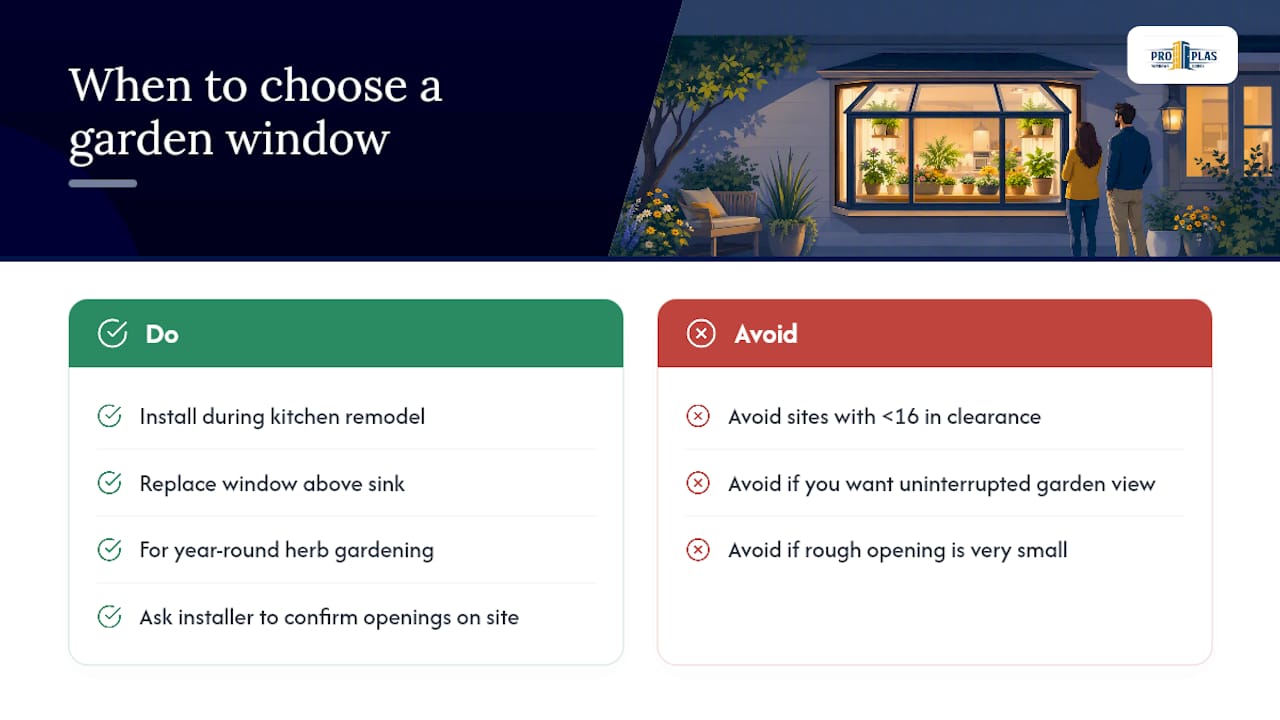
A garden window makes the most sense when you are doing a kitchen remodel and replacing an existing window above the sink anyway. The incremental cost over a standard replacement window is modest, and you gain the shelf and light benefits without a separate project. It also suits hobby gardeners who want fresh herbs year-round without a dedicated grow light setup, and homeowners in older Toronto homes where the kitchen faces a wall or fence and natural light is genuinely limited.
Where it may not be the right call: if your exterior wall has less than 16 inches of clearance before a walkway or deck railing, the projection creates a hazard. If you want a large, uninterrupted view of the garden, a picture window or a wider casement will serve you better. And if your rough opening is unusually small, the cost of structural modification can push the project budget higher than the benefit justifies.
The practical detail most homeowners miss is interior cabinetry coordination. If you are installing a garden window above a kitchen sink, the upper cabinet runs on either side need to be measured against the new projection depth before the unit is ordered. A 20-inch projection that conflicts with an existing cabinet door swing creates a frustrating problem after installation. Confirm those clearances at the measurement stage, not after the unit arrives.
Pro Tip: Ask your installer to confirm the rough opening dimensions and exterior clearances at the same site visit where you discuss the quote. Catching a clearance issue before manufacturing saves weeks and avoids costly modifications.
Proplas garden windows: custom installation for Toronto homeowners
Toronto and GTA homeowners who want a garden window without the usual headaches — unclear pricing, long lead times, and warranty gaps — get a straightforward process with Proplas. With 25 years of experience and over 10,000 satisfied customers, Proplas supplies and installs custom windows sized to your exact rough opening, with ENERGY STAR certified glazing options and transparent, no-hidden-fee pricing from the first quote.

Installation typically completes in as few as three days, and every project is backed by a lifetime warranty covering both the product and the workmanship. You can review past projects in the Proplas portfolio to see the range of installations completed across Toronto and Southern Ontario. To get a written quote for your garden window or to book a home energy assessment, visit Proplas Windows & Doors or request a callback directly from the site.
Sources
These sources cover the key topics discussed in this guide:
- Garden window — Wikipedia
- Garden Window Buying Guide: 9 Smart Styles and Cost Factors You Should Know – Koalaty Remodel