
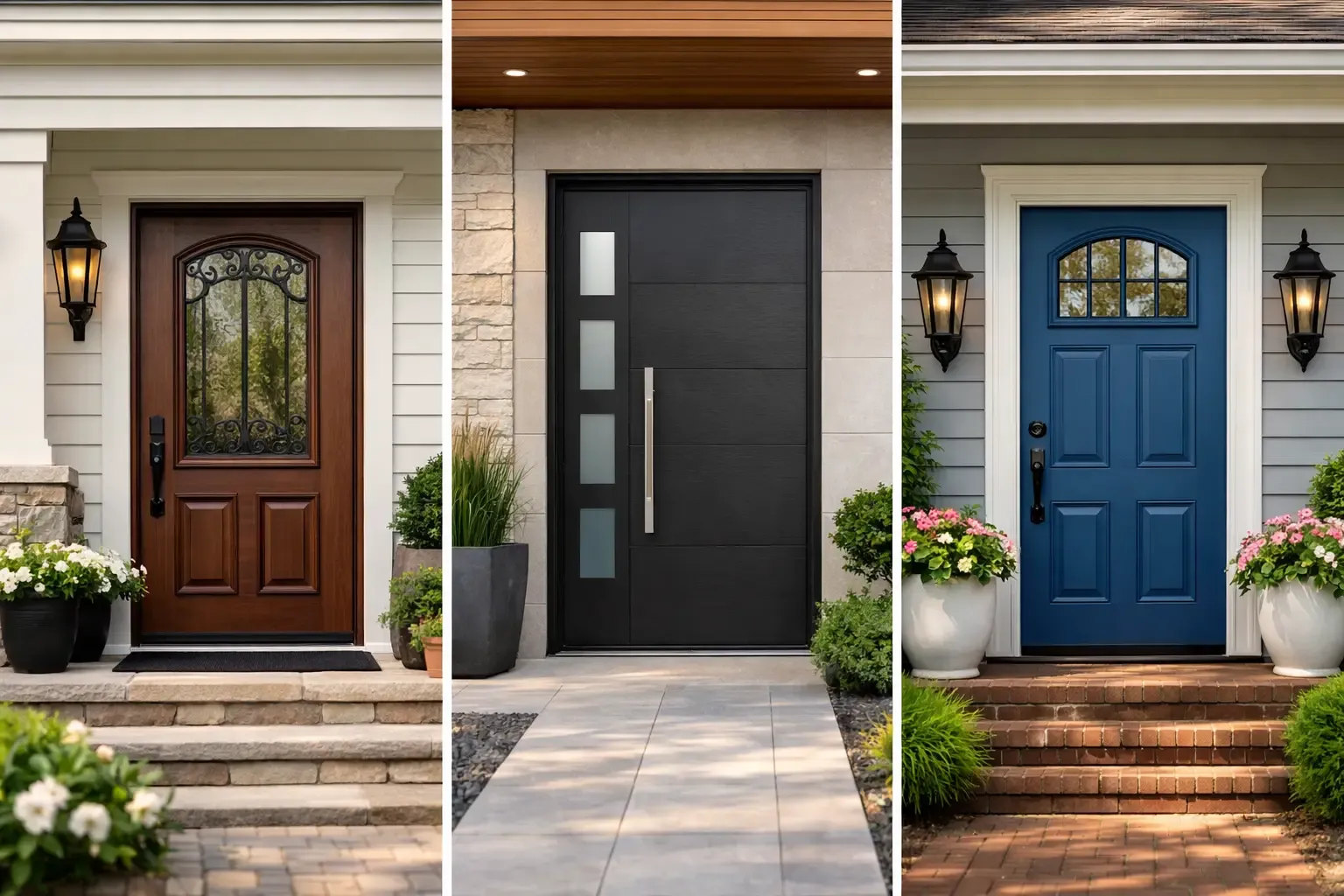
A front door has a disproportionate effect on how a home feels from the street. It is the detail visitors approach, delivery drivers notice, and homeowners see every day when they return home. The best entry doors for curb appeal do more than look attractive in a showroom. They suit the architecture, hold up through Southern Ontario weather, close securely, and continue looking good after years of use.
For many homeowners, replacing an entry door is also a chance to correct a common problem: the existing door may be faded, dented, drafty, poorly proportioned, or simply out of step with a renovated exterior. The right replacement can make the front of the house look more intentional without requiring a full exterior renovation.
Start With the Home, Not the Door
A beautiful door can still look wrong if it competes with the home's design. Before choosing a material, glass insert, or color, look at the fixed elements around it: brick or siding color, roof tone, window grille pattern, porch columns, trim, and the width of the entrance.
Traditional brick homes often suit doors with defined panels, modest glass, and classic finishes such as black, deep blue, charcoal, or a warm stained-wood appearance. A modern home may call for a smoother slab, narrow vertical glazing, clean lines, and minimal decorative details. Farmhouse-inspired properties usually work well with a straightforward panel design and simple divided-lite glass rather than overly ornate inserts.
Scale matters as much as style. A wide front elevation can support double doors or a single door with sidelights. A narrow entry may look more balanced with a strong single door and a carefully chosen glass panel. Adding too much glass or too many decorative elements to a small entrance can make it feel crowded.
Best Entry Doors for Curb Appeal by Material
Material affects both appearance and long-term performance. There is no single best choice for every property, but steel and fiberglass are the two materials most homeowners should compare for a primary exterior entry.
Fiberglass doors offer design flexibility
Fiberglass is often the strongest choice when curb appeal and low maintenance are equal priorities. It can be finished in solid colors or made to resemble stained wood grain, offering the character of wood without the regular refinishing demands associated with a real wood door.
This makes fiberglass especially useful for homes where the front door receives direct sun, rain, snow, or frequent temperature changes. Quality fiberglass doors resist warping, rot, and corrosion, while insulated cores can support better comfort around the entryway. They are available in many panel profiles, from traditional raised panels to smooth contemporary designs.
The trade-off is cost. Fiberglass is commonly priced above a basic steel door, especially when paired with premium glass, sidelights, or custom finishes. For a long-term home, that additional investment may be justified by the appearance and maintenance benefits.
Steel doors create a crisp, confident entrance
Steel entry doors are a practical option for homeowners who want a strong, clean-looking door with dependable security and value. They work particularly well on traditional, transitional, and contemporary homes when finished in a bold, durable color.
A steel door can provide a smooth, refined surface that makes dark colors look sharp. Black, graphite, navy, deep green, and rich red are all effective choices when they coordinate with the trim and masonry. Insulated steel doors can also perform well in winter, provided the complete system is properly fitted and installed.
The main consideration is surface damage. Steel can dent, and scratches should be repaired promptly to help prevent rust. A quality factory finish and professional installation reduce the risk of premature wear, but steel is best for homeowners who want a durable, straightforward design rather than a highly convincing wood-grain look.
Real wood has character, but requires commitment
Wood doors offer natural depth and craftsmanship that other materials imitate rather than duplicate. They can be an excellent fit for heritage homes, custom builds, and properties where authentic wood details are central to the architecture.
However, wood requires consistent maintenance in a climate with moisture, snow, heat, and freeze-thaw cycles. Exposure can affect the finish over time, particularly on an unprotected entrance. For most busy homeowners, fiberglass provides a more predictable balance of visual warmth and everyday durability.
Choose Glass That Adds Light Without Giving Up Privacy
Glass inserts can transform a dark entrance and make a front door feel more welcoming. They also need to match the level of privacy, security, and weather performance required at the front of the home.
Clear glass creates an open, elegant look, but it may not be appropriate for a door facing a busy sidewalk or neighboring property. Frosted, textured, or privacy glass allows daylight into the foyer while limiting direct views inside. Decorative glass can add traditional character, though it should support the home's design rather than become the focal point for the wrong reasons.
For a contemporary entrance, narrow vertical glass or a full-height sidelighted configuration can be striking. For a more traditional property, a smaller upper glass insert often provides the right amount of detail. Homeowners should also ask about insulated glass construction and low-emissivity coatings, which help manage heat transfer and improve comfort near the entry.
Color Can Make the Door Look Custom
Color is one of the fastest ways to improve curb appeal, but it should be chosen in the context of the entire exterior. The goal is contrast with coordination. A door that disappears into the siding has less visual impact, while a color that clashes with brick or roof tones can look temporary.
Black remains a reliable choice because it works with most brick, stone, and siding colors. Deep navy and charcoal provide a similar level of sophistication with a softer effect. Dark green can complement natural stone, warm brick, and mature landscaping. Red works best when the rest of the exterior is restrained and the homeowner wants a classic focal point.
For homes with darker facades, a lighter stained-wood finish or warm neutral door can add needed definition. White doors can work on traditional homes, but they often require stronger hardware, trim, or glass details to avoid looking flat from the street.
Do not overlook the finish quality. A door color is only as good as its coating and preparation. Factory-applied finishes are designed for exterior use and generally provide more consistent coverage than an on-site paint job.
Details That Separate a Good Door From a Finished Entrance
The door itself is only one part of the visual result. Hardware, trim, sidelights, transoms, and even the threshold affect whether the entrance looks complete.
A simple door with substantial hardware can look more expensive than a highly decorative door with undersized hardware. Choose a handle set that is proportional to the door and consistent with other exterior metal finishes. Matte black, brushed nickel, satin brass, and oil-rubbed bronze can all work well, but mixing too many finishes often creates visual clutter.
Sidelights are valuable when the entrance needs more daylight or width. They can make a modest front elevation feel more substantial, although they require careful measurement and an installation plan that addresses framing, insulation, and weather sealing. A transom can add height and traditional presence, but it is not necessary for every home.
Trim should frame the door rather than overpower it. If the home has existing window trim, carrying a similar profile or color to the entry creates a more coordinated exterior.
Curb Appeal Still Depends on Installation
An entry door can be attractive, energy-efficient, and well built, yet fail to perform if it is installed poorly. Gaps around the frame, an uneven reveal, weak flashing, or incorrect shimming can lead to drafts, water infiltration, difficult operation, and a visibly uneven finish.
This is why the replacement process should begin with accurate measurements and a clear review of the opening. Older homes may have out-of-square frames, hidden moisture damage, or trim issues that need to be addressed before the new system goes in. A transparent contractor will explain those conditions, outline the available options, and avoid surprising homeowners with vague extra costs after work begins.
For homeowners in Toronto, the GTA, Simcoe Region, and Southern Ontario, it is also worth selecting an Energy Star-compliant door system designed for local conditions. Insulation, weatherstripping, glass performance, and professional sealing all contribute to a more comfortable entrance through cold winters and humid summers.
A custom door should not mean an uncertain timeline or unclear pricing. At ProPlas, the process centers on proper measurement, product selection, professional installation, and support after the work is complete, so homeowners can make an appearance upgrade without taking on unnecessary risk.
The most appealing front door is the one that looks right for the house and still feels solid, secure, and draft-free years later. Choose the design that fits your architecture, then give equal attention to the material, glass, finish, and installation behind it.