
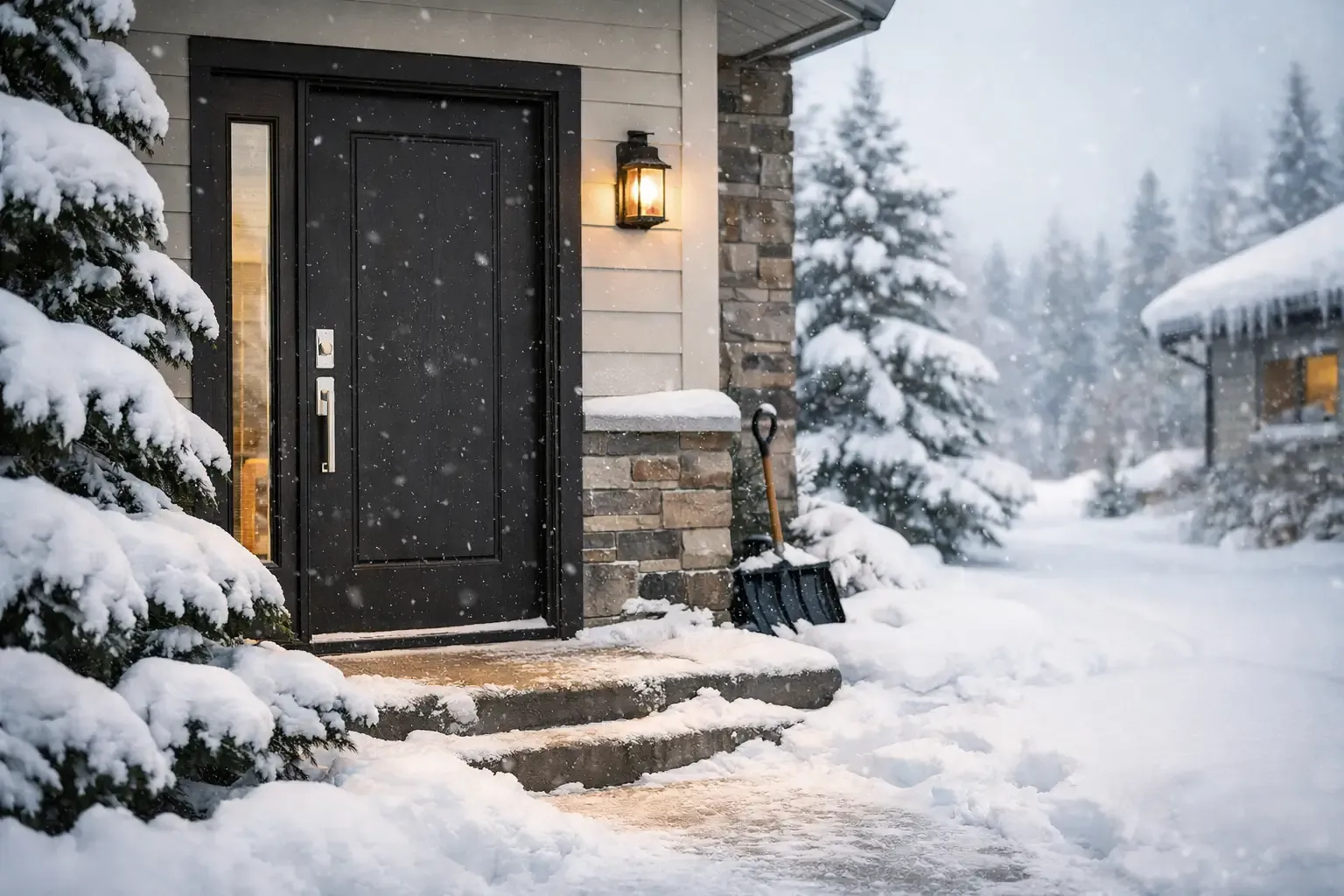
A front door can look solid from the sidewalk and still be the reason a foyer feels cold, a lock sticks, or snowmelt reaches the threshold. Exterior doors have to do more than make a good first impression. In Southern Ontario, they need to handle freeze-thaw cycles, wind-driven rain, daily traffic, and months of heating costs without warping, leaking, or losing their fit.
For homeowners replacing an aging entry, side, or patio door, the right choice is rarely about material alone. Door construction, glass options, hardware, sizing, and installation all affect comfort, security, appearance, and long-term value. A dependable replacement starts with understanding how those pieces work together.
Why Exterior Doors Need More Than a Good Finish
A door system is only as strong as its weakest point. A premium slab will not perform as expected if the frame is poorly insulated, the sill is not properly sealed, or the door is not adjusted to close evenly. This is why replacement should be treated as a full opening upgrade, not simply a door swap.
Older homes often have openings that are no longer perfectly square. Settlement, previous renovations, and worn framing can create small gaps that lead to drafts and water entry. Measuring the actual opening before ordering is essential. It prevents costly surprises and ensures the new unit can be fitted, leveled, insulated, and sealed correctly.
The door’s location matters, too. A protected front entrance has different needs than a side door exposed to prevailing winds or a rear patio door facing a snowy yard. The best choice depends on exposure, traffic, privacy, and how much natural light the space needs.
Steel vs. Fiberglass Exterior Doors
Steel and fiberglass are both practical choices for residential entry doors, but they solve different homeowner concerns.
Steel doors offer strength and value
A quality steel door is a strong option for homeowners who prioritize security, durability, and a clean, traditional appearance. Steel entry doors are commonly selected for front and side entrances because they provide a solid feel and can be finished in a wide range of colors and panel designs.
The trade-off is maintenance after impact damage. Deep scratches or dents can expose the surface to moisture if they are not repaired promptly. In a busy entrance where bikes, strollers, sports equipment, or deliveries regularly come through, that is worth considering. Quality steel doors also need a properly insulated core and well-built frame to avoid a cold surface during winter.
Fiberglass doors provide flexible design
Fiberglass doors are especially well suited to homeowners who want the look of stained wood without the upkeep associated with a wood entry door. They resist warping, denting, and moisture exposure well, making them a practical choice for challenging weather and high-traffic households.
Fiberglass can also support detailed wood-grain textures, smooth painted finishes, decorative glass, sidelights, and transoms. It generally costs more than a basic steel door, but the added durability and design range can make sense for a prominent front entrance or a long-term renovation.
Neither material is automatically better in every situation. A well-made, professionally installed steel door can outperform a poorly fitted fiberglass one. The more useful question is which system suits the opening, the exposure, and the expectations for appearance and maintenance.
Choose Glass for Light, Privacy, and Efficiency
Glass inserts can transform an entryway, but they should be selected with the home’s layout in mind. Clear glass brightens a dark foyer and improves the view outside, while frosted, textured, or privacy glass can bring in daylight without putting the interior on display.
For a front door facing a street or close neighbor, decorative glass with a privacy treatment is often the better balance. A rear or side entry may benefit from larger clear glass panels if the goal is to connect the home with a yard, deck, or patio.
Energy performance matters as much as appearance. Insulated glass units, low-emissivity coatings, and properly sealed inserts help reduce heat loss and limit uncomfortable cold near the door. More glass can mean more light, but it can also increase solar gain in a west-facing entrance. In that case, the right glass package and orientation deserve careful attention before finalizing the design.
Security Starts With the Full Door System
A strong deadbolt matters, but security should not stop at the lock. The strike plate, screws, hinges, frame, and multipoint hardware all play a role in resisting forced entry and keeping the door aligned over time.
For an active family entrance, choose hardware that is comfortable to use every day and rated for frequent operation. Lever handles can be easier to operate when hands are full, while traditional knob sets may better suit a particular architectural style. Finish is not just cosmetic either. Durable hardware finishes are less likely to show wear from weather, fingerprints, and repeated cleaning.
Ask how the lockset works with smart-home hardware if that is part of the plan. Not every smart lock fits every door preparation, glass layout, or handle set. Planning those details before production avoids unnecessary modifications later.
Installation Is Where Performance Is Won or Lost
Even the best door can leak air or water if it is installed without careful preparation. Professional installation should include an inspection of the opening, correction of obvious framing concerns, precise leveling and shimming, insulation around the frame, and exterior sealing appropriate for the wall system.
The sill deserves special attention. It needs to support the unit, direct water away from the home, and allow the door to operate without rubbing or binding. A door that is difficult to close on installation day will not improve with time. It should be adjusted before the job is considered complete.
Homeowners should also expect clear communication about what is included. A transparent quote identifies the door system, glass and hardware selections, installation scope, disposal, trim work, and any potential extras tied to concealed conditions. The goal is not to promise that an older opening will never reveal an issue. It is to explain how those issues will be handled if they arise.
This managed approach is central to ProPlas: accurate measurement, product options suited to local conditions, professional installation, and support after the work is complete. It removes the common gap between buying a door and getting a door that actually performs as intended.
Plan the Replacement Before Cold Weather Arrives
Door replacement is easier when it is planned rather than rushed after a draft, break-in concern, or water leak becomes urgent. Start by identifying what is failing now. Is the problem comfort, security, appearance, moisture, difficult operation, or all of the above? That answer helps prioritize the features that will matter most.
Bring photos of the entrance, including interior trim, exterior cladding, nearby windows, and the threshold area, to the consultation. They help determine whether sidelights, a wider configuration, a new storm door arrangement, or matching finishes should be part of the project. If the home is being updated in stages, selecting a door style that coordinates with planned window replacements can create a more consistent exterior later.
A well-chosen door should feel uneventful once it is installed: no noticeable draft, no hard push to latch it, no uncertainty when rain and snow arrive. That quiet reliability is the standard worth paying attention to when choosing a new entry system.