
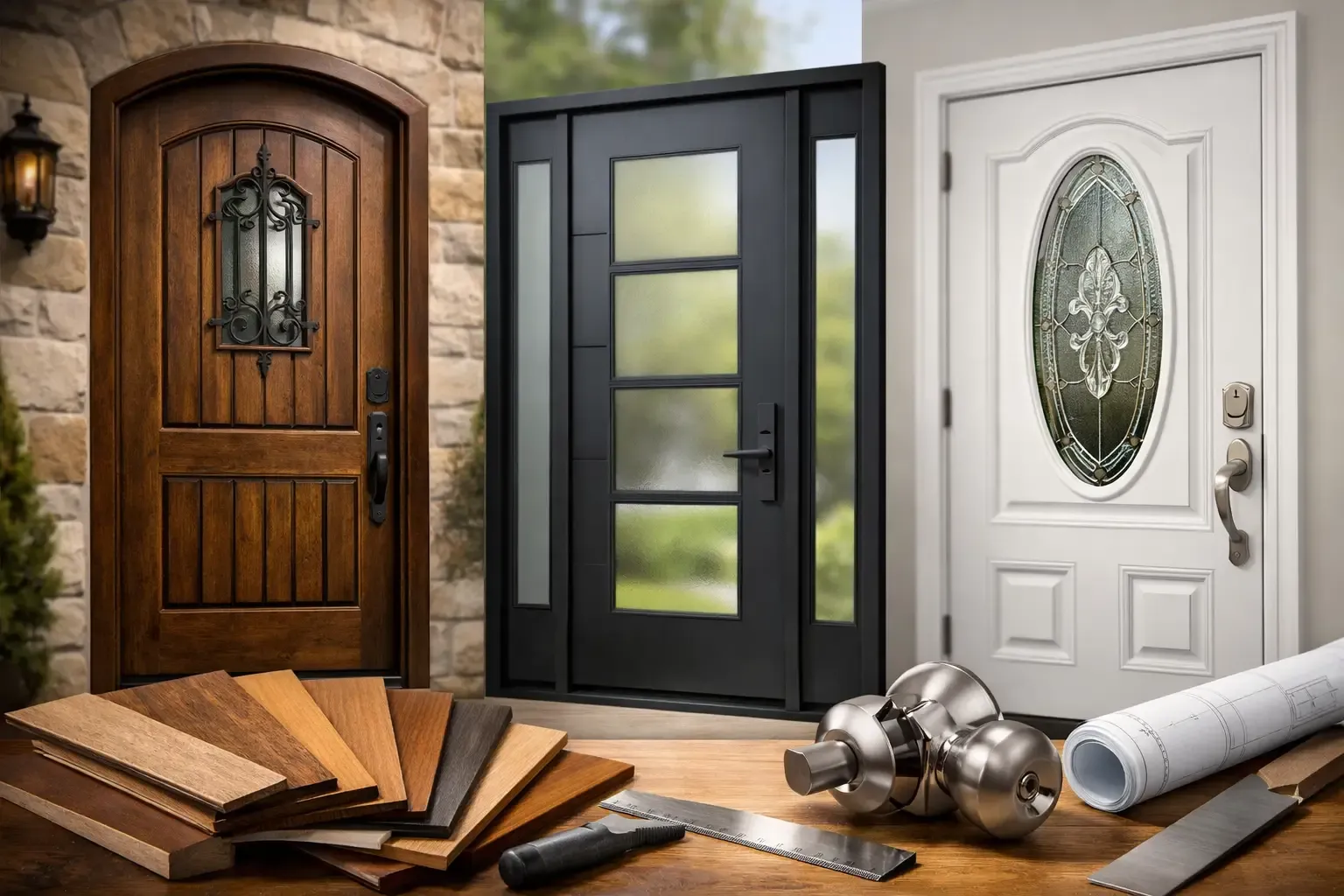
A front door has to do more than look good from the curb. In a Southern Ontario home, it must handle wind, rain, temperature swings, daily use, and the security expectations of a busy household. The right custom entry door options let you solve for all of those needs at once, rather than settling for a standard-size door that looks close enough but leaves gaps in performance, style, or fit.
For most homeowners, the best choice comes down to balancing appearance, insulation, privacy, maintenance, and budget. The details matter because an entry system is not only the door slab. It includes the frame, sidelights, glass, weatherstripping, threshold, locks, and installation. A quality product can still underperform if it is measured or installed poorly.
Start With the Right Door Material
Steel and fiberglass are the two most common materials for replacement entry doors, and each has clear advantages.
A steel entry door is a practical choice for homeowners who prioritize security, durability, and value. It has a strong, solid feel and can be finished in a wide range of colors and styles. Modern insulated steel doors are also designed to provide good thermal performance. Steel can be an excellent fit for a main front entrance, a side entry, or a door connecting the garage to the home.
The trade-off is that steel can dent if it takes a hard impact, and damaged paint should be addressed promptly to prevent rust. For many homes, this is manageable with routine care, but it is worth considering if the entrance sees heavy traffic, sports equipment, or frequent deliveries.
Fiberglass entry doors are especially popular when homeowners want the look of real wood without the maintenance demands of wood. They can be molded with realistic grain patterns, stained in rich tones, or painted in a clean contemporary color. Fiberglass does not rust, resists dents well, and performs reliably through changing weather conditions.
Fiberglass typically costs more than steel, particularly for detailed wood-grain finishes or larger configurations. It can be a worthwhile investment when curb appeal and long-term low maintenance are priorities.
Custom Entry Door Options That Change the Whole Entrance
The size and configuration of the door system have a major effect on how your entry looks and functions. A single door may be the right answer for a compact porch or a simple front elevation. But if the opening and layout allow it, a wider configuration can make the entry brighter, more welcoming, and easier to use.
Sidelights are fixed glass or panel sections installed beside the door. They bring daylight into a dark foyer and make a standard entry feel more substantial. A narrow sidelight can provide a subtle lift, while full-height sidelights create a more open, formal appearance. Privacy glass, textured glass, or internal blinds can help preserve privacy when a home faces a street or close neighboring property.
Double doors create a broad, balanced entrance and are useful when moving furniture, strollers, or large items in and out of the home. They suit larger facades well, but they require careful measuring and installation to ensure both panels seal tightly and operate smoothly.
A transom window above the door is another option for taller openings. It adds light without expanding the door width and can help make a low entryway feel more proportional. These features work best when chosen as part of one coordinated system, not as an afterthought.
Choose Glass for Light, Privacy, and Efficiency
Decorative glass can completely change a front door, but the most attractive choice is not always the most practical one. Clear glass offers maximum daylight and a clean, modern look, yet it provides little privacy. It is often best for sheltered entries or homes set back from the street.
For a more private entrance, consider frosted, textured, rain-pattern, or obscured glass. These styles allow natural light through while reducing direct visibility into the home. Some decorative glass designs use caming, geometric patterns, or subtle bevels to suit traditional, transitional, or contemporary architecture.
Internal blinds are a useful option for homeowners who want adjustable privacy without cleaning exterior slats or curtains. Because the blinds sit between sealed glass panes, they remain protected from dust and moisture. They can be particularly convenient in a door with a large glass insert or sidelights.
Glass selection should also consider energy performance. Insulated glass units, low-emissivity coatings, and properly sealed frames help reduce heat loss in winter and improve comfort near the entrance. The exact performance depends on the full door system, not the glass alone.
Match the Style to the Home, Not Just a Trend
A new entry door should look intentional from the street. For a traditional brick home, a classic panel design, divided-light glass, or a stained fiberglass wood-grain finish may feel appropriate. For a newer home or a renovation with cleaner lines, a smooth slab, flush glass insert, black hardware, or a bold painted color can create a more modern result.
Color is one of the simplest ways to personalize an exterior door. Black, charcoal, deep blue, and red remain common choices because they create contrast against lighter brick, siding, or stone. A neutral color can be the safer route for resale, while a stronger shade can give a home a clear focal point. The right answer depends on the surrounding exterior finishes, exposure to sunlight, and how often you are willing to repaint if needed.
Do not overlook the interior side of the door. The finish should work with the foyer flooring, trim, wall color, and overall light level. A door that looks excellent outdoors but makes a narrow entry feel dark may not be the right configuration.
Security Is Built Into More Than the Lock
Homeowners often focus first on deadbolts and smart locks, but security starts with the entire entry system. A strong frame, reinforced strike plate, reliable hinges, and secure hardware all contribute to performance. For doors with glass, the glass location and design should be considered alongside privacy and security needs.
A smart lock can be a convenient upgrade for families who want keypad access, temporary codes for visitors, or the ability to check whether the door is locked. It should be compatible with the door preparation and installed correctly so the latch and deadbolt align without forcing the mechanism.
For the best result, select hardware that suits both the style of the door and the way your household uses it. A decorative handle set may look impressive, but it should also feel comfortable, operate smoothly, and stand up to repeated use through all seasons.
Energy Performance Depends on Fit and Installation
A drafty front door is not always caused by an old door slab. Worn weatherstripping, a damaged threshold, frame movement, or poor installation can all create cold spots and air leakage. That is why replacement should begin with professional measurement and an assessment of the existing opening.
Energy-efficient entry systems use insulated cores, well-designed weatherstripping, tight seals, and thermally efficient glass where applicable. Energy Star-compliant products can be a sensible benchmark, but homeowners should also ask how the door will be installed and finished. Proper shimming, insulation around the frame, flashing where needed, and exterior sealing are not optional details.
A custom-sized door can reduce the need for excessive fillers or makeshift adjustments. It also helps the system close evenly and maintain a reliable seal over time. In older homes, where openings may no longer be perfectly square, this attention to fit is especially valuable.
Plan the Project Around the Complete Scope
Before choosing a door, consider whether the project includes damaged trim, a deteriorated sill, masonry work, or changes to the opening size. These conditions can affect timing and cost, and they should be identified before installation day whenever possible. Clear scope and transparent pricing help prevent the surprises homeowners often experience with rushed door replacements.
A dependable contractor should explain the material options, glass choices, hardware, expected timeline, installation approach, and warranty coverage in plain language. You should know what is included, what could affect the final scope, and who will be responsible for follow-up if an adjustment is needed.
At ProPlas, the goal is to make that process straightforward, from measuring the opening to selecting a door system that suits the home and completing a professional installation. A well-planned entry door replacement should leave you with a quieter, more comfortable entrance and confidence that the details were handled properly.
The best front door is not necessarily the most elaborate one. It is the one that fits the opening precisely, suits the architecture, protects the home, and continues to perform when the weather turns. Start with how you use your entrance every day, then choose the custom details that will keep working for years.