
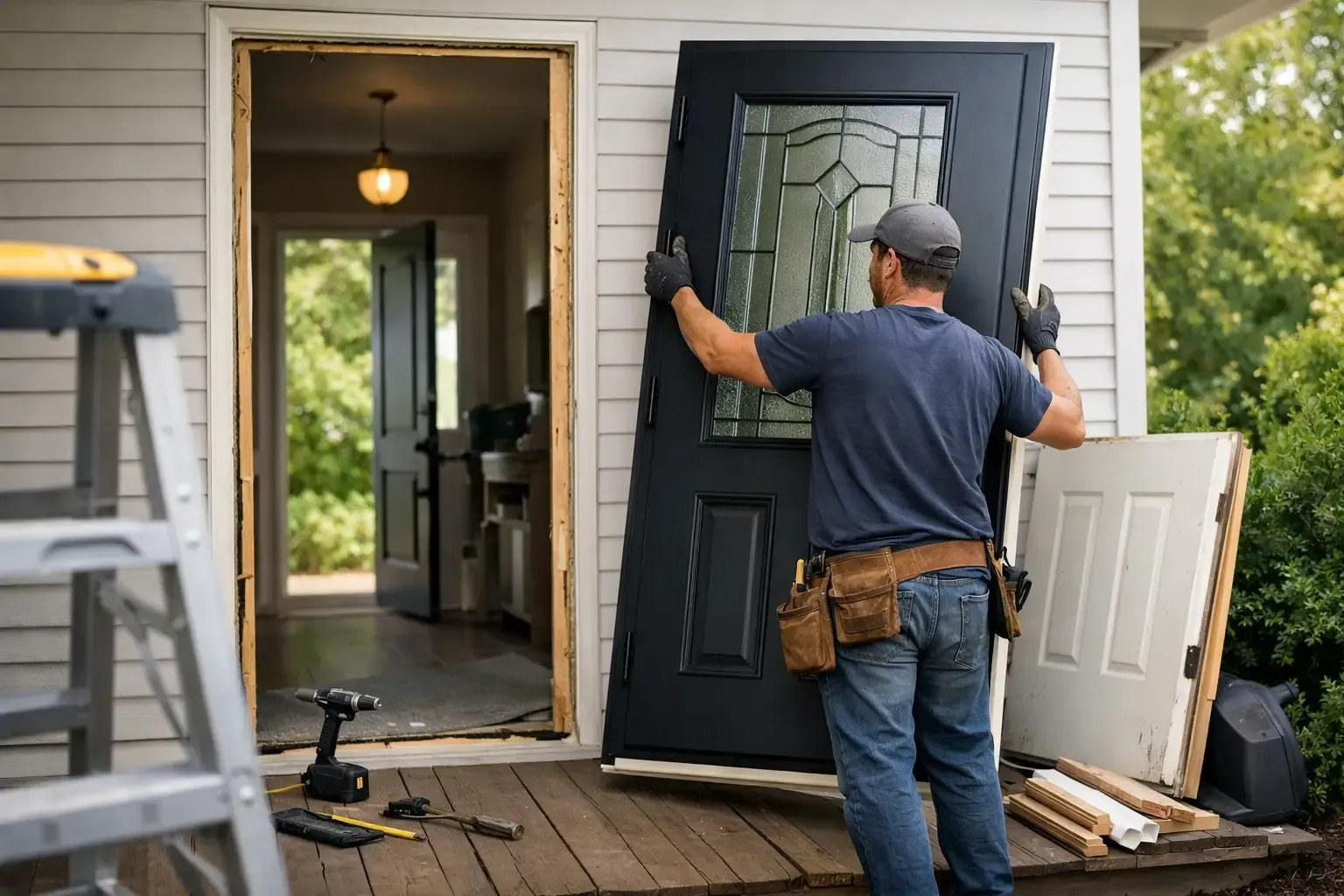
A front door that sticks in damp weather, lets in a cold draft, or no longer locks confidently is more than a cosmetic problem. It affects daily comfort, home security, energy use, and the first impression your property makes. Knowing how to plan exterior door replacement before selecting a style helps prevent the expensive surprises that often appear after an order has been placed.
Exterior door replacement is not simply a matter of choosing a panel you like. The new system needs to fit the opening correctly, perform in local weather, complement the home, and be installed with the details that keep water and air outside. A clear plan gives you better control over the budget, timeline, and final result.
Start With the Reason for Replacing the Door
Begin by identifying what is not working with the existing door. A door may need replacement because of visible damage, but the less obvious issues matter just as much. Drafts around the frame, condensation between glass panes, difficulty latching, water marks near the sill, fading finishes, and rising heating or cooling costs can all point to a failing entry system.
Your main reason for replacement should guide the rest of the decision. If security is the concern, prioritize a strong door slab, reinforced frame, quality hinges, and a dependable multi-point locking system where appropriate. If comfort and energy performance are the issue, focus on insulated materials, weatherstripping, low-emissivity glass, and a properly sealed installation.
Curb appeal may be the main motivation, particularly before a sale or a larger exterior renovation. Even then, performance should not become secondary. A striking door that is poorly fitted or not suited to the climate can create maintenance problems quickly.
Measure the Whole Opening, Not Just the Door Slab
One of the most common planning mistakes is assuming the visible door size tells you what to order. Exterior replacements are typically planned around the full opening and frame condition, not only the door panel. Older homes, additions, and previously altered entryways can have openings that are out of square, uneven, or affected by hidden water damage.
A professional measurement should assess the width and height of the opening, wall depth, threshold condition, frame alignment, flooring transitions, exterior cladding, and clearance for the door swing. It should also account for sidelites, transoms, storm doors, porch roofs, stairs, and railings that could affect installation.
This is particularly important when changing the door configuration. Replacing a single door with a wider unit, adding sidelites, or installing a sliding patio door may require structural work and permit review. It can be done, but it should be planned before the product is ordered rather than discovered on installation day.
Choose a Door Material for Your Priorities
Steel and fiberglass are two popular options for residential exterior doors, but they serve different needs. The best choice depends on exposure, budget, desired appearance, and maintenance expectations.
A steel door is a practical choice for homeowners who value security, affordability, and a clean painted finish. Insulated steel entry doors can offer strong performance, but their surface can dent and damaged paint should be addressed promptly to help prevent rust.
Fiberglass doors are often chosen for their durability and design flexibility. They can replicate the look of wood grain, resist dents well, and perform reliably through changing temperatures and moisture. Fiberglass may cost more upfront, especially with detailed finishes or decorative glass, but it can be a worthwhile investment for an exposed front entrance or a long-term home.
Wood doors offer a traditional appearance that some homeowners prefer, but they demand consistent maintenance and may be less forgiving in harsh, wet, or high-sun exposures. For many households, a high-quality fiberglass door provides the desired character with fewer upkeep requirements.
Plan Glass, Privacy, and Natural Light Together
Decorative glass can transform an entryway, but it should be selected with daily life in mind. Full-view glass brings in generous natural light, while smaller glass inserts offer more privacy and can improve energy performance. Frosted, textured, or obscured glass can brighten a foyer without creating a direct view into the home.
Consider where the entrance faces and how the space is used. A south- or west-facing door may receive strong sun for much of the day, making energy-efficient glass and a durable finish especially valuable. A front entry close to the sidewalk or street may call for more privacy than a sheltered side entrance.
Sidelites and transoms can make a narrow foyer feel more open, but they also increase the size and cost of the system. They are a good choice when the opening and budget support them. If the goal is simply to add light, a door with a thoughtfully sized glass insert may provide the better balance.
Build a Complete Exterior Door Replacement Budget
A realistic budget includes more than the advertised price of the door. The total investment can change based on customization, glass, hardware, frame work, disposal, trim, flashing, and repairs found after the old unit is removed.
Ask for a written estimate that clearly identifies what is included. It should distinguish between the product, installation labor, removal of the existing door, interior and exterior finishing, and any expected structural or cladding work. If there are possible unknowns, such as rot behind exterior trim, ask how they will be documented and priced if discovered.
The lowest quote is not automatically the lowest-cost choice. A door may look comparable on paper while using lower-grade hardware, basic weatherstripping, or an installation scope that excludes necessary finishing. Poor installation can reduce the performance of even an excellent door, leading to drafts, leaks, premature wear, and another repair bill.
Verify Energy Performance and Weather Protection
An exterior door should help maintain a stable indoor temperature while standing up to rain, wind, heat, and freeze-thaw cycles. Look for an insulated door system with dependable seals around the perimeter and threshold. Where glass is included, energy-efficient glazing can reduce heat transfer and improve comfort near the entry.
Energy performance depends heavily on installation. The frame must be properly leveled, secured, insulated, flashed, and sealed without preventing the door from operating smoothly. Water needs a controlled path away from the opening, especially at the sill. Caulk alone is not a long-term solution for poor flashing or a damaged threshold.
Ask the installer how they handle air sealing, exterior water management, and interior finishing. A qualified contractor should be comfortable explaining the process in plain language, including what will happen if the existing opening needs repair.
Set the Right Timeline Before Ordering
Custom exterior doors are not always available immediately. Material, finish, glass design, size, and hardware can all affect lead time. Plan the project early if you want installation completed before a holiday, sale date, major renovation, or seasonal weather change.
Installation can often be completed year-round when conditions are safe and the opening can be protected, but timing still matters. Avoid scheduling when other work will obstruct the entry, such as porch reconstruction, major flooring replacement, or exterior cladding repairs. If the household relies on that entrance every day, discuss access arrangements and the expected duration of the installation in advance.
Before work begins, remove décor and nearby furniture, secure pets, and make sure installers have a clear route to the door. Small preparations help the crew focus on accurate installation rather than avoidable delays.
How to Plan Exterior Door Replacement With the Right Installer
The right contractor should help you make decisions before they become problems. Look for a provider that offers in-home measurement, clear product options, written pricing, experienced installation, and warranty support after the job is complete. You should know who will install the door, what workmanship coverage applies, and whom to contact if an adjustment is needed later.
Ask to see material and finish samples in natural light whenever possible. Confirm the direction of the door swing, hardware location, threshold height, trim style, glass selection, and paint or stain color before approving the order. These details are difficult or costly to change once production begins.
A professional replacement is an investment in the entire entrance system, not just the door you see from the street. When the planning is thorough, the finished door should close quietly, lock securely, keep the weather out, and make coming home feel better every day.