
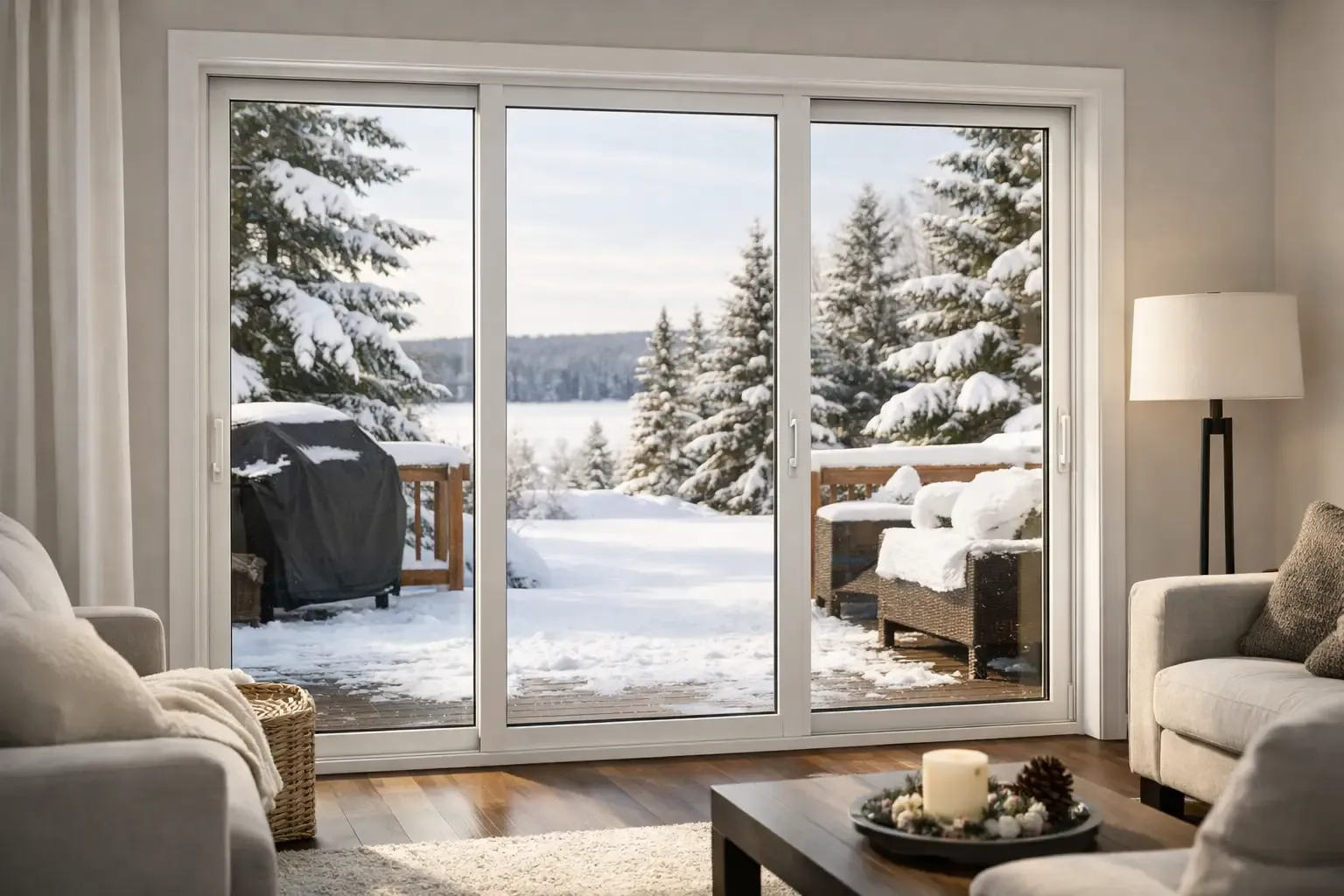
A patio door can be the largest glass opening in your home - and, in winter, one of the first places comfort problems show up. If you feel a cold draft near the door, see condensation along the glass, or avoid sitting in that part of the room, it may be time to look beyond temporary weatherstripping. The best patio doors for winter combine high-performance glass, well-insulated frames, reliable hardware, and precise installation designed for Southern Ontario conditions.
The right choice is not always the door with the most features or the lowest advertised price. It is the door system that fits your opening, how you use the space, your home's exposure to wind, and the quality of the installation behind it. A well-chosen replacement can make the room more comfortable, reduce air leakage, and give you a clearer view of your yard without the familiar winter chill.
What Makes a Patio Door Work Better in Winter?
A winter-ready patio door must manage two different issues: heat loss through the glass and frame, and cold air entering around moving panels or the perimeter of the opening. These are related, but they are not the same. A door with premium glass can still feel drafty if its seals, rollers, or installation are poor.
Start by asking about the door's U-factor. A lower U-factor generally means the complete door system resists heat flow more effectively. This number matters more in a cold climate than a high solar heat gain coefficient, although both may be relevant depending on whether the door faces south, north, east, or west.
Energy Star-compliant patio doors are a sensible baseline for homeowners replacing an older door. They are designed to meet efficiency requirements, but the label should begin the conversation, not end it. Compare the performance of the entire unit, including the glass package and frame, rather than making a decision based only on the center of the glass.
Best Patio Doors for Winter: Two Strong Options
For most homes, the decision comes down to a well-built sliding patio door or a lift-and-slide door. Both can perform well through an Ontario winter when they are properly specified and professionally installed. The better option depends on your opening size, budget, and expectations for operation and weather resistance.
High-performance sliding patio doors
A quality sliding patio door is a practical choice for many homeowners because it does not require swing clearance inside or outside the home. It is especially useful for decks, balconies, compact dining areas, and backyards where furniture placement matters.
For winter performance, look for multi-chamber insulated frames, durable compression seals, a reinforced meeting rail, and an insulated glass unit with Low-E coatings and gas fill. Good rollers and adjustable hardware also matter. When the active panel does not close squarely against the frame, even a good door can lose its seal over time.
Sliding doors are often the more budget-conscious path to a large glazed opening. The trade-off is that a conventional slider has a meeting point between panels, so the quality of its interlock and weatherstripping is critical. This is not a place to accept vague product details or an installation quote that does not explain what is included.
Lift-and-slide doors for large openings
Lift-and-slide doors are designed for homeowners who want wider openings, larger glass panels, and a more substantial feel. The operating handle lifts the moving panel slightly before it glides, then lowers it into a tight compression seal when closed. That mechanism can provide excellent air and water resistance while making a heavy panel easier to move.
This style is often a strong fit for expansive rear walls, renovated kitchens, contemporary additions, or homes with a clear connection to the backyard. It can create a more refined look than a standard slider while improving the sense of openness when the weather warms up.
The trade-off is cost. Lift-and-slide systems require more specialized hardware, heavier glass, and careful structural and installation planning. They are worth considering when the opening and design goals support them, but they are not automatically necessary for every replacement project.
Glass Packages Matter More Than Most Homeowners Expect
Glass makes up most of a patio door's surface area. That means the glass package has a direct effect on how the room feels when temperatures fall.
Double-pane insulated glass with a quality Low-E coating is a common starting point for replacement doors. The coating helps reflect interior heat back into the room while reducing the cold surface effect that can make a room feel uncomfortable near the glass. Argon gas between panes can further improve insulating performance.
Triple-pane glass can be a worthwhile upgrade for exposed homes, large patio door units, or rooms that are consistently cold in winter. It may improve comfort and reduce outside noise, but it adds weight and cost. A triple-pane door is not automatically the right answer if the existing opening has major air leakage or if installation details are overlooked. In many cases, a well-installed double-pane system with the right Low-E glass and seals will deliver a meaningful improvement.
Ask how the glass is configured, not just whether it is described as energy efficient. The direction the door faces, nearby shade, and the amount of direct sun all influence the best glass selection. A knowledgeable contractor should help match the glass package to your home instead of treating every opening the same.
Do Not Overlook the Frame, Threshold, and Hardware
The frame is more than a border around the glass. In winter, it needs to resist heat transfer, support the panels, and remain stable through temperature changes. Insulated vinyl frames are widely used because they are low-maintenance and offer good thermal performance. The quality of the construction, reinforcement, and welding is as important as the material name on its own.
Pay close attention to the sill and threshold. This is where rain, melting snow, and cold air often expose weak details. A properly designed patio door uses drainage paths to direct water out, while seals at the sill and jamb help block drafts. If a threshold is installed out of level, or if drainage is obstructed, water management can become a problem even with a quality product.
Hardware deserves the same scrutiny. A locking system should pull the panel firmly into position, and the handle should operate smoothly without forcing it. Difficult operation can be a warning sign that the panel is misaligned, the rollers need adjustment, or the door was not installed correctly.
Installation Is the Difference Between a Good Door and a Good Result
Homeowners sometimes compare patio doors as if the product alone determines performance. In reality, a patio door replacement is a system: the door, the rough opening, the flashing or water-management details, insulation, interior finishing, and final adjustment must all work together.
Before work begins, the opening should be measured carefully and evaluated for rot, water damage, uneven framing, or structural concerns. A rushed replacement that covers an existing problem may look fine at first but can lead to drafts, moisture, and difficult warranty discussions later.
During installation, the team should set the unit square, level, and plumb, fasten it according to manufacturer requirements, insulate the perimeter correctly, and ensure the door drains as intended. The panels should be adjusted and tested before the job is complete. This is the workmanship homeowners are paying for when they choose a managed replacement service rather than simply buying a door.
ProPlas helps homeowners evaluate the full opening, select an Energy Star-compliant patio door suited to their needs, and complete installation with clear expectations around the scope of work and warranty support.
Signs Your Current Patio Door Is Costing You Comfort
Not every cold room means immediate replacement is necessary. A worn sweep, damaged weatherstripping, or roller adjustment may solve a smaller issue. However, replacement becomes the more sensible long-term choice when problems keep returning.
Watch for persistent drafts around the frame or meeting rail, fogging between glass panes, visible warping, water intrusion, hard-to-operate panels, or condensation that appears regularly despite normal indoor humidity. If you can hear wind or outdoor traffic clearly through a closed patio door, that can also indicate weak seals or an aging glass system.
Condensation on the room-side glass needs a little context. It can result from high indoor humidity, especially in winter, rather than a failed door. But if it is heavy, recurring, and concentrated around a cold door frame, it is worth having the opening assessed. Condensation between panes, on the other hand, usually indicates a failed insulated glass seal.
Questions to Ask Before Choosing a Winter Patio Door
A clear proposal should tell you what door system is being installed, the glass option included, the expected efficiency rating, and what installation work is covered. It should also explain whether trim, disposal, repairs to damaged framing, permits, and finishing are included or could create additional costs.
Ask how the door will be sealed and insulated, how water will drain at the sill, and what warranty applies to the product and labor. These questions are not difficult or overly technical. They are how you avoid surprises after the crew has left.
The best replacement is one that makes your home feel calmer and more usable on the coldest days, without creating a new maintenance concern or a confusing service gap. A careful measurement and honest product discussion before installation are the simplest way to get there.