
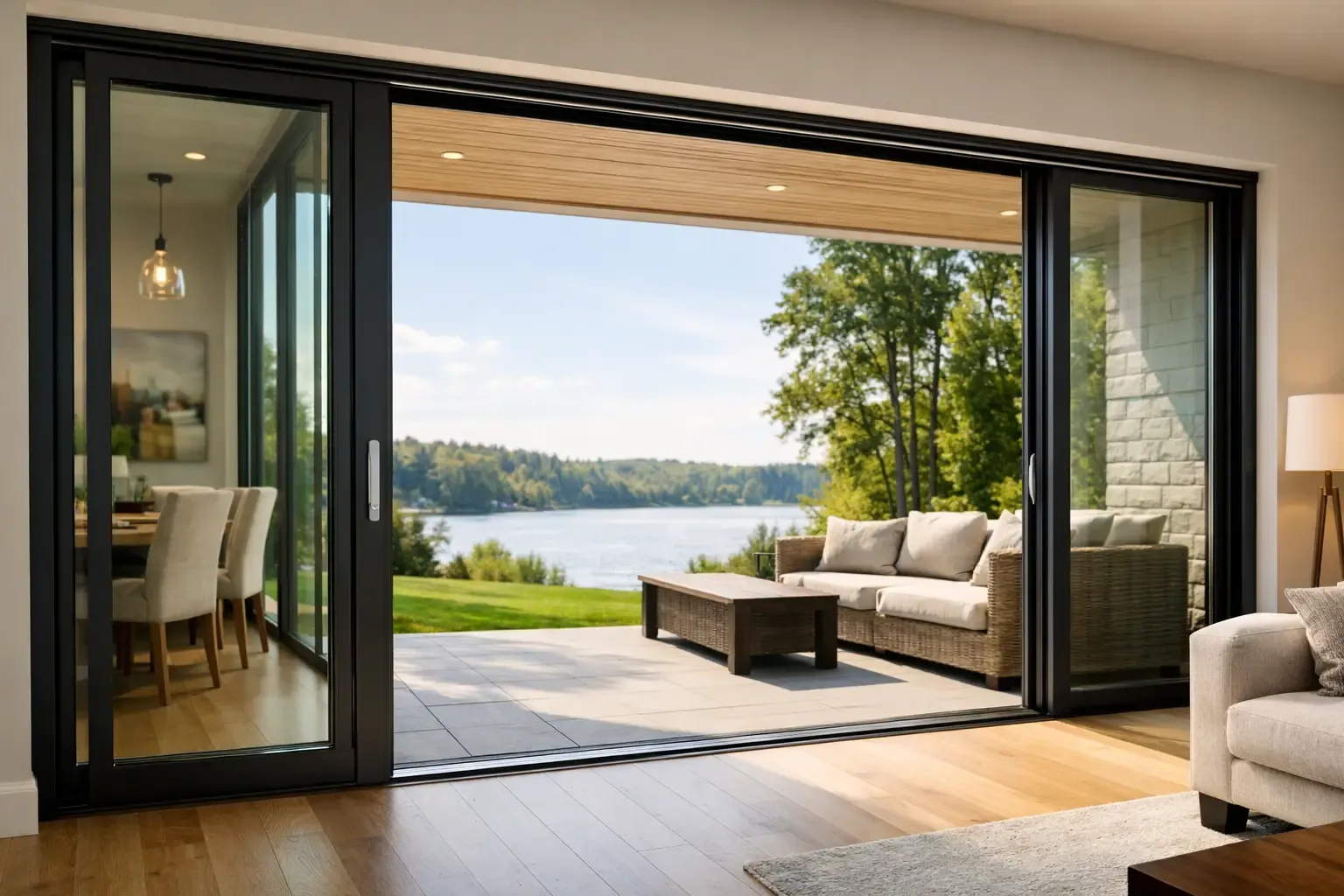
A large patio door should make a room feel more open, not become the one opening everyone avoids because it sticks, rattles, or lets in a winter draft. Lift and slide patio doors are designed for homeowners who want expansive glass and a premium operating experience without giving up the weather protection Southern Ontario homes require.
They are not the right choice for every opening or every budget. But for a wide opening facing a deck, garden, pool area, or backyard, they can solve problems that conventional sliding doors often cannot. The difference comes down to how the door moves, how it seals, and how carefully it is measured and installed.
What makes a lift and slide patio door different?
A standard sliding patio door moves on rollers while the panel remains seated against its weather seals. It is a familiar, practical option for many homes, especially at standard sizes. A lift and slide system uses a handle mechanism that lifts the operating panel slightly when you turn it. This reduces friction so a large, heavy glass panel can glide with far less effort.
When the handle returns to the locked position, the panel lowers into place and compresses against the seals. That action helps create a tight closure around the frame. The result is a door that can carry larger panes of glass while remaining comfortable to operate and more resistant to air and water intrusion.
This is why lift and slide doors are often chosen for openings that are too wide or too demanding for an ordinary slider. They provide a more substantial feel, a cleaner visual connection to the outdoors, and reliable operation when the system is properly specified.
Why homeowners choose lift and slide patio doors
The most immediate benefit is scale. These systems can accommodate broad openings and oversized panels, allowing more natural light into a family room, kitchen, or rear addition. With fewer visible frame interruptions, the view feels less divided. That matters when the door looks onto a landscaped yard, ravine lot, or outdoor entertaining area.
Ease of operation is equally important. Large glass panels are heavy by nature. A lift and slide mechanism is built to manage that weight, so opening the door does not require a hard pull or a struggle with worn rollers. For homeowners planning to stay in their home long term, that everyday convenience has real value.
Performance is another reason to consider this style. A well-built system with quality glass, insulated framing, and correct installation can help reduce drafts near the opening and improve year-round comfort. In a climate with cold winters, wind-driven rain, and humid summers, the door assembly needs to do more than look good.
There is also a security advantage in the way many systems lock. When closed, the panel settles firmly into the frame and engages a multi-point locking arrangement. Specific hardware varies by manufacturer and configuration, but the goal is the same: a solid, secure closure that homeowners can use with confidence.
The trade-offs to consider before you choose
Lift and slide patio doors are a premium product. Their specialized hardware, larger glass units, reinforced frames, and installation requirements generally make them more expensive than standard sliding patio doors. The price difference can be worthwhile when the opening is large and the door is a major feature of the home. It may be harder to justify for a compact, seldom-used doorway.
They also require thoughtful planning. The wider the opening, the more critical the structural details become. A replacement may need confirmation that the existing header can support the opening, while an enlargement can involve permits, framing work, exterior finishing, and interior repairs. These details should be discussed before a final price is presented, not discovered after installation begins.
Threshold height is another practical consideration. Some lift and slide systems have a more substantial sill than a basic slider. Low-profile options may be available, but they must still manage water properly. A good recommendation balances accessibility, drainage, exposure to weather, and the height of the adjacent deck or patio.
Finally, expansive glass brings abundant daylight, but it can also increase solar heat gain on a south- or west-facing wall. The right glass package can reduce that effect, yet there is no one glazing option that suits every orientation. A professional consultation should account for where the opening faces, how much shade it receives, and how the room is used.
Choosing the right configuration and glass
The best configuration depends on how you want to use the space. A two-panel system typically has one operating panel and one fixed panel. It works well for straightforward openings where a generous passage is needed without changing the wall dramatically.
For a wider opening, a multi-panel design may be a better fit. Some layouts allow panels to meet in the center, while others stack to one side. The right option depends on the available wall space, furniture placement, and whether you want the opening to feel centered or fully opened toward one side.
Glass selection deserves the same attention as the frame and hardware. Low-emissivity coatings, argon-filled insulating glass, and appropriate spacer systems can help support energy performance and interior comfort. For high-traffic family spaces, tempered safety glass is often appropriate. If the door faces a busy street or a noisy backyard environment, laminated glass may be worth discussing for added sound control and security benefits.
Color, grille style, interior finish, exterior cladding, screen options, and hardware finish also affect the final result. Customization should not be treated as an afterthought. A patio door is one of the largest visual elements on the back of a home, and it should suit both the architecture and the way the household lives.
Installation determines how the door performs
Even a high-quality door can disappoint if it is installed without precision. Large glass units leave little room for shortcuts. The opening must be measured accurately, the sill must be level, the frame must be square and properly fastened, and the exterior must be sealed to manage water without trapping it inside the wall.
A complete installation should begin with an on-site measurement and a clear review of the scope. Homeowners should know whether the project includes removal of the existing door, disposal, trim work, exterior capping, insulation, and any repair work that becomes necessary once the old unit is removed. Clear answers upfront reduce the risk of surprises later.
Proper flashing and sealing are especially important. The goal is not simply to apply more caulk. The door needs a drainage path, continuous weather protection, and a durable connection between the frame and the surrounding wall. This is where experienced installation teams protect both the new door and the home around it.
At ProPlas, the process is built around measured planning, customized product selection, professional installation, and warranty support. For a significant opening such as a lift and slide door, that full-service approach helps homeowners avoid the common problems of unclear pricing, poor fit, and limited follow-up after the crew leaves.
Questions worth asking before you sign
Before selecting a door, ask how the system is rated for air, water, and structural performance, and whether the proposed glass package suits the exposure of your home. Ask who will complete the installation, what preparation work is included, and how any concealed damage or framing issues will be handled.
It is also reasonable to ask about lead times, warranty coverage for both product and labor, and the expected finish details inside and outside. A detailed quote should identify the door configuration, dimensions, color, glass, hardware, installation scope, and exclusions. A low number without those details is not necessarily a better value.
If you are comparing proposals, make sure you are comparing like for like. One quote may include a basic slider with standard glass, while another includes a lift and slide system, upgraded glazing, reinforced components, and complete finishing. The difference is not just the door label. It is the long-term performance of the entire opening.
A patio door should earn its place in your home every day: opening easily for a barbecue, closing tightly during a January cold snap, and giving you a view worth stopping for. When the opening is large and the expectations are high, careful product selection and installation are what turn that promise into a dependable result.