
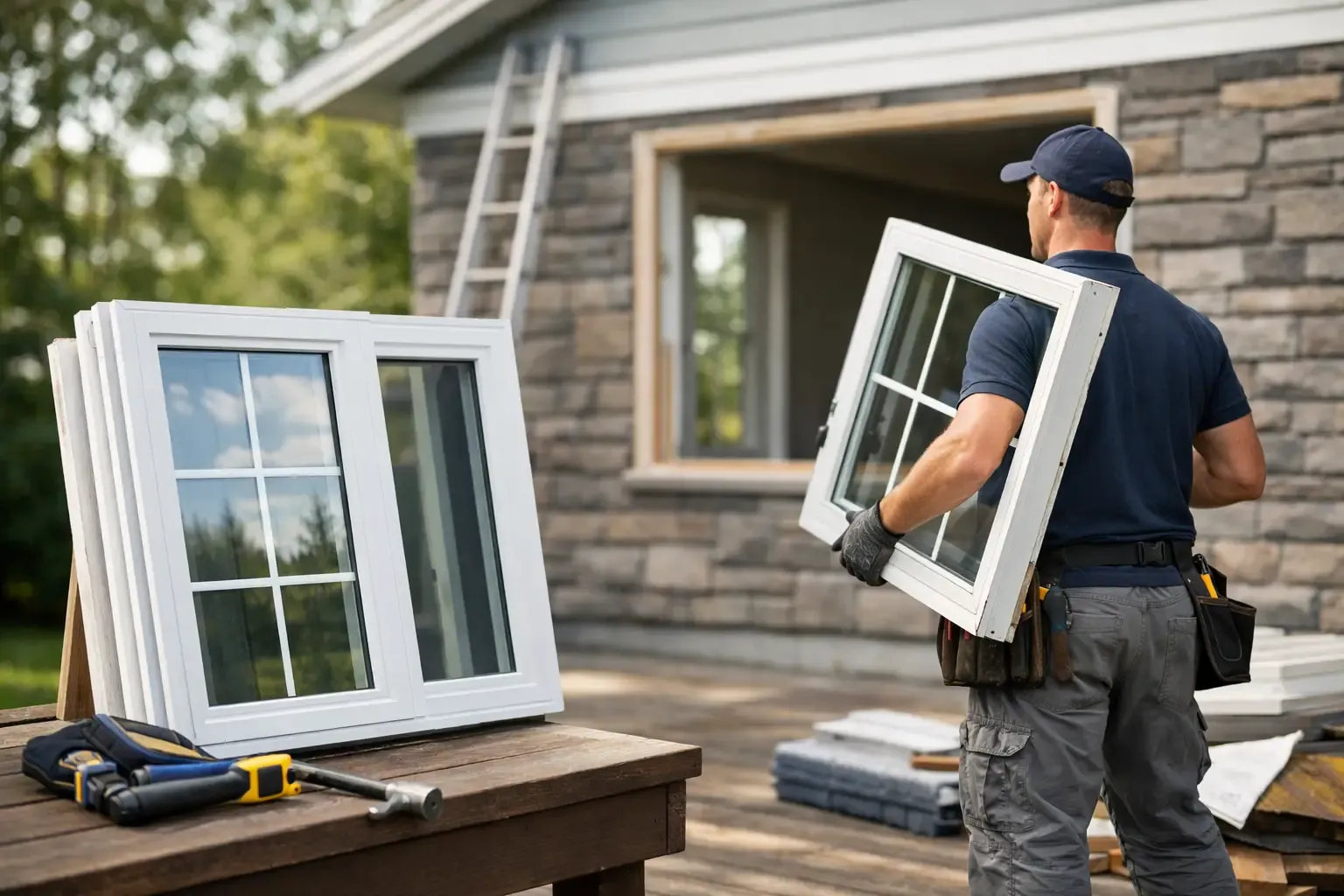
A low window quote can look appealing until the final invoice includes disposal, exterior finishing, structural repairs, and upgrades that were never discussed. This window replacement cost guide explains what homeowners in Toronto, the GTA, Simcoe Region, and Southern Ontario should expect to pay - and what a clear estimate should include before work begins.
For clarity, the price ranges below are in Canadian dollars and reflect professionally supplied and installed replacement windows. Your final price will depend on the window size, opening condition, glass package, customization, and installation requirements.
What Does Window Replacement Typically Cost?
Most standard vinyl replacement windows cost roughly $700 to $1,800 per window installed. That range is wide because a compact fixed window and a large, operable casement window are not comparable projects. A homeowner replacing several standard windows may spend $8,000 to $20,000 or more, while a whole-home project with custom sizes, specialty shapes, or extensive trim work can run substantially higher.
The right question is not simply, “What is the cheapest window?” It is, “What is included in the price, and will the finished installation perform properly through an Ontario winter?” A well-made window can still disappoint if it is measured poorly, installed without proper insulation, or finished with inadequate exterior sealing.
Typical Installed Costs by Window Style
Standard fixed or picture windows are often among the more affordable options because they do not require operating hardware. Smaller units may begin around $600 to $1,200 installed, while larger custom picture windows can exceed $2,000.
Casement and awning windows commonly fall between $900 and $1,800 installed. They are popular in Southern Ontario homes because they can provide excellent ventilation and a tight seal when closed. The price rises with size, hardware, glass upgrades, and divided-lite or grille options.
Single-hung, double-hung, single-slider, double-slider, and end-vent slider windows generally range from $750 to $1,600 installed. These styles can be practical where a casement window would interfere with a walkway, deck, or exterior space. Double-hung and double-slider designs may cost more than simpler operating styles because of their added components.
Bay, bow, and specialty-shape windows are a separate category. These projects may cost $3,000 to $8,000 or more, depending on the size, roof or support requirements, interior finishing, and number of individual units. A custom arched, angled, or geometric window can also increase manufacturing and installation costs.
The Biggest Factors Behind Your Window Replacement Cost
A trustworthy quote should make the major cost drivers easy to understand. If an estimate only gives one total number, ask for details before signing. It is much easier to compare proposals when you know whether each contractor is pricing the same window, glass package, and level of finishing.
Window Size, Style, and Customization
Larger windows require more material, more glass, and more labor to safely remove and install. Custom dimensions also cost more than common sizes, especially when a home has older or irregular openings.
Style matters as well. A fixed window has fewer moving parts than a casement or double-hung window. Specialty colors, interior wood-look finishes, decorative grilles, obscure privacy glass, and custom shapes can improve the appearance of the home, but they should be treated as deliberate upgrades rather than surprises in the final bill.
Glass and Energy-Efficiency Features
Ontario homeowners often replace windows because certain rooms feel cold, drafty, or overly hot in summer. The glass package has a direct effect on comfort and energy performance.
Double-pane insulated glass is standard for many replacement projects. Low-E coatings, argon gas fills, warm-edge spacers, and triple-pane glass can add to the cost, but they may reduce heat loss, improve interior comfort near the window, and help control condensation in the right conditions. Triple-pane glass is especially worth discussing for exposed elevations, bedrooms, large glass areas, and homes with persistent winter comfort issues.
More expensive glass is not automatically the best choice for every opening. A good contractor will consider orientation, room use, existing insulation, shading, and your budget rather than selling the same upgrade for every window.
Installation Complexity and Opening Condition
This is where two quotes for what appears to be the same window can differ sharply. A straightforward replacement in a sound opening may be relatively predictable. An older home can reveal hidden issues once the existing unit is removed, including rot, water damage, poor framing, failing brickmould, or insufficient insulation around the opening.
Full-frame replacement can cost more than an insert-style replacement because it involves removing more of the existing frame and rebuilding the opening as needed. However, it may be the better long-term choice when the original frame is damaged, the opening needs correction, or you want to maximize glass area.
Exterior work also affects pricing. Aluminum capping, brickmould replacement, trim, flashing, caulking, and repairs around siding, stucco, or brick all require skill and time. These details are not cosmetic extras. They help direct water away from the home and create a finished appearance that lasts.
What Should Be Included in a Window Quote?
A low number is only useful if it represents the complete job. Before comparing quotes, confirm whether each proposal includes the same scope of work. Professional window replacement should normally account for product supply, site measurement, removal of old windows, disposal, installation materials, insulation, sealing, exterior finishing, and cleanup.
You should also know the brand or manufacturer, frame material, operating style, glass specification, color, hardware finish, and warranty coverage. If a contractor expects possible repairs after removal, ask how those repairs will be documented and priced. Transparency does not mean pretending unexpected conditions never happen. It means explaining the process before the work starts.
At ProPlas, the goal of the estimate process is to remove those gaps early through measurement, product selection, and a clear installation scope. That matters because window projects are rarely improved by vague allowances or verbal promises.
How to Budget Without Sacrificing Performance
Homeowners do not need to replace every window at once to make a meaningful improvement. If the budget is limited, start with the windows causing the biggest comfort, water, or operation problems. Bedrooms, large living-room windows, and openings exposed to prevailing wind are often sensible priorities.
It can also be practical to group windows by elevation or room. Replacing several windows during one installation visit can reduce repeated setup and finishing costs compared with completing one small project at a time. Still, do not replace functioning windows solely to meet a target number. Focus on condition, comfort, efficiency, and the overall renovation plan.
Avoid cutting costs on installation preparation. Choosing a modest but Energy Star-compliant vinyl window with careful insulation and proper exterior capping is usually a better investment than buying a premium unit that is installed carelessly. The window and the installation work as one system.
Questions to Ask Before You Approve an Estimate
Ask whether the quote is based on final site measurements or preliminary dimensions. Confirm the expected timeline from order to installation, who will complete the work, and how the crew will protect your interior space. You should also ask what happens if concealed damage is found and whether there are separate charges for permits, structural work, disposal, or trim.
Warranty questions deserve equal attention. Product warranties and labor warranties are different. A reliable contractor should explain who handles a service issue, how long coverage lasts, and what support is available after installation. This is particularly valuable for custom windows, where correct ordering and responsive follow-up matter as much as the initial sale.
A window replacement project is easier to manage when the proposal is specific, the timeline is realistic, and the workmanship is backed by a clear commitment. Request a written, itemized estimate, compare the scope rather than the headline price, and choose the option that gives your home the comfort and protection it needs for years ahead.