
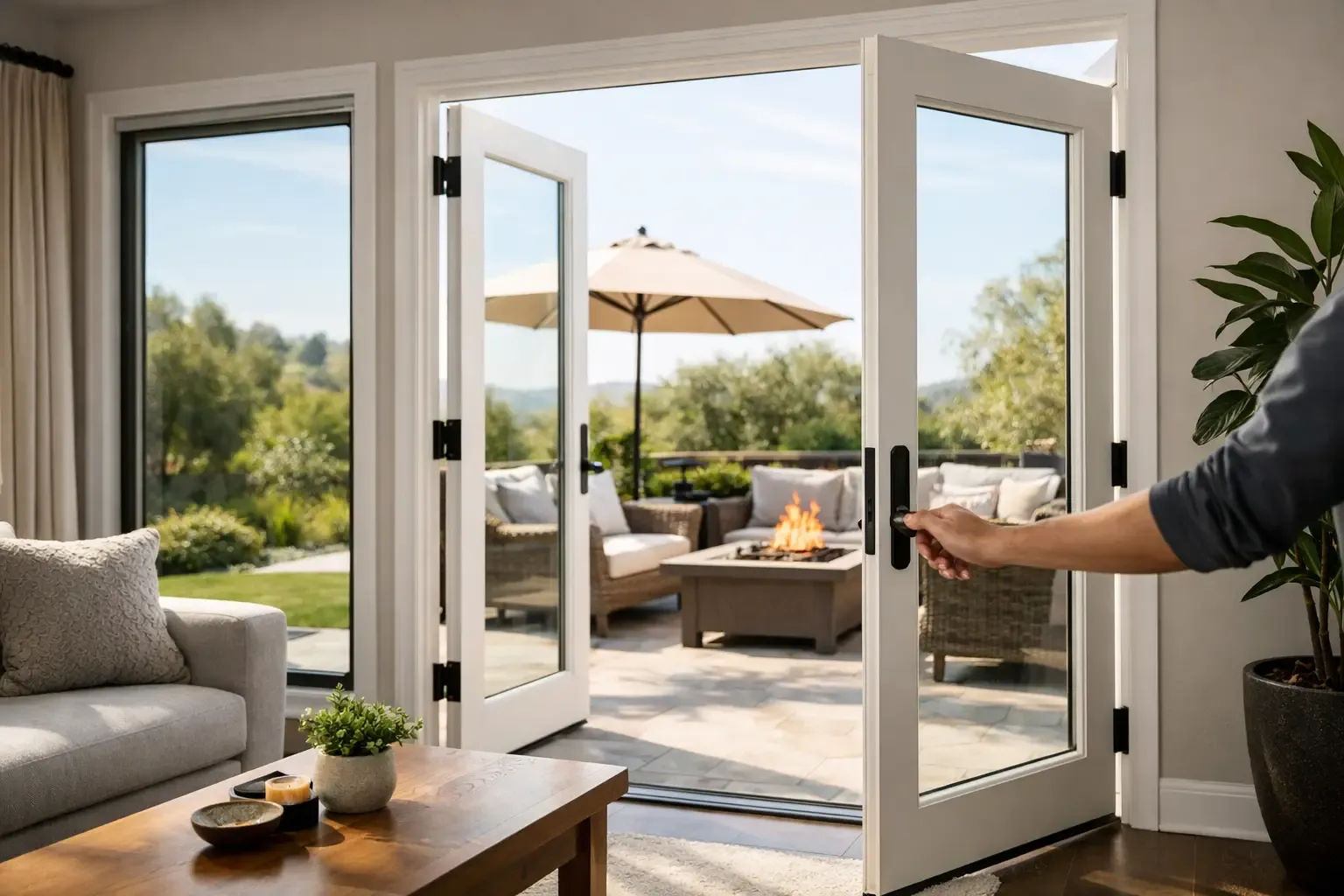
A patio door is more than an opening to the backyard. It is one of the largest glass surfaces in your home, a daily traffic route, and a major line of defense against drafts, water, and forced entry. Knowing how to pick patio doors means looking beyond the showroom appearance and choosing a system that works in your actual space through years of changing weather.
For homeowners replacing an older sliding door, the common frustrations are familiar: cold glass in winter, a track that sticks, condensation, leaking during heavy rain, or a lock that no longer inspires confidence. A well-chosen replacement can improve comfort, natural light, access to outdoor living areas, and the overall feel of the room. The right choice depends on the opening, your household routine, and the quality of the installation as much as the door itself.
How to Pick Patio Doors by Starting With Your Space
Begin with the existing opening and how the room functions. Measure the rough opening, but do not choose a door based on a tape measure alone. A professional site assessment should also account for the condition of the frame, floor level, wall construction, drainage, and available clearance around the door.
A standard two-panel sliding patio door is often the practical choice for a compact dining room, kitchen, or living room. One panel glides behind the other, so it does not take up indoor or outdoor floor space. This makes it a good fit near a table, deck furniture, or a narrow walkway.
If the opening is wide and the view is a priority, consider a larger multi-panel sliding system or a lift-and-slide door. Lift-and-slide doors use a handle mechanism to raise the operating panel slightly off its seals before it moves. They can accommodate larger, heavier glass panels and create a more refined, easy-gliding operation. The trade-off is cost. They are generally a higher-end option and require precise planning and installation.
French-style hinged patio doors offer a traditional look and a wide, open passage when both panels are opened. They can suit homes where architectural character matters, but they need clearance for the door swing. They are usually less convenient if furniture, a grill, or a frequently used walkway sits close to the opening.
Think about who uses the door, too. Families carrying groceries, pet owners, and homeowners who entertain outdoors often value a broad, low-effort opening. If accessibility is a concern, ask about sill height and threshold options early. A beautiful door that creates a trip hazard or is difficult to operate is not a practical upgrade.
Choose the Operating Style Before the Finish
Door style affects ventilation, maintenance, security hardware, and the furniture layout on both sides of the wall. It should come before decisions about grille patterns or handle color.
Sliding doors are popular because they preserve space and can provide wide glass areas. Quality matters significantly here. A better sliding system should have durable rollers, a stable frame, smooth track performance, and a locking system designed for regular use. Cheaper doors may look acceptable when new but develop rough operation or air leakage as components wear.
Lift-and-slide doors are designed for homeowners who want large-format glass without a heavy, difficult-to-move panel. When closed, the panel compresses against its seals for strong weather protection. When opened, it should glide with less effort than a conventional oversized slider. This is an excellent option for a modern renovation, a rear addition, or a room with a premium backyard view.
Hinged doors can provide a more classic exterior appearance and may offer stronger compression seals when properly installed. However, they need room to swing, and screen solutions may be different from those used with sliding doors. Ask to see how the screen, hardware, and threshold work as a complete system rather than evaluating the slab alone.
Prioritize Glass and Energy Performance
Large glass areas make patio doors visually appealing, but glass selection has a direct effect on room comfort. In a climate with cold winters, humid summers, and frequent temperature changes, energy performance is not an optional detail.
Look for an Energy Star-compliant door appropriate for your region. Insulated glass units with low-emissivity, or Low-E, coatings help reduce heat transfer while allowing useful daylight into the room. Depending on the glass package, Low-E coatings can help keep indoor heat inside during winter and reduce unwanted solar heat during warmer months.
Double-pane glass is standard for many replacement doors, while triple-pane glass may be worth considering for exposed walls, large openings, or homes where winter comfort is a major concern. Triple-pane units can improve insulation and may reduce outdoor noise, but they add weight and cost. The best value depends on the door size, orientation, and the rest of your home’s insulation.
Pay attention to solar exposure. A south- or west-facing patio door may receive intense afternoon sun. In that location, a glass package that manages solar heat gain can make the adjoining room more comfortable. A shaded north-facing door may place greater emphasis on insulating value and daylight. There is no single glass specification that is right for every home.
Also ask about condensation resistance. Interior condensation is often related to humidity levels in the home, but warmer interior glass surfaces and well-designed frames can reduce the likelihood of moisture buildup. This matters because repeated condensation can damage nearby trim, flooring, and wall finishes.
Do Not Overlook Frame Material and Construction
The frame holds the entire system together. It affects insulation, rigidity, maintenance, and how the door performs over time.
Vinyl patio doors are a practical choice for many homeowners because they are low maintenance, resist moisture, and can offer strong thermal performance. Quality vinyl frames should be reinforced where needed, especially in larger openings. Ask how the frame is engineered to support the weight of the glass and prevent unwanted movement.
Fiberglass and aluminum-clad systems may be considered where a particular architectural look, strength requirement, or finish is needed. Aluminum can be durable and slim in profile, but its thermal design is especially important in cold climates. Materials should be compared as complete door systems, not just by the name of the frame material.
Check the weatherstripping, sill design, drainage paths, rollers, and locking points. These details are easy to miss in a showroom, yet they often determine whether a door stays dry, secure, and easy to use after several seasons.
Balance Security With Everyday Convenience
A patio door should feel secure without becoming frustrating to lock and unlock. Look for a dependable multi-point locking system or a strong integrated lock designed for the specific door style. The lock, keeper, frame, and glass all work together. Adding an aftermarket bar to a weak door is not a substitute for a well-built system.
Tempered safety glass is commonly used in patio doors because it is designed to break into smaller pieces if damaged. For locations where added security or noise control is a concern, ask about upgraded glass and hardware options. The right choice may differ between a quiet fenced yard and a door exposed to a busy street or shared access area.
Screens also deserve attention. A standard screen may be sufficient for light seasonal use, while pet-resistant or retractable screen options may make more sense for active households. Test the screen operation during product selection. It should not feel like an afterthought attached to an otherwise high-quality door.
Treat Installation as Part of the Product
Even an excellent patio door can underperform if it is installed poorly. A replacement project should include a clear review of what happens around the frame, not only the door panel that will be visible afterward.
Proper installation involves removing the existing unit carefully, inspecting the opening, correcting issues that affect fit or water management, insulating the perimeter appropriately, and applying interior and exterior finishing with care. The door must be level, square, and properly sealed so panels operate smoothly and weather stays outside.
Before approving a quote, confirm what is included. Ask whether removal and disposal, trim work, caulking, required repairs, hardware, screens, taxes, and warranty coverage are clearly stated. Transparent pricing protects you from the unpleasant surprise of discovering that essential work was treated as an extra.
For homes in Toronto, the GTA, Simcoe Region, and Southern Ontario, ProPlas approaches patio door replacement as a full system decision: measurement, product selection, customization, professional installation, and support after the work is complete. That accountability matters when the door must perform through real winter weather, not just look good on installation day.
Set a Budget Around Long-Term Value
The least expensive patio door can become costly if it leaks air, needs repeated service, or has to be replaced early. At the same time, the most expensive option is not automatically the right one for every home.
Set priorities before comparing quotes. If your main problem is drafts, invest in the glass package, frame performance, and installation quality. If your main goal is opening a wall to a deck or garden, panel configuration and operating style may deserve more of the budget. If appearance is central to a renovation, consider finishes, grille options, and sightlines, but do not sacrifice weather performance for a slimmer profile.
Ask for a written breakdown that makes it easy to compare like for like. A lower price may reflect a smaller door, basic glass, fewer hardware features, or exclusions that appear later. A clear proposal should explain what you are receiving and what warranty supports it.
The best patio door is the one that suits your opening, stays comfortable beside your favorite chair, locks confidently at night, and continues to slide or swing properly long after the renovation is finished.