
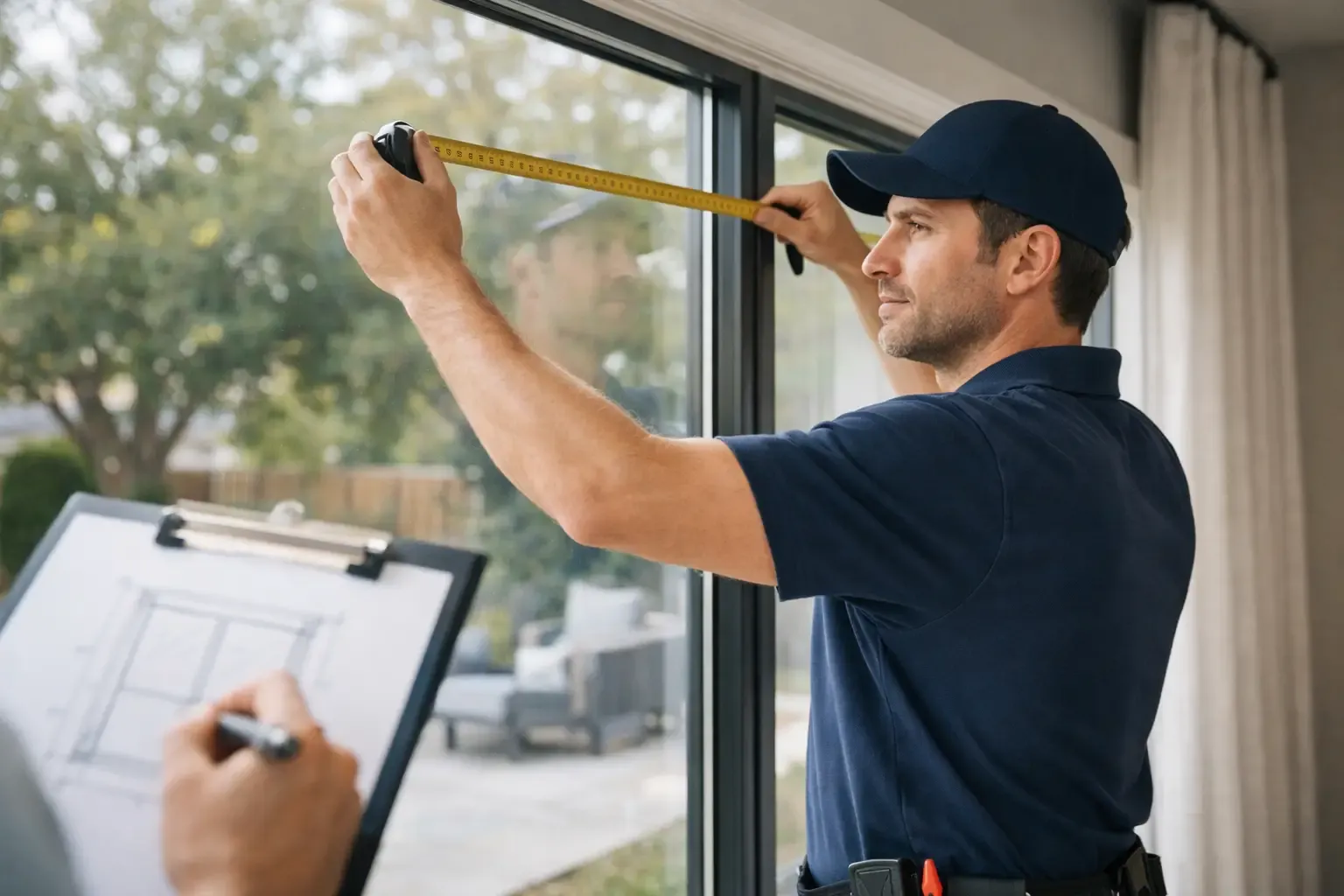
A replacement window can look straightforward until it is time to order it. An opening that appears square may be out of level, brick molding can hide damage, and a few millimeters can determine whether the finished window seals properly. A professional window measurement service removes that uncertainty before a custom product is made, helping homeowners avoid costly ordering mistakes, installation delays, and comfort issues after the work is complete.
For homeowners in Toronto, the GTA, Simcoe Region, and Southern Ontario, accurate measurement is especially important. Windows must perform through humid summers, driving rain, freeze-thaw cycles, and long heating seasons. The right product matters, but it can only perform as designed when it is sized and planned correctly for the home.
What a Professional Window Measurement Service Includes
Professional measurement is not simply measuring the glass or taking one width and one height. A qualified technician assesses the full window opening and the conditions surrounding it. That includes measurements at multiple points, the depth of the opening, the condition of the frame, wall construction, exterior cladding, interior trim, and any signs that the opening has shifted over time.
The goal is to determine the correct finished size for the replacement window and the best installation approach. In some homes, the existing frame can support an insert-style replacement. In others, a full-frame installation is the better choice because the old frame is damaged, poorly insulated, or limiting the amount of visible glass. These options affect product sizing, labor, trim work, and price, so they should be identified before an estimate becomes a contract.
A proper visit also connects measurement to the homeowner's goals. For example, a bedroom window may need to meet egress requirements, a kitchen window may benefit from an easy-to-operate casement style, and a large living room opening may be better suited to a fixed picture window with operating units on each side. Accurate dimensions are the starting point, but the final recommendation should consider ventilation, light, appearance, privacy, and energy performance.
Why Window Measurements Are More Complicated Than They Look
Older homes often have openings that are not perfectly consistent from top to bottom. Settling, past renovations, moisture exposure, and changes to siding or masonry can all affect the opening. Measuring only the narrowest visible point or relying on a homeowner's rough dimensions can lead to a window that is too large to fit safely or too small to seal and finish properly.
The exterior matters as much as the interior. Brick, stucco, vinyl siding, aluminum capping, and trim details all influence how the new window should be installed and flashed. A measurement technician needs to identify where water will drain, where insulation can be added, and how the finished unit will connect with the exterior of the home. Skipping this assessment can leave homeowners with a window that looks acceptable on day one but develops drafts, water entry, or trim problems later.
There is also a difference between the rough opening, the old window frame, and the size of the new custom unit. These are not interchangeable measurements. The replacement window needs appropriate clearance for shimming, insulation, adjustment, and a durable perimeter seal. A professional accounts for those details instead of ordering to the nearest visible dimension.
Problems Accurate Measurement Helps Prevent
Measurement errors usually become expensive because replacement windows are made to order. Once a custom unit has been produced, changing its size may mean additional manufacturing time, extra labor, and disruption to the installation schedule.
The most common issues accurate measurement helps prevent include:
- A unit that does not fit the opening or requires unnecessary alterations to the home
- Gaps that are too large to insulate and seal effectively
- Windows that bind, do not lock smoothly, or sit out of square
- Lost glass area caused by choosing the wrong replacement method
- Incorrect trim, capping, or exterior finishing allowances
- Unexpected costs discovered only after the old window is removed
Good measurement cannot eliminate every hidden condition. Rot behind an old frame, for instance, may only be visible once removal begins. What it does provide is a far better understanding of the risks before work starts. A dependable contractor explains that possibility clearly, outlines how hidden damage would be handled, and does not use it as an excuse for vague pricing.
The Measurement Visit Should Support a Clear Estimate
Homeowners should not have to guess what is included in a window quote. A professional site measurement gives the contractor the information needed to provide an estimate that reflects the real scope of work, rather than a low starting number that changes later.
That estimate should distinguish between the window product, installation, removal and disposal, insulation and sealing, exterior finishing, and any identified repair work. If a detail cannot be confirmed until installation, it should be explained in plain language. Transparency is not just about providing a final number. It is about showing homeowners what the number covers and where reasonable contingencies may exist.
At ProPlas, measurement and estimation are part of the replacement planning process, not an afterthought. The right visit helps match each opening with a suitable window style, customization options, and installation method before the order is placed. That reduces surprises and keeps the project moving on a realistic timeline.
What Happens During a Professional Measurement Appointment
A useful appointment begins with a conversation about the homeowner's concerns. Are certain rooms cold in winter? Is outside noise a problem? Are the existing windows difficult to open, showing condensation between panes, or allowing water around the frame? Those answers help the technician look beyond dimensions and identify the cause of the problem.
Next, the technician measures each opening carefully, usually more than once. Width and height are checked at several locations because the smallest usable dimension can control the sizing decision. The installer also checks plumb, level, and square, along with frame depth and the condition of surrounding materials.
The visit should include a review of design choices. Window configuration affects both function and final measurements. A double-hung window may suit a traditional facade and offer familiar operation, while a casement window can provide strong ventilation and a tight compression seal. Fixed units can bring in more light, but they do not provide airflow. There is no single best style for every room.
Finally, the technician documents the opening, takes notes on finishing details, and confirms the scope with the homeowner. This is the time to ask how the installation will protect interior finishes, whether exterior capping is included, how old units will be removed, and what warranty support is available after the job is done.
When a Simple Estimate Is Not Enough
Some projects require more planning than others. Bay and bow windows, specialty shapes, large picture windows, patio doors, and openings with structural concerns deserve a more detailed site review. The same is true when homeowners are changing a window size, combining openings, or replacing windows in a home with older brick or unusual exterior finishes.
In these cases, the best choice may not be the quickest or least expensive option. A full-frame replacement can cost more than an insert installation, but it may be worthwhile when the old frame is deteriorated or the homeowner wants to improve insulation and maximize glass area. Conversely, preserving a sound existing frame can reduce disruption and maintain interior trim that the homeowner wants to keep. The right recommendation depends on site conditions, not a one-size-fits-all sales approach.
How Homeowners Can Prepare for the Visit
You do not need to measure the windows yourself before an appointment, but a little preparation makes the visit more productive. Make note of rooms with drafts, condensation, operating problems, or water stains. Think about whether you want more ventilation, easier cleaning, increased privacy, or a different exterior look. If you have a preferred window style or color, bring it up early so the recommendation can account for it.
It also helps to clear access around the windows where possible. The technician may need to inspect both the inside and outside of the opening, including trim and exterior details. Clear access leads to a more complete assessment and fewer assumptions.
A window replacement is a long-term investment in comfort, energy efficiency, and the appearance of your home. Taking the time to measure it properly is one of the simplest ways to protect that investment before the first window is ordered.