
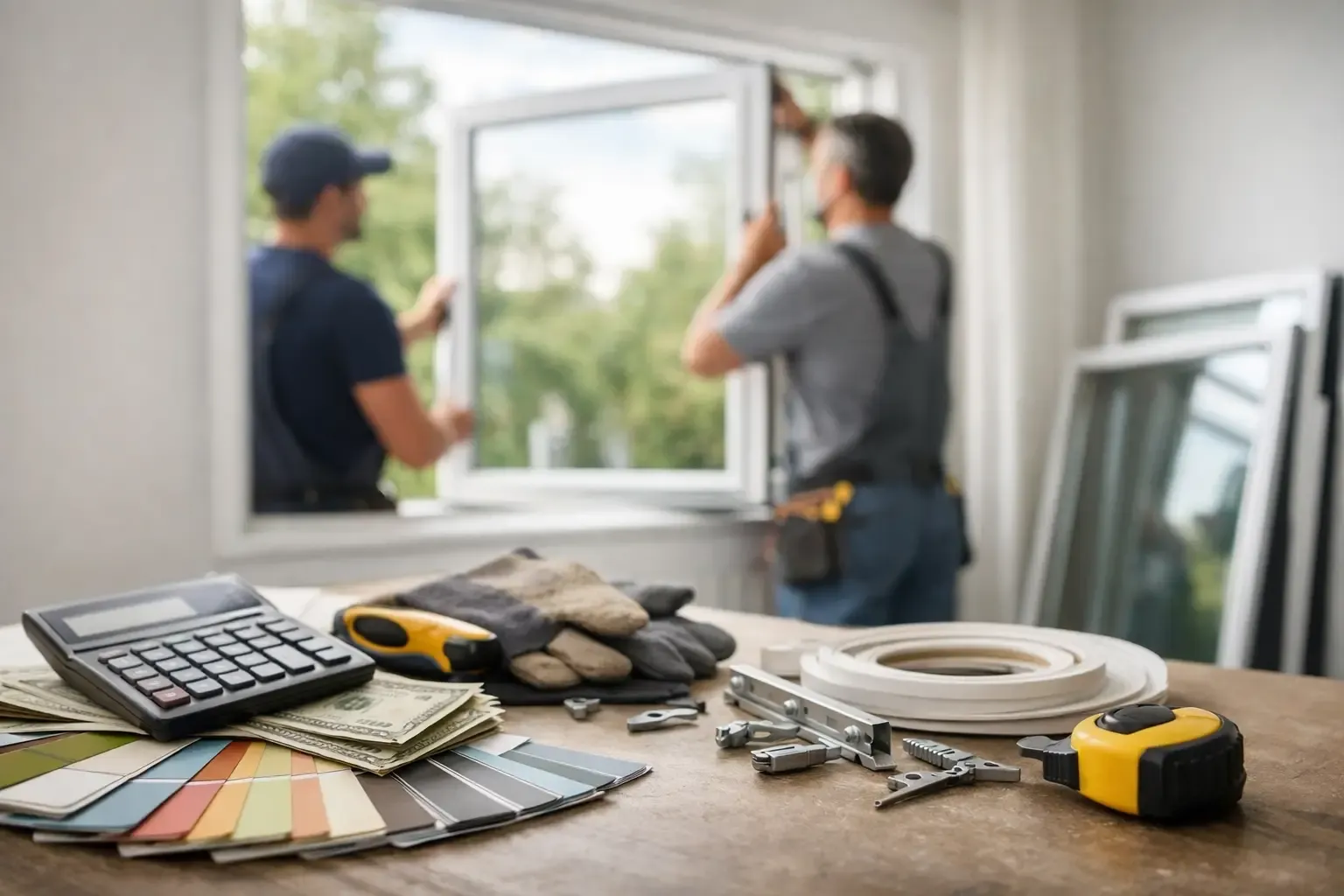
A window replacement quote can look simple on paper: a price per window, a timeline, and a promise of better comfort. The details behind that number matter far more. If the quote leaves out removal, exterior finishing, disposal, or warranty coverage, the lowest price can become the most expensive choice once work begins. Understanding what is included in window replacement helps homeowners compare proposals fairly and avoid surprises.
For homes in Toronto, the GTA, Simcoe Region, and Southern Ontario, replacement windows also need to perform through humid summers, wind, rain, and long heating seasons. A complete project is not just about ordering a new glass unit. It is a managed process that begins with accurate measurements and ends with a weather-tight opening, a clean home, and clear support if a concern arises later.
What Is Included in Window Replacement?
A professional window replacement project generally includes an in-home assessment, product selection, custom manufacturing, removal of the old window, installation of the new unit, insulation and sealing, interior and exterior finishing, cleanup, and warranty documentation. The exact scope depends on the window style, the condition of the opening, and whether surrounding trim or structural repairs are needed.
The key is to ask what is included in writing. A clear estimate should separate standard installation work from optional upgrades or potential repair work. That transparency protects both the homeowner and the installer when an older home reveals hidden issues after the existing window is removed.
Consultation, Measurement, and a Detailed Estimate
A reliable replacement starts with measuring the actual opening, not relying on a rough window size or measurements from the previous owner. An installer should assess the frame, sill, exterior cladding or brickwork, interior trim, access to the opening, and the condition of nearby walls.
This visit is also where practical decisions are made. A bedroom may benefit from a casement window that opens fully for ventilation, while a wide living-room opening may suit a picture window with operating side units. Homeowners can compare frame colors, grille patterns, glass options, hardware finishes, and energy-performance features before ordering.
The estimate should identify the window type, quantity, approximate dimensions, glass package, installation scope, expected timeline, and payment terms. It should also explain items that may change the cost, such as rotted framing, masonry repairs, lead-safe work requirements in older homes, or difficult access. Vague language such as “installation included” is not enough without knowing what the installation covers.
Custom Windows and Energy-Efficient Glass
Most replacement windows are made to fit the opening after final measurements are confirmed. This is especially valuable in older Southern Ontario homes, where openings are rarely perfectly square or consistent from room to room. A properly sized window reduces the need for excessive filler and helps create a more dependable seal.
The product portion of the project typically includes the frame, sash, insulated glass unit, screens for operating windows, hardware, and standard finishes. Energy-efficient options may include low-emissivity coatings, argon gas between panes, warm-edge spacers, and multi-pane glass. Energy Star-compliant products can help reduce drafts and heat loss, but performance depends on the complete window system and the quality of installation.
Not every upgrade is necessary for every room. Triple-pane glass may be worthwhile on an exposed wall or in a noisy location, while a well-specified double-pane unit may be a sensible choice elsewhere. The best recommendation should match the home’s exposure, budget, comfort goals, and existing heating and cooling concerns.
Removal and Professional Installation
The installation phase should include careful removal of the old window and reasonable protection of the work area. Experienced crews protect nearby floors and furnishings, remove old frames without unnecessary damage to finishes, and inspect the opening before placing the new unit.
A new window must be level, square, and securely fastened. Small errors can create larger problems: a sash that does not operate smoothly, water that drains the wrong way, air leakage around the frame, or premature hardware wear. Installation is where product quality becomes real-world performance.
After the unit is set, the installer should insulate the gap around the frame with an appropriate low-expansion material and seal the exterior against water and air intrusion. Exterior caulking is not a cosmetic final touch. It is part of the weather barrier that helps keep wind-driven rain out of the wall assembly.
Interior and Exterior Finishing
Finishing work is one of the most common sources of confusion in window quotes. Standard work may include reinstalling existing interior trim where practical, applying interior caulking, and finishing exterior joints with caulk. However, replacement or custom fabrication of interior casing, jamb extensions, exterior brickmould, aluminum capping, siding repair, or stucco restoration may be separate items.
This does not mean a quote is incomplete. It means the scope should be specific. If your current trim is damaged, your exterior cladding needs repair, or you are changing the window size or style, additional finishing may be required. A good contractor explains these conditions before work begins and provides options rather than presenting an unexpected bill after the opening is exposed.
For a full-frame replacement, more surrounding material may need to be removed to inspect the rough opening and properly integrate the new unit. Insert replacements can be less invasive when the existing frame is sound, but they may reduce visible glass area. The right approach depends on the existing frame condition, not simply which option has the lower initial price.
Cleanup, Disposal, and Final Inspection
A complete service should include removal and disposal of old windows and normal job-related debris. The crew should vacuum or sweep the immediate work area, remove protective coverings, and avoid leaving glass, screws, caulking tubes, or packaging behind.
Before the crew leaves, each operating window should be checked. It should open, close, lock, and tilt or crank as designed. Screens should fit correctly, glass should be clean and undamaged, and the homeowner should understand basic operation and maintenance. This final walkthrough is the right time to raise questions about condensation, screen storage, hardware adjustment, or cleaning procedures.
Warranty and Support After Installation
Window replacement is a long-term investment, so warranty coverage deserves the same attention as the window price. Product warranties often cover specific components such as insulated glass seals, vinyl frames, or hardware for defined periods. Installation warranties cover the workmanship of the contractor. They are not the same thing.
Ask who will handle a service request, what documentation you will receive, and whether the installer will remain your point of contact if a manufacturer issue occurs. A reputable company should make this process clear. ProPlas approaches window replacement as a turnkey service, with product selection, professional installation, and ongoing support treated as connected parts of the same job.
A low price that excludes follow-up service can leave homeowners dealing with several parties if a problem develops. Clear warranty terms, responsive communication, and a record of completed work offer more peace of mind than broad promises alone.
Questions to Ask Before Approving a Quote
Before signing, confirm whether the proposal includes removal and disposal of old windows, insulation around the frame, exterior sealing, interior and exterior trim work, and cleanup. Also ask whether permits are required for the planned changes. Like-for-like window replacements often do not require a permit, but enlarging an opening, altering structure, or changing an egress opening may.
It is also wise to ask how unforeseen conditions are handled. Water damage or rotted wood cannot always be identified until the old window is removed. The important issue is not whether a contractor can promise there will be no hidden damage. It is whether they have a clear process for documenting it, explaining the repair, and receiving approval before extra work proceeds.
The strongest window replacement proposal is not necessarily the longest or the cheapest. It is the one that clearly defines the product, workmanship, finishing, cleanup, warranty, and responsibility at every stage. When those details are settled before installation day, you can focus on the result that matters most: a quieter, more comfortable home with windows built and installed to last.