
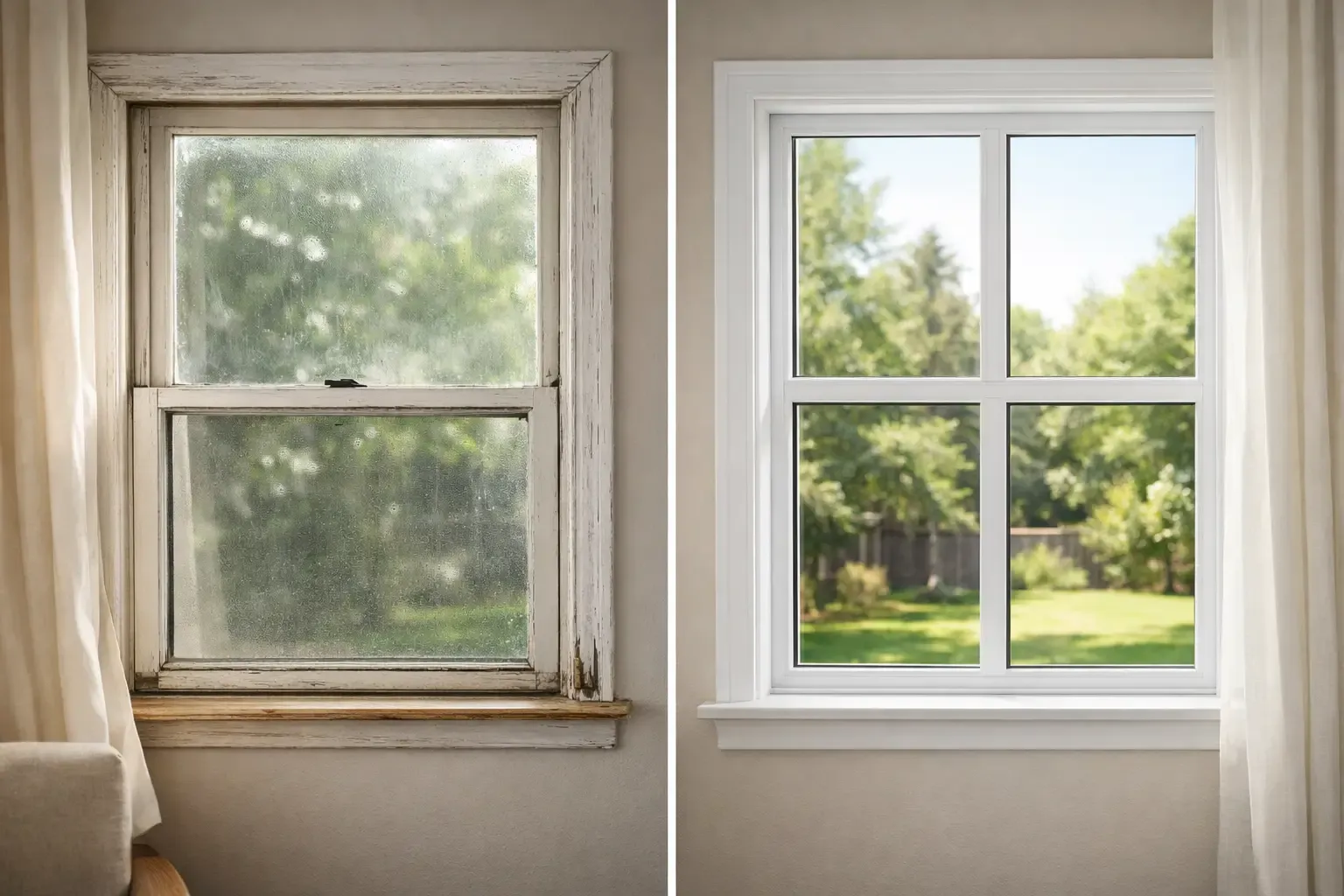
A window replacement before and after comparison should show more than brighter rooms and cleaner exterior lines. For a homeowner, the meaningful changes are often felt on a January morning near the glass, during a summer heat wave, or when a busy street suddenly sounds farther away. The best results combine a window that suits the home with careful installation that manages water, air, and insulation correctly.
What Changes Before and After Window Replacement?
Old windows rarely fail in just one obvious way. A draft may be noticeable in a bedroom, while another window sticks, collects condensation, or has a fogged pane that cannot be cleaned from either side. Outside, peeling frames, damaged caulking, and faded finishes can make an otherwise well-kept home look tired.
After replacement, the visual difference can be immediate. New frames sit squarely in the opening, operate smoothly, and create more consistent sightlines across the facade. Homeowners can also update the style of the home by selecting frame colors, grille patterns, glass options, and window configurations that better match the architecture.
The performance difference is just as valuable, although it is less visible in a photograph. Properly selected, energy-efficient windows can reduce cold spots near openings, help stabilize indoor temperatures, and lessen the load on heating and cooling equipment. Results depend on the existing windows, exposure to sun and wind, the home’s insulation, and the product selected. Replacing a single window will not solve every comfort issue in an older home, but replacing poorly performing units can make a noticeable difference room by room.
Before Replacement: Signs the Windows Are Holding the Home Back
A cracked pane is a clear reason to act, but many replacement decisions start with smaller frustrations. If rooms feel chilly near the windows, curtains move when the windows are closed, or you hear traffic and wind more than expected, the issue may be worn seals, aging weatherstripping, poor installation, or a frame that has shifted over time.
Condensation needs a closer look. Moisture on the room-facing side of the glass can be related to indoor humidity, especially in kitchens, bathrooms, and tightly sealed homes. Moisture between glass panes is different. It typically points to a failed insulated-glass seal, which reduces clarity and thermal performance. Rotting wood, warped frames, soft spots around the sill, and recurring leaks also require prompt attention because water damage can extend beyond the window itself.
Appearance matters too. Older windows may have thick frames that limit glass area, mismatched replacements from past renovations, or designs that no longer fit the home. A bay of aging sliders, for example, may be a candidate for a more functional arrangement with fixed center glass and operable casement or end-vent units at the sides.
Measure the opening, not just the old window
One of the biggest differences between a disappointing project and a dependable one happens before manufacturing begins. The installer must assess the rough opening, exterior cladding, interior trim, wall condition, drainage details, and the condition of the existing frame. Measurements alone do not tell the whole story.
This is particularly relevant in Southern Ontario, where homes face freeze-thaw cycles, wind-driven rain, humid summers, and long heating seasons. A replacement window needs to fit the opening precisely, but it also needs the right flashing, insulation, sealants, and exterior finishing to manage local weather over time.
After Replacement: Comfort Is the Result Homeowners Notice First
The most common after-effect is a more comfortable room. New insulated glass units, low-emissivity coatings, well-built frames, and intact seals work together to slow heat transfer. That can mean less cold radiating from the glass in winter and less solar heat entering rooms with strong afternoon exposure.
However, glass selection should match the location. A homeowner may want stronger solar control on a west-facing living room but prefer higher visible light in a shaded north-facing room. Privacy glass can make sense for a bathroom, while clear glass may be best for a view-facing family room. The right choice is not always the highest-specification option. It is the one that addresses the window’s particular use, orientation, and exposure.
Noise reduction can improve as well, especially when old windows have gaps or loose-fitting sashes. But expectations should be realistic. New windows can reduce everyday outdoor noise, yet they cannot fully block a nearby highway, rail line, or construction site without a broader sound-control strategy and appropriately specified glass.
The Installation Is What Protects the Investment
A premium window can underperform if the installation is rushed. Gaps around the frame can allow air leakage. Incorrect drainage details can trap water. Excessive foam or poor shimming can affect operation. Exterior caulking may look clean on installation day but fail early if it is applied to unsuitable surfaces or used as the only defense against water.
A professional replacement process should begin with a clear scope of work and product details, followed by accurate field measurements. On installation day, the crew should protect the work area, remove the existing unit carefully, inspect the opening, and address any condition that affects the new installation. The replacement window is then leveled, secured, insulated, sealed, and finished so it opens, closes, locks, and drains as intended.
Interior and exterior finishing deserve attention. Depending on the home and installation method, trim may need to be replaced or refinished, and exterior capping may be used to protect exposed wood. These details influence both appearance and long-term maintenance. A quote that seems lower at first can become less attractive if it leaves essential finishing, disposal, or repairs unclear.
Ask for clarity before work begins
Homeowners should receive straightforward answers about what is included, the projected timeline, who will perform the work, and how unexpected issues are handled. It is reasonable to ask whether permits are needed, how the crew will protect floors and landscaping, and what warranty applies to both the product and installation.
Transparency matters because some findings are only visible after an old window is removed. Minor repairs can be normal in older homes. The important point is that the contractor explains the condition, presents options, and obtains approval before expanding the work.
Choosing a Window Style That Improves Daily Use
A before-and-after project is an opportunity to correct how windows function, not merely replace like for like. Casement windows are often chosen for wide openings and strong ventilation because the sash opens outward. Awning windows can provide airflow during light rain and work well in bathrooms or over kitchen counters. Double-hung windows suit traditional homes and can offer convenient cleaning, while sliders are practical where an outward-opening sash would interfere with a walkway, deck, or landscaping.
Fixed picture windows are a strong option when the priority is daylight and an unobstructed view. They do not open, so they are commonly paired with operable windows nearby. Specialty shapes can preserve distinctive architectural details, but they require careful planning because replacement options, glass choices, and installation complexity may differ from standard rectangular units.
The best layout considers escape requirements, ventilation, furniture placement, exterior access, and how the home looks as a whole. A window should be easy to use every day, not just attractive from the curb.
How to Judge Real Before-and-After Results
Do not judge the project only by the final photo. Stand near the window on a cold or windy day. Check that locks engage easily, sashes move smoothly, screens fit properly, and trim looks complete. From outside, look for consistent lines, clean finishing, and no obvious gaps around the frame.
Over the following weeks, pay attention to comfort in the room, condensation patterns, and whether the area around the window remains dry after heavy rain. Keep warranty documents and care instructions available, and avoid blocking drainage paths or using harsh cleaners on glass coatings and hardware.
For homeowners who want a managed replacement experience, ProPlas helps coordinate measurement, product selection, professional installation, and follow-up support. That continuity reduces the risk of a gap between what was sold and what is installed.
The most satisfying after result is not simply a newer-looking window. It is a home that feels quieter, warmer, easier to maintain, and properly protected when the weather turns.